
In the vast, often isolated expanses of rural and remote areas, connectivity is not just a convenience—it’s a lifeline. It’s a bridge to essential services, a tool for economic growth, and a critical factor in safety. A recent study published in IEEE Access introduces a dynamic beamforming system designed to enhance vehicular connectivity in these challenging environments, with significant implications for the agriculture sector.
The system, developed by a team led by Rasool Keshavarz from the RF and Communication Technologies Research Laboratory at the University of Technology Sydney, features a reconfigurable, roof rack-mounted, ventilated log-periodic antenna (DRV-LPA). This innovative design provides full 360° azimuthal coverage around the vehicle, with beamforming implemented on both the forward and backward sides. Each side is equipped with three LTE and three WiFi antennas, enabling dynamic directional control of beams.
The DRV-LPA electronically steers its beam from 0° to ±30°, based on electric field theory, and is validated through full-wave electromagnetic simulations. “This dynamic beam steering allows the system to adapt to the vehicle’s position relative to the base station, ensuring stable connectivity and optimized bandwidth,” Keshavarz explains.
The system supports three beam configurations, adapted to communication needs and vehicle orientation. A compact wireless router integrated with the switching module manages continuous data exchange with a remote base station. The switching module dynamically activates the appropriate beam based on the vehicle’s position, ensuring robust and effective performance in real-world vehicular scenarios.
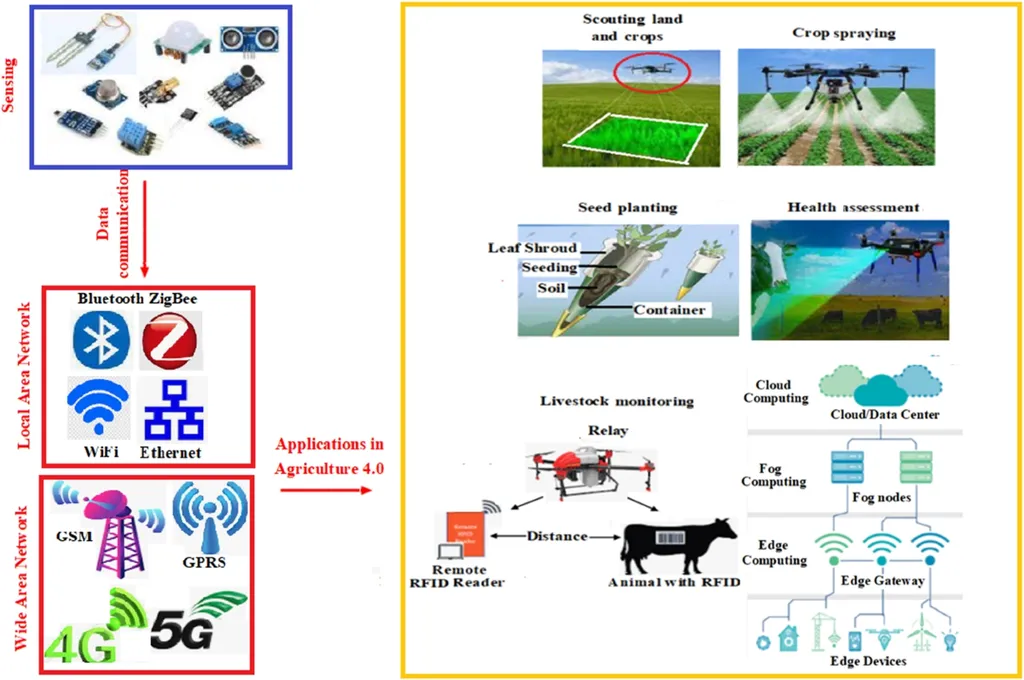
The implications for the agriculture sector are profound. Precision agriculture, which relies heavily on real-time data and connectivity, stands to benefit significantly from this technology. Farmers operating in remote areas can access critical information, monitor crops, and manage resources more efficiently. “This system can be a game-changer for rural mobility infrastructure, enabling precision agriculture and strengthening connectivity in areas where it’s most needed,” Keshavarz notes.
The system’s performance was evaluated through anechoic chamber measurements and field trials in regional Australia. Simulated and measured results showed strong agreement in beam direction, gain, VSWR, and overall performance within the roof rack. The field trials confirmed the system’s robustness and effectiveness, offering a cost-effective, scalable solution for improving vehicle-based connectivity.
This research not only addresses immediate connectivity challenges but also paves the way for future developments in smart wireless communication systems. As the agriculture sector continues to embrace technology, the demand for reliable, high-speed connectivity in rural areas will only grow. This dynamic beamforming system represents a significant step forward in meeting that demand, shaping the future of rural and remote connectivity.
The study, published in IEEE Access, highlights the potential of innovative technologies to bridge the digital divide and support the growth and development of rural communities. As we look to the future, the integration of such advanced systems into agricultural practices could revolutionize the way farmers operate, ultimately contributing to a more sustainable and productive agricultural sector.