
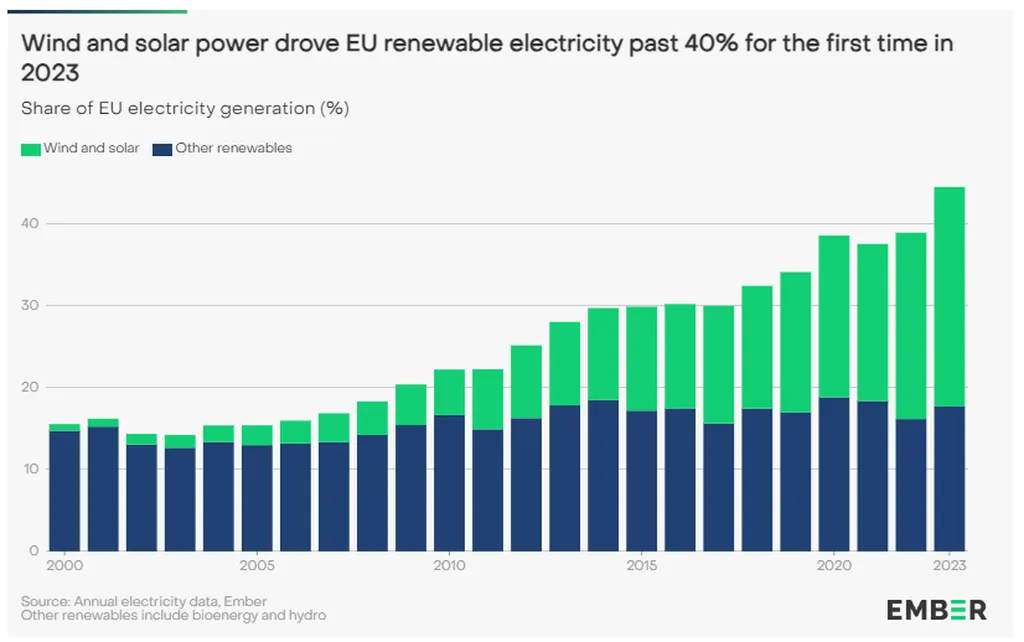
The European Union has reached a significant milestone in its transition to renewable energy. For the first time, wind and solar power have surpassed fossil fuels in terms of electricity generation, according to a new analysis by Ember, a London-based think tank. This shift is largely attributed to the rapid expansion of solar energy, which is currently growing faster than any other source of electricity.
In 2023, wind and solar energy collectively generated 30% of the E.U.’s power, while fossil fuels accounted for 29%. When hydroelectric power is included, renewables provided nearly half of all E.U. power. The analysis highlights that solar energy is making gains in every E.U. country, while coal usage is broadly declining. Notably, solar power alone supplied more than 20% of electricity in Hungary, Cyprus, Greece, Spain, and the Netherlands. Additionally, coal accounted for less than 5% of power in 19 European countries. In 2025, Ireland and Finland joined the ranks of countries that have shut down their last remaining coal plants.
However, the transition to clean energy is not without its challenges. Droughts have impacted hydropower output, leading to a slight drop in hydroelectric generation. Consequently, natural gas power increased to compensate for this shortfall. Ember analyst Beatrice Petrovich emphasized the need for the E.U. to reduce its reliance on expensive, imported gas. “Gas not only makes the E.U. more vulnerable to energy blackmail, it’s also driving up prices,” she stated.
In some parts of Europe, the increasing affordability of batteries is beginning to displace natural gas during the early evening hours when power demand is high, but solar output is decreasing. Petrovich noted that as this trend accelerates, it could limit the need for natural gas during peak hours, thereby stabilizing prices.
For the agriculture sector, this shift towards renewable energy presents both opportunities and challenges. On one hand, the increased availability of clean energy can reduce the carbon footprint of agricultural operations, which is increasingly important to consumers and regulators alike. Farmers may also benefit from new revenue streams, such as leasing land for solar farms or participating in energy storage projects.
On the other hand, the transition may require significant investments in new technologies and infrastructure, which could be a financial burden for some farmers. Additionally, the reliability of renewable energy sources can be variable, which may impact operations that rely on a consistent power supply.
For investors, the rapid growth of renewable energy in the E.U. offers promising opportunities. The solar energy sector, in particular, is expanding quickly and is likely to continue doing so in the coming years. Investments in battery storage technologies also hold significant potential, as they are crucial for stabilizing the grid and integrating more renewable energy sources.
However, investors should also be aware of the challenges and risks associated with this transition. The variability of renewable energy sources and the need for significant infrastructure investments are important factors to consider. Additionally, policy and regulatory changes can impact the profitability and feasibility of renewable energy projects.
In conclusion, the E.U.’s shift towards renewable energy is a significant development with wide-ranging implications. For the agriculture sector, it presents opportunities for reducing carbon footprints and generating new revenue streams, but also poses challenges in terms of investment and reliability. For investors, the rapid growth of renewable energy offers promising opportunities, but also requires careful consideration of the associated challenges and risks.