
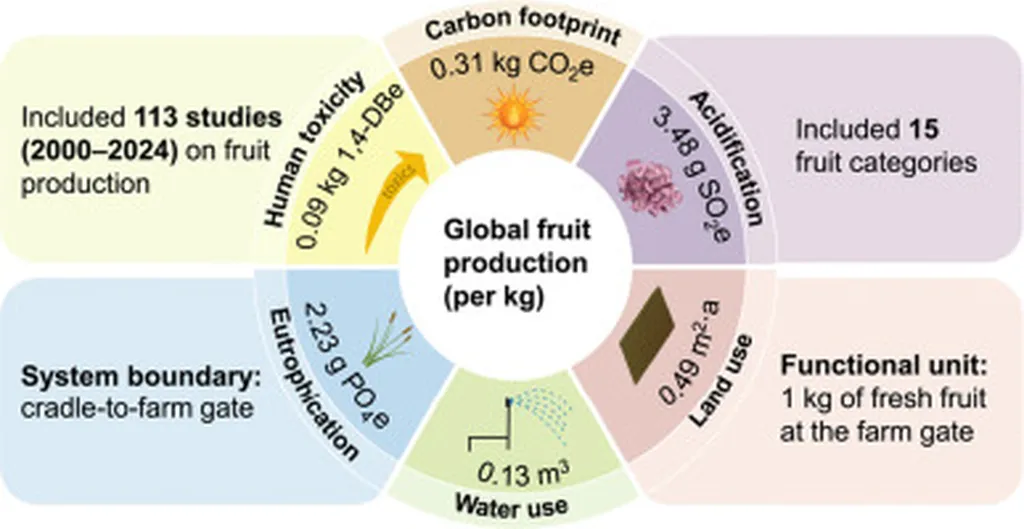
In a world where the demand for healthy diets is on the rise, understanding the environmental impacts of fruit production has never been more critical. A groundbreaking study published in *Resources, Environment and Sustainability* sheds light on the environmental footprints of global fruit production, offering valuable insights for the agriculture sector. Led by Lu Wang from the College of Environment and Ecology at Chongqing University, the research systematically reviews life-cycle assessments of 15 major fruit species, revealing substantial variability in yields and environmental impacts across different regions and production systems.
The study highlights that high-yielding fruits like pineapple and apple tend to have lower greenhouse gas emissions compared to low-yielding crops such as avocado and berries. For instance, pineapple and apple production emit approximately 0.10 and 0.15 kg CO2e per kilogram, respectively, while avocado and berry production emit around 0.48 and 0.44 kg CO2e per kilogram. This variation is driven by factors such as climate, soil conditions, and management practices.
One of the most striking findings is the significant regional differences in environmental impacts. For example, the carbon footprint of apples varies widely, ranging from 0.04 to 3.01 kg CO2e per kilogram across different countries. “This variability underscores the importance of tailored approaches to sustainable fruit production,” says Lu Wang, the lead author of the study. “By understanding these differences, we can identify best practices and target interventions to improve sustainability across the global fruit sector.”
The study also reveals data gaps in certain impact categories, particularly for the toxicity and eutrophication impacts of fruits like avocado, cherry, and plum. This highlights the need for further research to fill these gaps and provide a more comprehensive understanding of the environmental impacts of fruit production.
The commercial implications of this research are substantial. For the agriculture sector, the findings offer a roadmap for optimizing production systems to minimize environmental impacts while maximizing yields. By adopting best practices from regions with lower environmental footprints, fruit producers can enhance their sustainability credentials and meet the growing consumer demand for eco-friendly products.
Moreover, the study’s insights can inform policy decisions and guide investments in sustainable agriculture. Governments and organizations can use this data to develop targeted interventions that promote sustainable fruit production, such as incentivizing low-impact farming practices or supporting research and development in high-yielding, low-emission fruit varieties.
As the global population continues to grow and dietary patterns shift towards healthier options, the demand for fruits is expected to rise. This study provides a crucial foundation for shaping the future of sustainable fruit production. By leveraging the findings, the agriculture sector can strive towards a more environmentally friendly and economically viable future.
The research, published in *Resources, Environment and Sustainability* and led by Lu Wang from the College of Environment and Ecology at Chongqing University, offers a comprehensive overview of the environmental impacts of global fruit production. By synthesizing results across fruit types, regions, and multiple impacts, the study reveals opportunities for targeted interventions and best-practice transfer to improve sustainability across the global fruit sector.