
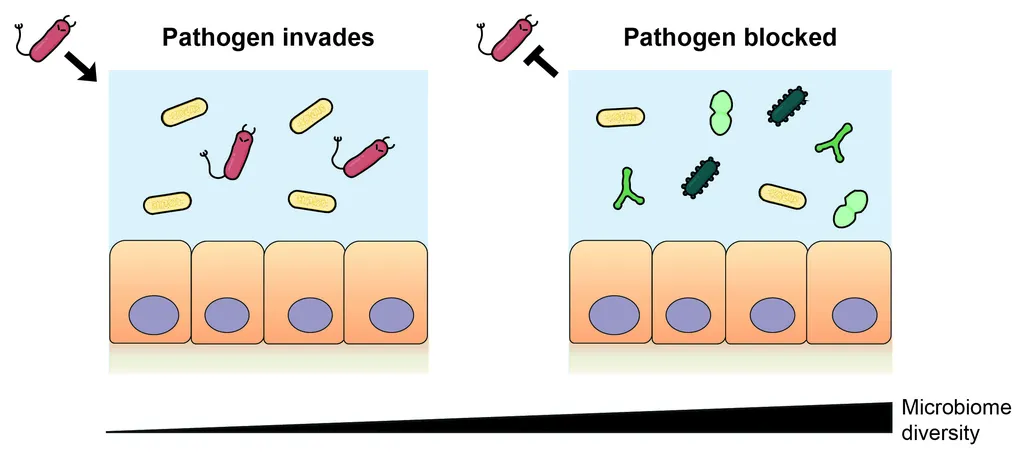
In the quest for sustainable agriculture, scientists are increasingly turning to nature’s own solutions, and a recent discovery from the phyllosphere of agricultural crops is making waves in the agritech world. Researchers have identified a novel bacterium, Bacillus altitudinis GG-22, that shows remarkable potential as a biocontrol agent and plant growth promoter. This promising strain, isolated and studied by a team led by Ana Falcón-Piñeiro at the DMC Research Center in Spain, could revolutionize how we approach crop protection and yield enhancement.
The study, published in *Biotechnology Reports*, reveals that B. altitudinis GG-22 possesses a rich arsenal of genes involved in biocontrol mechanisms. These include the ability to synthesize siderophores, lipopeptides like pumilacidin, and even bacteriocins such as pumilarin. “The genome of this strain is a treasure trove of beneficial traits,” Falcón-Piñeiro explains. “It’s equipped with everything from antifungal compounds to volatile organic compounds that can inhibit phytopathogens.”
In vitro tests confirmed the strain’s efficacy, showing significant inhibitory effects against notorious plant pathogens like Verticillium dahliae and Pythium sp. While its impact on bacterial pathogens such as Xylella fastidiosa was more limited, the results are still promising. The bacterium’s ability to prime plant defense responses and modulate hormonal pathways could be a game-changer for agriculture.
Transcriptomic profiling of olive trees treated with GG-22 provided further insights. The study found early activation of auxin transport and systemic acquired resistance (SAR) pathways, alongside a substantial downregulation of cell wall remodelling genes. This suggests that B. altitudinis GG-22 not only enhances plant resilience but also fine-tunes growth processes, potentially leading to healthier, more productive crops.
The commercial implications of this research are substantial. As the agricultural sector grapples with the challenges of climate change, soil degradation, and the need for reduced chemical inputs, biological solutions like B. altitudinis GG-22 offer a sustainable alternative. “This strain could be integrated into existing agricultural practices to improve crop yields and reduce reliance on synthetic pesticides,” says Falcón-Piñeiro. “It’s a step towards more resilient and eco-friendly farming.”
Future research will focus on optimizing application strategies and exploring synergies with other microbial agents. The goal is to fully harness the biocontrol and growth-promoting potential of B. altitudinis GG-22, potentially leading to new bioformulations that could transform the agricultural landscape.
As the world seeks innovative solutions to feed a growing population sustainably, discoveries like this one offer hope. By leveraging the natural abilities of microorganisms, we may unlock new pathways to agricultural success, ensuring food security while protecting the environment. The journey towards sustainable agriculture is complex, but with breakthroughs like this, the future looks brighter than ever.