
In the heart of Brazil’s agricultural landscape, a groundbreaking study is reshaping the way we think about pesticide remediation. Published in *Frontiers in Agronomy*, the research led by Victor Hugo Cruz from São Paulo State University (UNESP) explores multifunctional biological approaches to enhance pesticide removal in agroecosystems, offering a beacon of hope for sustainable agriculture.
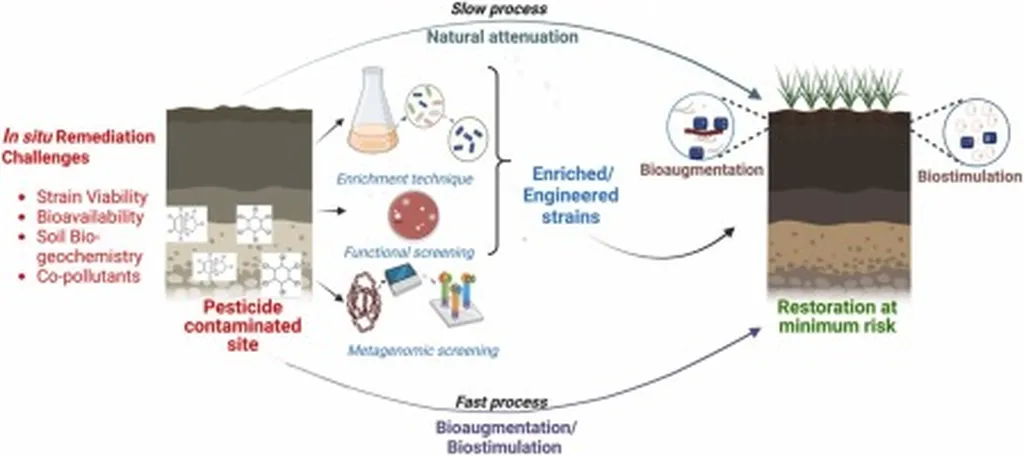
The indiscriminate use of pesticides has left a lasting mark on our environment, contaminating soils and water bodies, and harming non-target organisms. Traditional remediation methods often fall short, but Cruz and his team are championing a new era of bioremediation techniques. Their study highlights the power of combining phytoremediation, bioaugmentation, biostimulation, and vermiremediation to accelerate pesticide degradation and restore soil health.
Plants like *Canavalia ensiformis* and *Zea mays* from the Fabaceae and Poaceae families have shown remarkable potential in phytoremediation, effectively tackling herbicides and insecticides. “These plants are not just passive participants; they actively contribute to the degradation process,” Cruz explains. The study also underscores the crucial role of microbial genera such as *Bacillus*, *Pseudomonas*, and *Streptomyces*, which work in synergy with plants to break down pollutants.
But the innovation doesn’t stop there. The integration of organic additives like vinasse enhances the interactions between plants, microbes, and soil fauna, boosting remediation efficiency. Additionally, vermiremediation using earthworms like *Eisenia foetida* improves soil aeration and microbial activity, further accelerating the cleanup process.
The commercial implications for the agriculture sector are substantial. By adopting these multifunctional biological approaches, farmers can reduce the long-term costs associated with soil degradation and pesticide contamination. “This is not just about cleaning up the environment; it’s about creating a sustainable future for agriculture,” Cruz emphasizes.
The study also points to the need for further research to optimize these techniques and explore genetic advances to enhance microbial and plant remediation capabilities. As we look to the future, the integration of these bioremediation strategies could pave the way for a more resilient and sustainable agricultural system, mitigating the environmental impacts of pesticides and promoting soil health.
In a world grappling with the consequences of intensive agriculture, this research offers a glimmer of hope. By harnessing the power of nature itself, we can restore our soils, protect our ecosystems, and ensure a sustainable future for generations to come.