
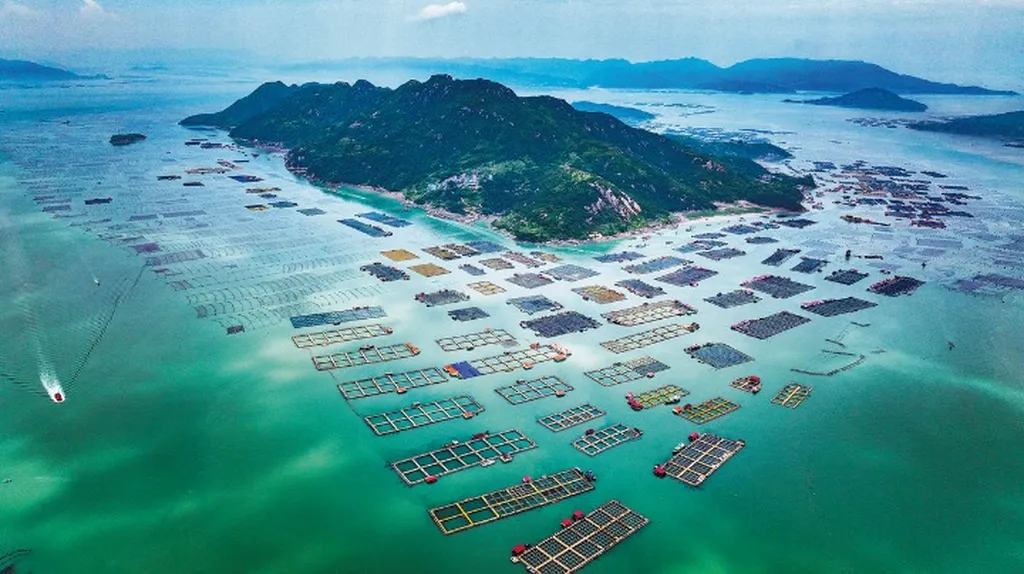
In the heart of Fujian Province, a unique blend of ecological value, cultural richness, and governance functions is unfolding, offering a blueprint for marine ecological culture communication that could reshape coastal economies and agricultural sectors worldwide. A recent study published in *Frontiers in Marine Science* and led by Hao Wang from the College of Digital Economy at Fujian Agriculture and Forestry University, delves into the intricate web of factors driving this phenomenon, providing insights that could unlock new commercial opportunities and sustainable practices.
The research, which employs the Grey-DEMATEL model—a sophisticated analytical tool—reveals a complex interplay of elements that are crucial for the effective communication of marine ecological culture. At the core of this network, government incentives and support, innovation/digital communication elements, and capital investment emerge as pivotal drivers. “Government incentives and support, along with innovation in digital communication, play a dominant role and have a significant spillover effect,” explains Wang. “Capital investment, while crucial, shows a dependence on these other factors.”
This interplay of drivers is not just an academic curiosity; it has profound implications for the agriculture sector, particularly in coastal regions. The study highlights the importance of resource abundance, purchasing power, and tourism demand, which collectively enhance the breadth and resilience of communication. For farmers and agribusinesses, this means new avenues for diversification and value addition. Imagine coastal farms leveraging marine ecological culture to attract eco-tourists, or agricultural products being marketed with a unique cultural narrative that enhances their market value.
The research also underscores the role of institutional drivers and public participation in fostering innovation synergy. “The coastal red lines and heritage regulations act as binding intermediaries in the system,” notes Wang. This suggests that robust policies and community engagement are essential for creating a sustainable ecosystem where marine ecological culture can thrive. For the agriculture sector, this could mean collaborating with local communities and policymakers to develop integrated strategies that promote both ecological and economic sustainability.
The study’s findings offer a replicable path for other regions looking to harness the power of marine ecological culture. By understanding the structural logic and multi-dimensional driving mechanisms, stakeholders can create tailored strategies that enhance resource value realization, cultural soft power, and modernize governance. This could lead to innovative agricultural practices that are not only environmentally sustainable but also economically viable.
As the world grapples with the challenges of climate change and resource depletion, the insights from this research provide a beacon of hope. They offer a roadmap for integrating ecological, cultural, and economic dimensions to create a sustainable future. For the agriculture sector, this means embracing new paradigms that go beyond traditional practices, leveraging technology, community engagement, and policy support to create a resilient and thriving ecosystem.
In the words of Hao Wang, “This research expands the theoretical boundaries of ecological civilization construction and verifies the synergy effect of institutional drivers, innovation synergy, and public participation.” As we look to the future, the lessons from Fujian Province could very well shape the next wave of sustainable development, offering a blueprint for a world where ecology, culture, and commerce coexist harmoniously.