
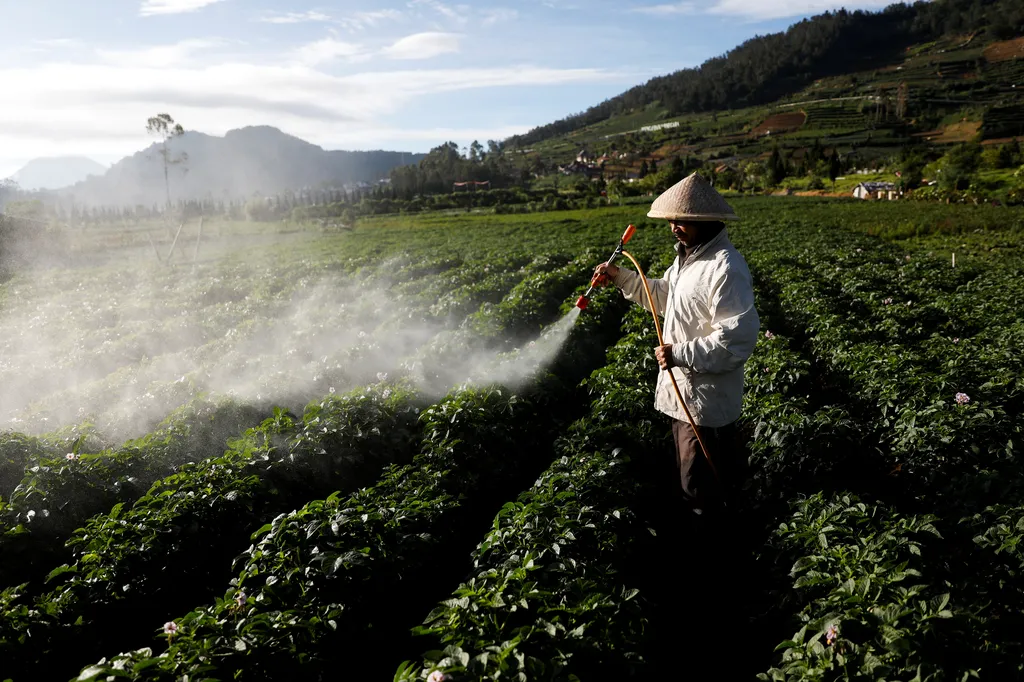
In the heart of Indonesia’s karst landscapes, a groundbreaking study is reshaping our understanding of sustainable agriculture. The dry lands of the Gunungsewu region in Gunungkidul, known for their reliance on rainfall, are now at the forefront of a new approach to farming that could have significant commercial impacts for the agriculture sector.
The research, published in the ‘BIO Web of Conferences’, focuses on the critical role of cropping patterns in ensuring agricultural sustainability. Led by Handayani Cicik Oktasari from the Research Center for Horticulture at the National Research and Innovation Agency, the study provides a blueprint for farmers to optimize their yields while conserving precious resources.
The key finding? Effective rainfall patterns determine the best cropping strategies. “Crop water requirement and rainfall are the primary factors in formulating sustainable cropping patterns,” explains Oktasari. During the first growing season, crops like rice, corn, groundnut, soybean, and cassava thrive due to adequate rainfall. In the second season, corn, groundnut, soybean, and cassava continue to flourish. However, without irrigation, the third season remains fallow, allowing the land to recover.
This approach isn’t just about what to plant; it’s about optimizing resources. Farmers are encouraged to manage water, sunlight, and other inputs like manure, fertilizers, and pesticides to support successful cropping patterns. The results are impressive: increased crop diversity and yield, improved soil fertility, reduced degradation, and even mitigation of greenhouse gases.
The commercial implications are vast. By adopting these sustainable practices, farmers can enhance their productivity and resilience, ensuring a steady supply of crops to the market. “Successful cropping patterns are characterized by resource optimization, taking into account physical, economical, social, and environmental aspects,” Oktasari notes. This holistic approach could revolutionize agriculture in dry, karst regions, providing a model for other arid areas worldwide.
The study’s findings are particularly relevant as the world grapples with climate change and the need for sustainable agricultural practices. By understanding and adapting to local rainfall patterns, farmers can mitigate the risks associated with unpredictable weather and ensure long-term productivity.
As we look to the future, this research could shape the development of new agricultural technologies and policies. It underscores the importance of tailored, localized solutions in the face of global challenges. For the agriculture sector, the message is clear: sustainability isn’t just about survival; it’s about thriving in a changing world.
With the lead author, Handayani Cicik Oktasari, affiliated with the Research Center for Horticulture at the National Research and Innovation Agency, this study represents a significant step forward in our quest for sustainable agriculture. As the world watches, the dry lands of Gunungsewu may well become a beacon of hope for farmers everywhere.