
In the quest for sustainable agriculture, managing nitrogen (N) fertilizer use effectively is a balancing act. Farmers must meet the growing global demand for crop production while minimizing environmental impact. A recent study published in *Earth Critical Zone* sheds light on the evolution of nitrogen fertilizer recommendation techniques and proposes a path forward that could reshape the agricultural landscape.
The research, led by Siyuan Cai from the State Key Laboratory of Soil and Sustainable Agriculture at the Chinese Academy of Sciences, reviews historical strategies for optimizing nitrogen fertilizer rates. These strategies fall into three main categories: soil/plant testing-based techniques, modeling-based techniques, and a combination of both. Each approach has its strengths, and the study suggests that integrating these methods could enhance the precision and adaptability of nitrogen management.
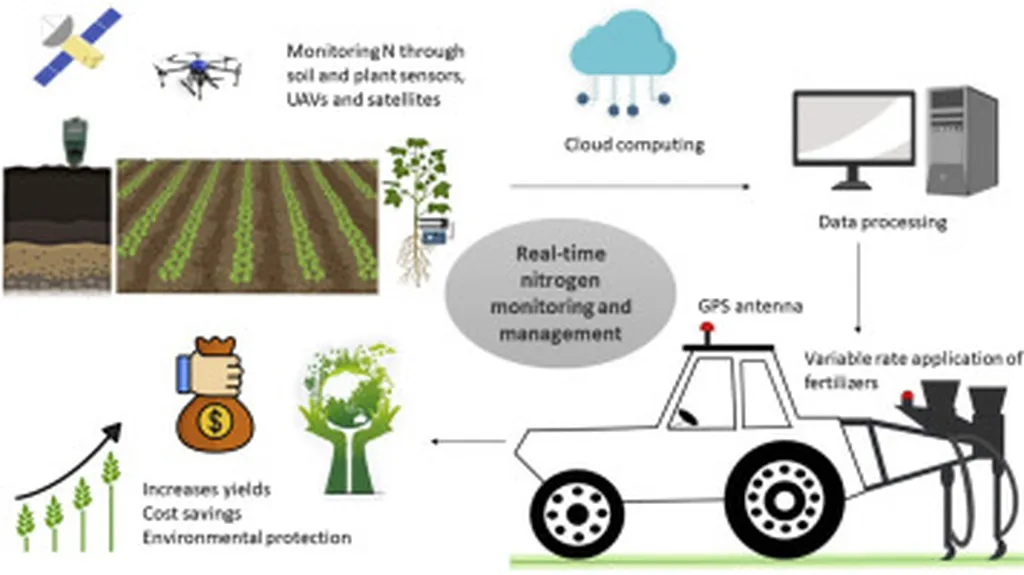
Soil/plant testing-based techniques rely on real-time assessments of crop and soil conditions during the growing season. These methods provide immediate, actionable data that farmers can use to adjust fertilizer applications as needed. On the other hand, modeling-based approaches use historical data to predict nitrogen requirements, following the principle of diminishing returns. By combining these two methodologies, farmers can benefit from the timely insights of testing-based techniques and the predictive power of modeling-based approaches.
“The integration of these methods allows for a more holistic and precise management of nitrogen fertilizers,” says Cai. “This not only improves crop yields but also reduces the environmental footprint of agriculture.”
The study highlights the importance of improved model accuracy, timely data availability, and cost-effectiveness in driving the adoption of these integrated approaches. Government policies, research funding, market incentives, and consumer demand for sustainably produced food are all contributing to this shift. By addressing current barriers to adoption, these approaches aim to enhance the implementation of nitrogen fertilizer recommendations and contribute to the achievement of the Sustainable Development Goals (SDGs).
For the agriculture sector, the implications are significant. Precise nitrogen management can lead to higher crop yields, reduced input costs, and a smaller environmental impact. This can translate into increased profitability for farmers and a more sustainable food supply chain. As the global population continues to grow, the demand for efficient and sustainable agricultural practices will only increase.
The research suggests that the future of nitrogen fertilizer management lies in the integration of testing-based and modeling-based techniques. By leveraging the strengths of both approaches, farmers can achieve more precise and adaptable nitrogen management, ultimately contributing to the sustainability of the agriculture sector.
As the world grapples with the challenges of feeding a growing population while protecting the environment, innovations in nitrogen management offer a promising path forward. The study published in *Earth Critical Zone* provides valuable insights into the evolution of nitrogen fertilizer recommendation techniques and points the way toward a more sustainable future for agriculture.