
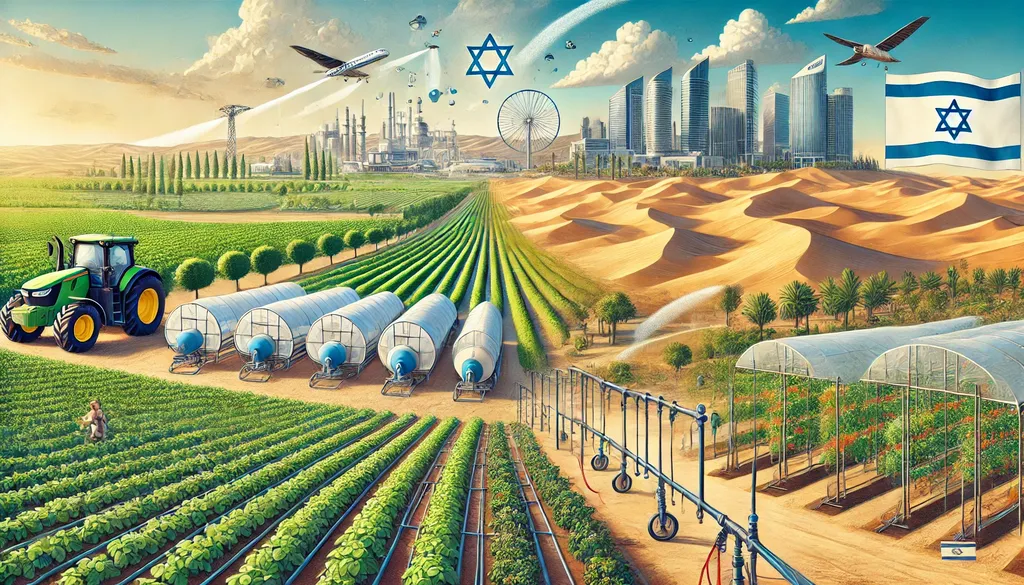
Israel’s agriculture sector, despite operating under significant structural constraints such as limited arable land, water scarcity, and climate pressures, continues to be a vital player in the global market. The sector’s outward orientation, with the European Union (EU) absorbing the majority of its agricultural exports, underscores the importance of compliance with international quality, traceability, and regulatory standards.
Recent company activity in Israel’s agriculture sector highlights a strong focus on ag inputs, particularly crop protection. This segment has seen a high volume of announcements, including product launches, certifications, financial disclosures, and partnerships. Precision agriculture is another key area, driven by technologies that enhance automation, sensing, irrigation, and data-driven decision-making. These trends indicate a market that is increasingly oriented towards applied solutions aimed at improving yield stability, quality, and operational efficiency.
Capital allocation in the sector provides further insights into market priorities. Funding is predominantly directed towards later-stage companies, reflecting investor confidence in technologies that have already demonstrated technical validation and are poised for scaling. This trend suggests that the market is focused on commercialization and international expansion rather than broad early-stage experimentation.
Expansion beyond Israel’s domestic market is crucial for sustained growth. Companies are leveraging partnerships, strategic leadership appointments, and regional commercial initiatives to establish a presence in Asia and North America. These strategies allow companies to tap into new markets while mitigating capital intensity and regulatory risks.
At the farm level, technology adoption is pragmatic and closely tied to measurable outcomes. Automation and mechanization are being deployed to reduce losses and improve labor efficiency. Government subsidies, which cover a significant portion of equipment costs, play a central role in accelerating technology adoption by lowering the associated risks.
In conclusion, Israel’s agriculture sector is navigating its structural constraints through a focus on ag inputs, strategic capital allocation, and international expansion. The sector’s ability to comply with international standards and leverage government support for technology adoption positions it for continued growth and innovation. For a more detailed analysis, the full report on the iGrow Network provides an in-depth exploration of sector-level activity, capital flows, expansion strategies, and structural constraints based on recent company actions and transaction data.