
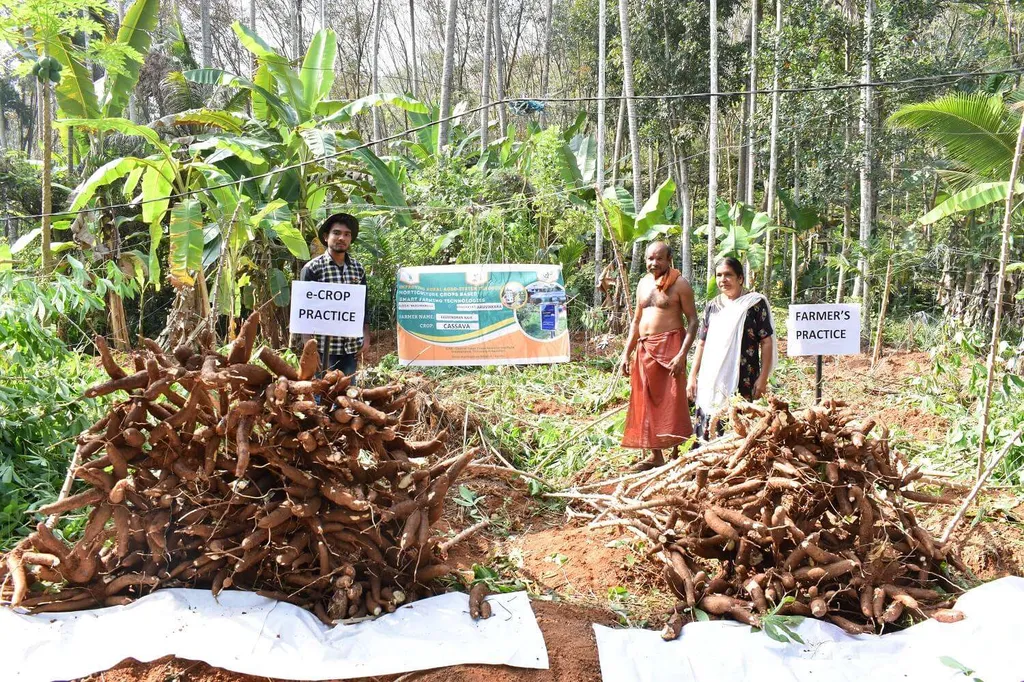
In the heart of India’s lush Kerala region, a groundbreaking review is set to reshape the way we think about soil moisture monitoring in agriculture. Published in the journal ‘Farming System’, the research led by R. Sreeram from the Department of Computer Science and Engineering at Amrita Vishwa Vidyapeetham, Amritapuri, offers a comprehensive look at how advanced technologies are revolutionizing smart agriculture.
The review, titled “Soil moisture monitoring technologies in smart agriculture: A comprehensive review,” delves into the critical role of soil moisture monitoring in modern farming. With climate change, water scarcity, and global food demand putting increasing pressure on agricultural systems, the need for innovative, data-driven approaches has never been more urgent. “This review aims to address major global challenges, including food security, water scarcity, and climate variability,” Sreeram explains. “By synthesizing advancements in Internet of Things (IoT), machine learning (ML), remote sensing, and related technologies, we hope to elucidate their contributions to precision farming, resource optimization, and sustainable agricultural practices.”
The commercial implications of this research are vast. Precision farming, enabled by these advanced technologies, promises to optimize resource use, reduce costs, and increase crop yields. For instance, IoT devices can provide real-time soil moisture data, allowing farmers to make informed decisions about irrigation, while machine learning algorithms can predict future water needs based on historical data and weather forecasts. “The integration of these technologies can lead to significant improvements in crop productivity and environmental resilience,” Sreeram notes.
Moreover, the review highlights the potential for these technologies to enhance soil quality. By monitoring soil moisture levels, farmers can prevent over-irrigation, which can lead to soil degradation, and under-irrigation, which can stunt crop growth. This not only improves crop yields but also promotes sustainable farming practices, benefiting both farmers and the environment.
The research also identifies key innovations and research gaps, providing a roadmap for future developments in the field. “We hope this review will guide researchers, policymakers, and agritech stakeholders toward scalable, inclusive solutions,” Sreeram says. “By highlighting future directions for equitable and sustainable agricultural transformation, we aim to contribute to a more resilient and productive agricultural sector.”
As the world grapples with the challenges of climate change and food security, this research offers a beacon of hope. By harnessing the power of advanced technologies, we can transform soil moisture monitoring and pave the way for a more sustainable and productive future in agriculture. The review, with its comprehensive analysis of current trends, methodologies, and technological integrations, is a significant step in this direction.