
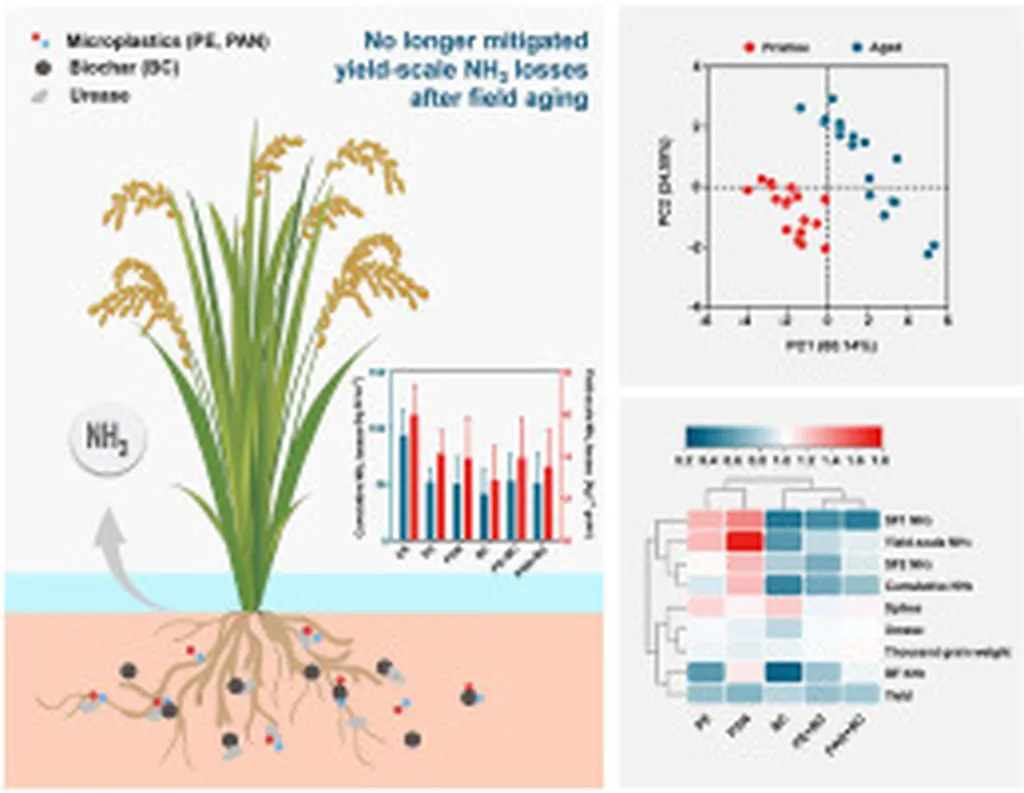
In the heart of our global food supply, a silent invader is making its presence known. Nano and microplastics (NPs/MPs), those tiny fragments of plastic less than five millimeters in size, have infiltrated paddy fields, the very ecosystems that nurture the staple food for half of the world’s population. A recent study published in *Earth Critical Zone* sheds light on the alarming impacts of these particles on paddy soils and rice plants, raising critical questions about food safety and agricultural sustainability.
The research, led by Tharanga Bandara from the La Trobe Institute for Sustainable Agriculture and Food at La Trobe University, Australia, reveals that NPs/MPs enter paddy soils through various means, including the application of biosolids, organic amendments, flooding, irrigation, plastic mulching, and atmospheric deposition. Once in the soil, these particles wreak havoc on its physical, chemical, and biological properties. They increase soil aggregation and water content while decreasing bulk density, enhance soil carbon and greenhouse gas emissions, and boost the bioavailability of pollutants. Moreover, they provide habitats for pathogens and decrease microbe diversity, ultimately hindering the growth and physiology of rice plants.
“The introduction of NPs/MPs into paddy soils is a complex issue that affects not only the soil health but also the rice plants’ growth and nutrient uptake,” Bandara explains. “The particles can increase oxidative damage and reduce antioxidant activity in rice plants, leading to decreased yields and potentially impacting the food supply for billions of people.”
The study also highlights that soils can be further contaminated with various pollutants, such as toxic elements, antibiotics, pathogenic microbes, and pesticides, which adhere to the surfaces of NPs/MPs. This adherence affects the bioavailability of these pollutants, further harming the growth and metabolisms of rice plants. The impact of contamination is influenced by many factors, including the type, size, and dose of NPs/MPs, paddy soil properties and cultivation history, environmental factors like drought, and the rice cultivar.
The commercial implications for the agriculture sector are significant. As the world’s population continues to grow, the demand for rice and other staple crops will only increase. However, the presence of NPs/MPs in paddy soils threatens to reduce yields and compromise food safety. Farmers, agricultural businesses, and policymakers must grapple with these challenges and seek innovative solutions to mitigate the impacts of these tiny invaders.
Bandara emphasizes the need for further research to address the current knowledge gap. “Future studies should focus on minimizing the research gap in actual field conditions to protect the health of over 3 billion human consumers,” she says. “Understanding the interaction between paddy soil systems and NPs/MPs, as well as their associated toxic pollutants, is crucial for developing effective strategies to safeguard our food supply.”
As the agricultural sector confronts this emerging threat, the findings of this study serve as a wake-up call. The infiltration of NPs/MPs into paddy soils is not just an environmental issue but a pressing food security concern. The research underscores the urgent need for collaborative efforts among scientists, farmers, and policymakers to develop sustainable practices that ensure the health of our soils, the vitality of our crops, and the security of our food supply.