
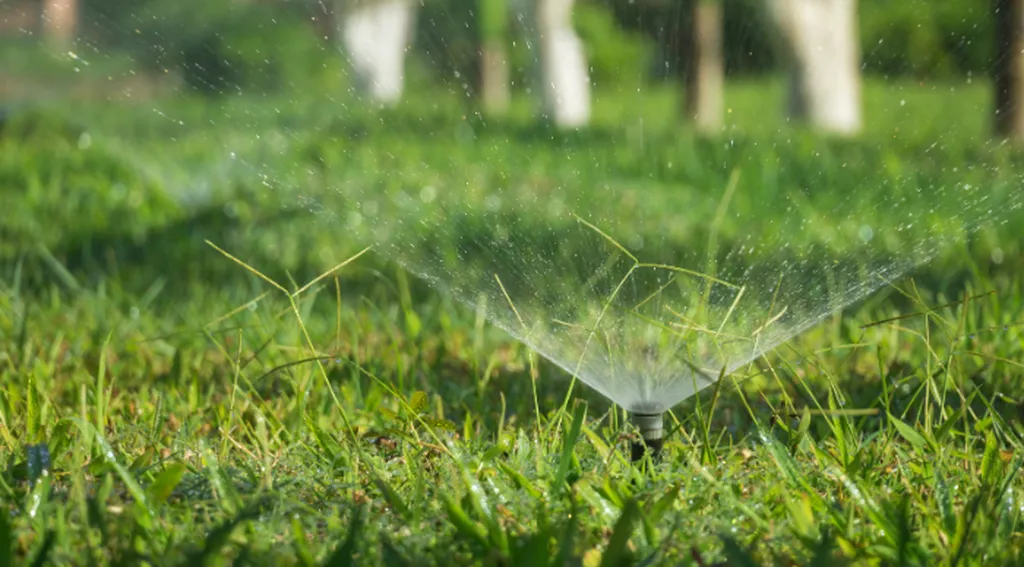
In the heart of Morocco’s Haouz plain, a critical battle is being waged—not against invaders, but against a far more insidious foe: water scarcity. As climate change tightens its grip on arid and semi-arid regions, farmers are grappling with the dual challenge of maintaining productivity while conserving precious water resources. A recent study published in *BIO Web of Conferences* offers a glimmer of hope, demonstrating how precision irrigation can dramatically reduce water waste and boost agricultural sustainability.
The research, led by Bouswir Zaineb of the Agrobiotech Center at Cadi Ayyad University, focuses on winter wheat cultivation under two contrasting irrigation regimes: one with water stress and one without. Over two growing seasons (2016-2017 and 2017-2018), the team employed the SIMDualKc model to quantify deep percolation losses—a process where water drains too deeply into the soil, bypassing the crop’s root zone and contributing to groundwater recharge but also representing a significant inefficiency in irrigation.
“Traditional irrigation practices often lead to substantial water losses through deep percolation,” Zaineb explains. “Our study revealed that these losses ranged from 203 to 435 mm in non-stressed plots and from 203 to 307 mm in stressed plots. That’s a staggering amount of water that could be better utilized by the crops.”
The SIMDualKc model proved to be a game-changer. By simulating optimized irrigation schedules, the researchers achieved an average reduction in deep percolation losses of 88% under both regimes. Moreover, irrigation volumes were slashed by an average of 45% compared to farmer-applied amounts, all while ensuring that crops received adequate water.
The commercial implications of this research are profound. In regions where water is a scarce and valuable resource, optimizing irrigation could mean the difference between profit and loss for farmers. “This isn’t just about saving water; it’s about making agriculture more resilient and economically viable in the face of climate change,” Zaineb notes.
The study also underscores the importance of adopting precision agriculture technologies. As water resources continue to dwindle, farmers will need tools like the SIMDualKc model to make data-driven decisions about irrigation. This shift could lead to a more sustainable agricultural sector, one that balances productivity with environmental stewardship.
Looking ahead, the research suggests that future developments in irrigation technology and modeling could further enhance water use efficiency. By integrating real-time data and advanced analytics, farmers may soon be able to fine-tune their irrigation practices with even greater precision, minimizing waste and maximizing yields.
In the fight against water scarcity, every drop counts. This study offers a compelling case for why irrigation optimization should be a cornerstone of modern agriculture, particularly in arid and semi-arid regions. As the global population grows and climate change intensifies, the lessons learned in Morocco’s Haouz plain could very well shape the future of farming worldwide.