
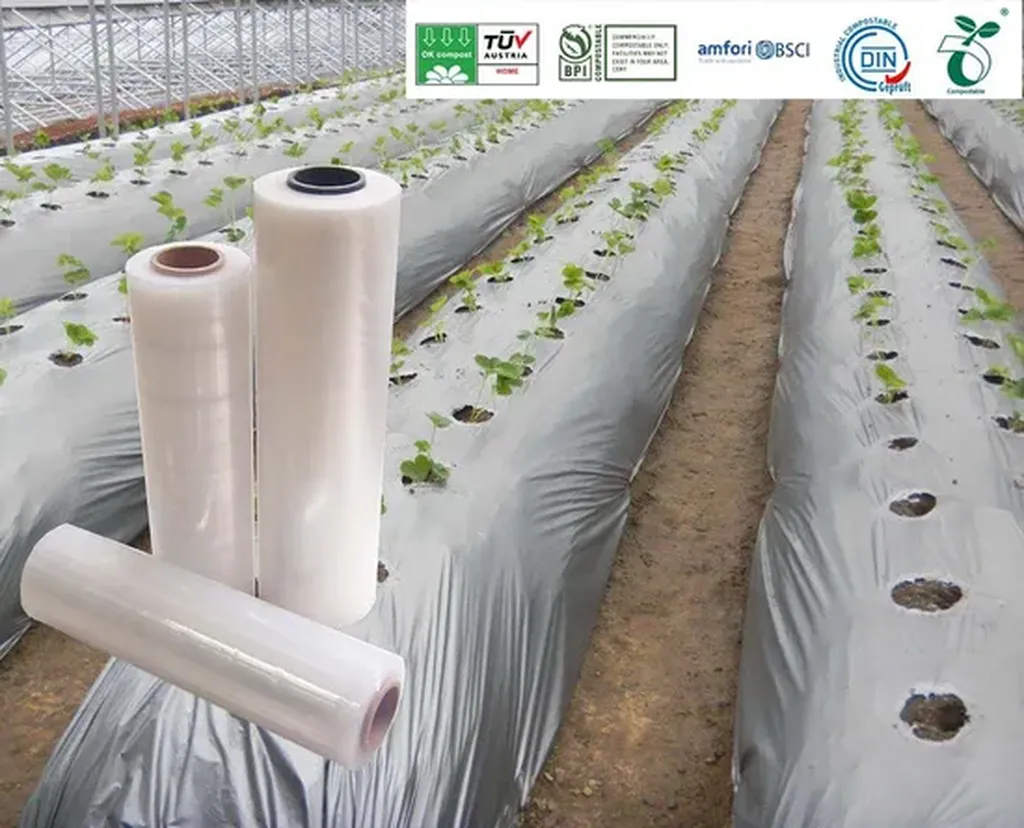
In the quest for sustainable materials, researchers are turning their attention to Poly (butylene adipate‐co‐terephthalate) (PBAT), a flexible, industrially compostable polyester with significant potential for the agriculture sector. A recent study published in *Materials & Design* delves into the applications, performance tuning, and emerging directions of PBAT, offering insights that could revolutionize agricultural films and packaging.
PBAT’s compatibility with conventional processing methods makes it an attractive candidate for agricultural applications, such as mulch films and greenhouse covers. However, its broader adoption has been hindered by cost, limited mechanical performance, and uncertainties around its degradation outside industrial composting environments. The study, led by Tina Fathalipour Ardabili from the Material Technology & Environmental Research (MATTER) Lab at the University of Northern British Columbia, aims to address these challenges by exploring functional PBAT systems and advanced processing techniques.
“PBAT offers a promising alternative to traditional plastics, but we need to enhance its functionality and scalability to make it truly viable for the agriculture sector,” Ardabili explains. The research highlights the potential of compatibilizer-assisted multifunctional blends and AI-guided blown-film optimization to improve PBAT’s performance. These innovations could lead to stronger, more durable agricultural films that degrade more efficiently in real-world conditions.
One of the most exciting aspects of the study is its focus on functional PBAT systems, including antimicrobial, sensing, and self-healing properties. These advancements could significantly extend the lifespan and effectiveness of agricultural films, reducing waste and improving crop yields. “Imagine a mulch film that not only protects crops but also monitors soil health and degrades harmlessly once its job is done,” Ardabili envisions. “This is the kind of innovation that could transform sustainable agriculture.”
The study also addresses the critical issue of environmental credibility. By proposing a unified validation framework that distinguishes certified industrial compostability from marine and ambient biodegradation, the research aims to provide clearer guidelines for the development and deployment of PBAT technologies. This framework could help farmers and agricultural businesses make more informed decisions about the materials they use.
Looking ahead, the research identifies several testable milestones to guide the translation of laboratory innovations into industrial deployment. These include achieving at least 80% elongation retention with a 3-log antibacterial efficacy, which could set new standards for the performance and sustainability of agricultural films.
As the agriculture sector continues to seek sustainable solutions, the insights from this study offer a roadmap for the development of functional, scalable, and environmentally credible PBAT technologies. By linking multi-scale structure, processing control, and application-specific performance targets, the research paves the way for a new generation of materials that could reshape the future of sustainable agriculture.