
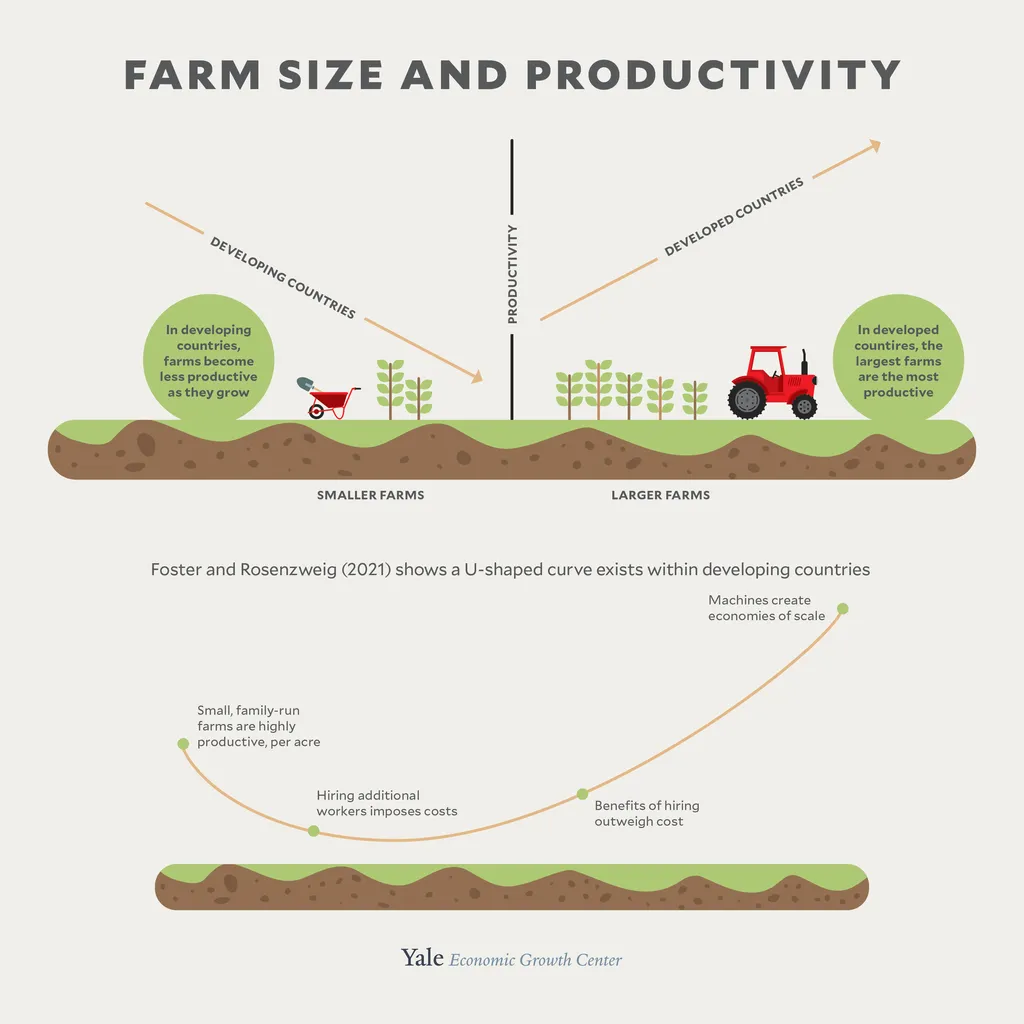
In the ongoing debate over the future of agriculture, a new study published in *Earth Critical Zone* sheds light on the complex interplay between farm size, productivity, and sustainability. Led by Chenchen Ren from the Department of Global Ecology at Carnegie Science, Stanford, the research challenges the conventional wisdom that larger farms are inherently more efficient and sustainable. Instead, it reveals a nuanced landscape of trade-offs that could reshape agricultural policies and practices worldwide.
The study highlights the critical role of smallholder farms, which, despite their limitations in mechanization and technology, contribute significantly to food security, poverty alleviation, and biodiversity. “Smallholder farms are often overlooked, but they are the backbone of agricultural diversity and resilience,” Ren explains. “They play a pivotal role in maintaining crop diversity and supporting local ecosystems, which are essential for long-term sustainability.”
However, the research also acknowledges the potential benefits of scaling up farm size. Larger farms can achieve higher productivity and resource use efficiency, which could lead to sustainable agricultural intensification, particularly in regions dominated by smallholder systems. “Transitioning to large-scale farming could offer opportunities for increased efficiency and reduced environmental impact,” Ren notes. “But this transition is not without its challenges and potential unintended consequences.”
The study identifies several risks associated with large-scale farming, including biodiversity loss, increased market volatility, and adverse environmental impacts. These findings underscore the need for tailored strategies that consider the unique characteristics and challenges of different farm sizes. “One size does not fit all in agriculture,” Ren emphasizes. “We need to develop context-specific approaches that balance productivity, economic viability, and sustainability.”
The commercial implications of this research are significant. For the agriculture sector, understanding the trade-offs between farm sizes can inform investment decisions, policy-making, and technological innovations. Farmers, agribusinesses, and policymakers must navigate these complexities to optimize agricultural outcomes and ensure sustainable development.
As the global population continues to grow, the pressure on agricultural systems will intensify. This study provides a timely reminder that the path to sustainable agriculture is not straightforward. It requires a careful consideration of the multifaceted role of farm size and the development of strategies that harness the strengths of both smallholder and large-scale farming systems.
In the words of Ren, “The future of agriculture lies in finding the right balance. By understanding the trade-offs and tailoring our approaches, we can create a more sustainable and resilient agricultural system that meets the needs of current and future generations.”