
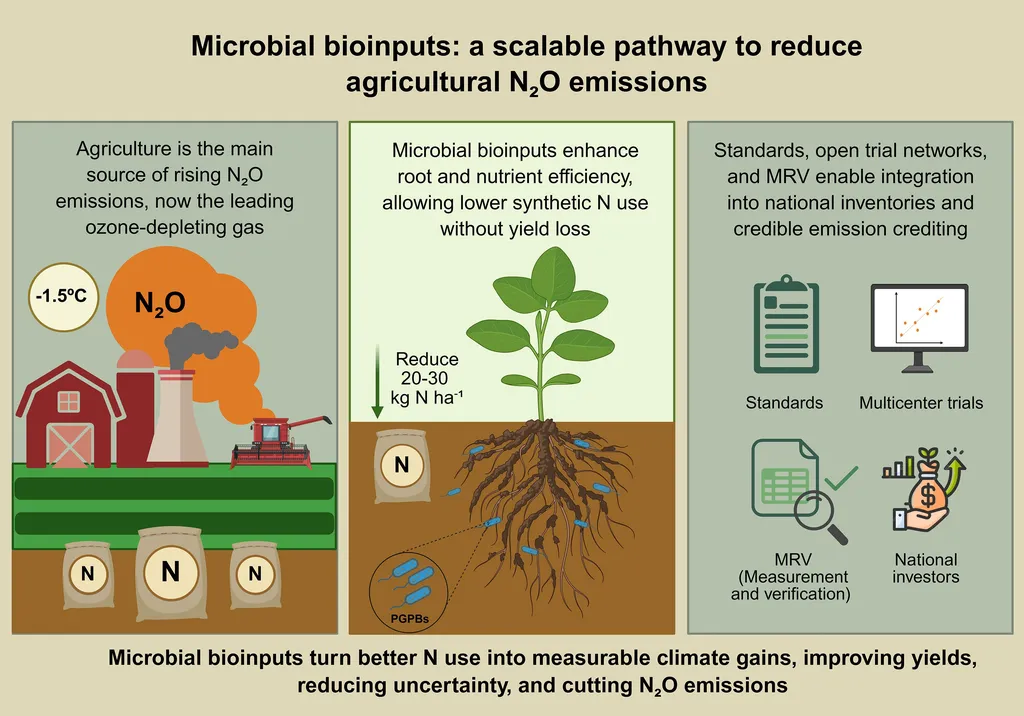
In the quest to reduce the environmental impact of vegetable production, researchers have identified a suite of best management practices (BMPs) that can significantly cut nitrous oxide (N2O) emissions without compromising crop yields or profitability. A comprehensive review published in the *Journal of Agriculture and Food Research* synthesizes current knowledge on mitigating N2O emissions, offering practical strategies for farmers and agronomists to adopt.
Nitrous oxide, a potent greenhouse gas with a global warming potential 273 times that of carbon dioxide, is a byproduct of intensive vegetable farming. The reliance on synthetic nitrogen fertilizers, frequent irrigation, and low fertilizer recovery rates in vegetable production systems contribute to elevated N2O emissions. “Excessive nitrogen application, poor synchronization between nitrogen supply and crop demand, and intensive irrigation are the primary drivers of elevated N2O emissions in vegetable cultivation,” explains lead author Lokeshwar Kesamreddy, a researcher at the Department of Agronomy, Tamil Nadu Agricultural University, and the World Vegetable Center.
The review highlights several BMPs that have proven effective in reducing N2O emissions. These include the use of nitrification inhibitors, optimized fertilizer rates, timing and placement, precision fertigation, negative pressure irrigation, and biochar amendments. “The effectiveness of these strategies varies with soil type, climate, and crop type,” notes Kesamreddy. “However, when implemented as part of coordinated management efforts, their impact is significantly enhanced.”
For the agriculture sector, these findings present a valuable opportunity to reduce the carbon footprint of vegetable production while maintaining economic viability. By adopting integrated nitrogen management practices, farmers can enhance nitrogen use efficiency, sustain crop productivity, and contribute to climate change mitigation. “Single interventions can reduce emissions, but their effectiveness is strongly enhanced when implemented as part of coordinated management efforts,” Kesamreddy emphasizes.
The research also identifies knowledge gaps and areas for future investigation. System-level assessments, long-term field studies, and region-specific guidelines are needed to support scalable, climate-smart vegetable production. As the agriculture sector continues to grapple with the challenges of climate change, these findings offer a roadmap for reducing greenhouse gas emissions and promoting sustainable farming practices.
In the broader context, this research underscores the importance of holistic, integrated approaches to nitrogen management. By shifting from input-intensive practices toward precise, coordinated strategies, the agriculture sector can significantly reduce its environmental impact while maintaining productivity and profitability. As Kesamreddy and his colleagues continue to explore these topics, their work will undoubtedly shape the future of sustainable vegetable production.