
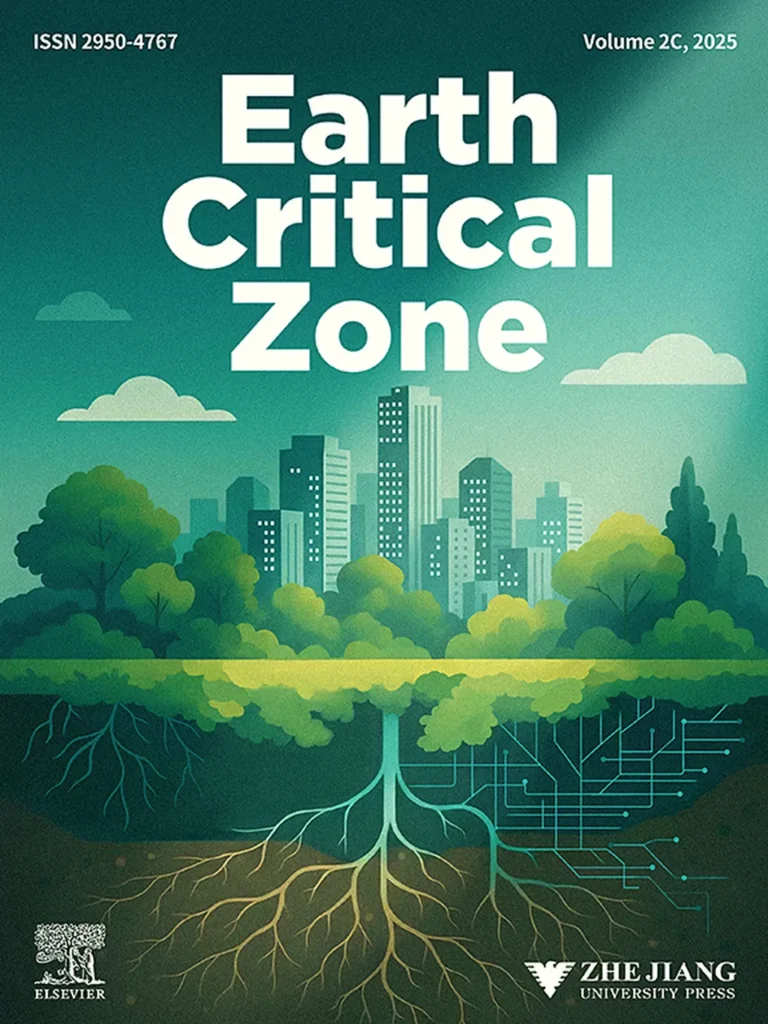
In the heart of our planet’s surface lies a dynamic and intricate realm known as the Earth Critical Zone (ECZ), where the atmosphere, water, life, and the Earth’s crust converge in a complex dance of processes that sustain life and shape our landscapes. Understanding this critical zone is not just an academic pursuit; it holds profound implications for agriculture, environmental protection, and even socioeconomics. A new open-access journal, “Earth Critical Zone,” has been launched to delve into these interconnected processes, offering a platform for scientists and researchers to share their findings and innovative ideas.
The ECZ is a multifaceted system that influences soil health, plant nutrient cycling, hydrology, and ecology. By comprehending these processes, we can make significant strides in sustainable agriculture, environmental conservation, and resource management. The journal aims to foster a collaborative environment where researchers can explore the dynamic landscapes of the ECZ and contribute to our collective understanding of this vital space.
One of the key areas of focus for the journal is soil health, which is crucial for agriculture. Healthy soils are the foundation of productive and sustainable farming systems. By understanding the processes that occur within the ECZ, researchers can develop new methodologies to improve soil fertility, enhance nutrient cycling, and promote sustainable agricultural practices. This, in turn, can lead to increased crop yields, improved food security, and more resilient farming systems.
The journal also aims to explore the hydrological processes within the ECZ, which are essential for water resource management. Understanding how water moves through the landscape, interacts with the soil, and supports plant growth can help us develop more effective strategies for water conservation, irrigation, and flood management. This is particularly important in the face of climate change, which is altering precipitation patterns and increasing the frequency of extreme weather events.
In addition to soil health and hydrology, the journal will also focus on the ecological processes within the ECZ. This includes understanding the interactions between plants, animals, and microorganisms, as well as the role of the ECZ in supporting biodiversity. By comprehending these processes, we can develop more effective strategies for conservation, restoration, and sustainable land management.
The launch of the “Earth Critical Zone” journal is a significant step forward in our understanding of the Earth’s surface processes. As lead author Jiabao Zhang from the State Key Laboratory of Soil and Sustainable Agriculture at the Chinese Academy of Sciences and the College of Environmental and Resource Sciences at Zhejiang University notes, “The ECZ is a complex and dynamic system that plays a crucial role in supporting life and shaping our landscapes. By understanding these processes, we can develop more effective strategies for sustainable agriculture, environmental conservation, and resource management.”
The journal invites impactful papers that explore the intricate processes occurring within the ECZ. By fostering a collaborative environment where researchers can share their findings and innovative ideas, the journal aims to shape the future of our understanding of the ECZ and its implications for agriculture, environmental protection, and socioeconomics. As we delve deeper into the dynamic landscapes of the ECZ, we open up new possibilities for sustainable development and a healthier planet.