
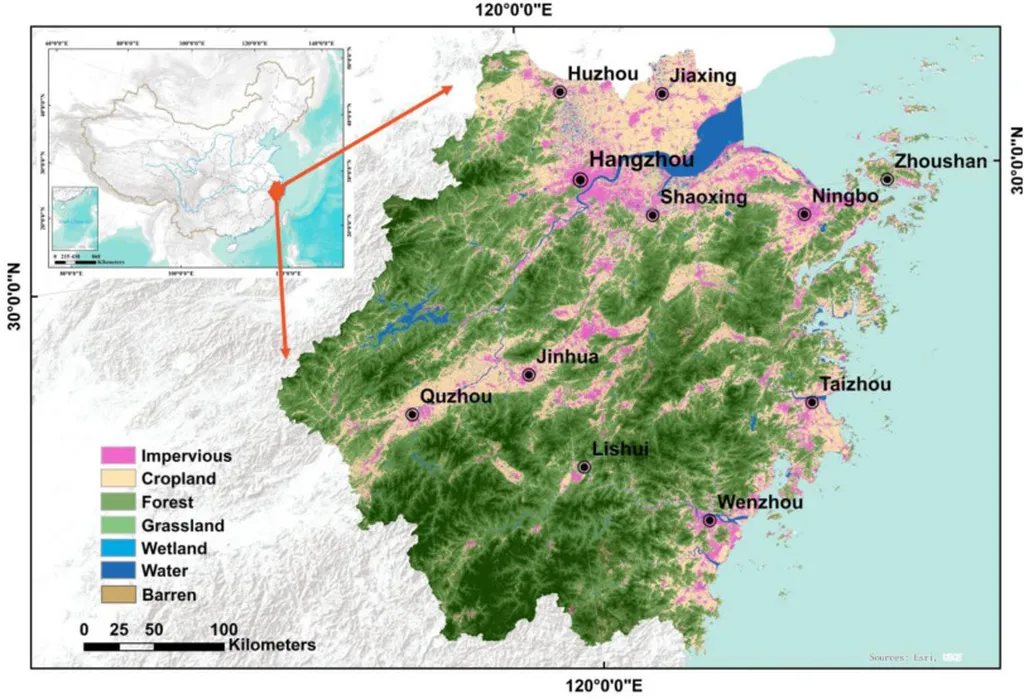
In the heart of China’s Zhejiang Province, a fascinating story of resilience and recovery is unfolding, one that could reshape our understanding of ecosystem restoration and hold significant implications for the agriculture sector. A recent study published in *Earth Critical Zone* has shed light on the critical role human activities play in accelerating the recovery of ecosystems following vegetation disturbances.
The research, led by Lingkun Chen from the State Key Laboratory of Soil Pollution Control and Safety at Zhejiang University, employed advanced remote sensing techniques and comprehensive data analysis to assess vegetation recovery over a 20-year period. The team utilized the Gross Ecosystem Product (GEP) as a holistic indicator, integrating key ecosystem services such as water conservation, soil conservation, air purification, and carbon storage.
The findings are both surprising and enlightening. “Most disturbed vegetation exhibited strong resilience, with 78.4% recovering within one to two years,” Chen explained. However, the study also revealed that 13.1% of the disturbed areas, primarily located in urbanized regions, failed to recover fully. This disparity underscores the complex interplay between natural resilience and human influence.
What sets this study apart is its focus on the role of human activities. Using a Random Forest model and SHAP analysis, the researchers identified anthropogenic factors, particularly nighttime light intensity and road proximity, as dominant drivers of recovery. “Human activities generally accelerated recovery by shortening recovery intervals,” Chen noted. In fact, the study found that without human intervention, the average recovery interval would increase substantially from 1.47 to 3.96 years.
For the agriculture sector, these findings are particularly relevant. Understanding how human activities can facilitate ecosystem recovery can inform more effective land management practices and sustainable agricultural strategies. As ecosystems recover more quickly, they can provide more robust ecosystem services, such as improved soil health, better water retention, and enhanced carbon sequestration. These benefits can translate into higher crop yields, reduced erosion, and more resilient agricultural systems.
The study also highlights the importance of integrating remote sensing and advanced data analysis techniques into agricultural and environmental management. By leveraging these technologies, farmers and land managers can gain deeper insights into ecosystem dynamics and make more informed decisions.
Looking ahead, this research could shape future developments in ecological restoration and sustainable ecosystem management. It underscores the need for a more nuanced understanding of human-environment interactions and the potential for human activities to positively influence ecosystem recovery.
As we grapple with the challenges of climate change and environmental degradation, studies like this offer a glimmer of hope. They remind us that with the right strategies and interventions, we can harness the power of human ingenuity to restore and protect our natural ecosystems. And in doing so, we can secure a more sustainable future for agriculture and the broader environment.