
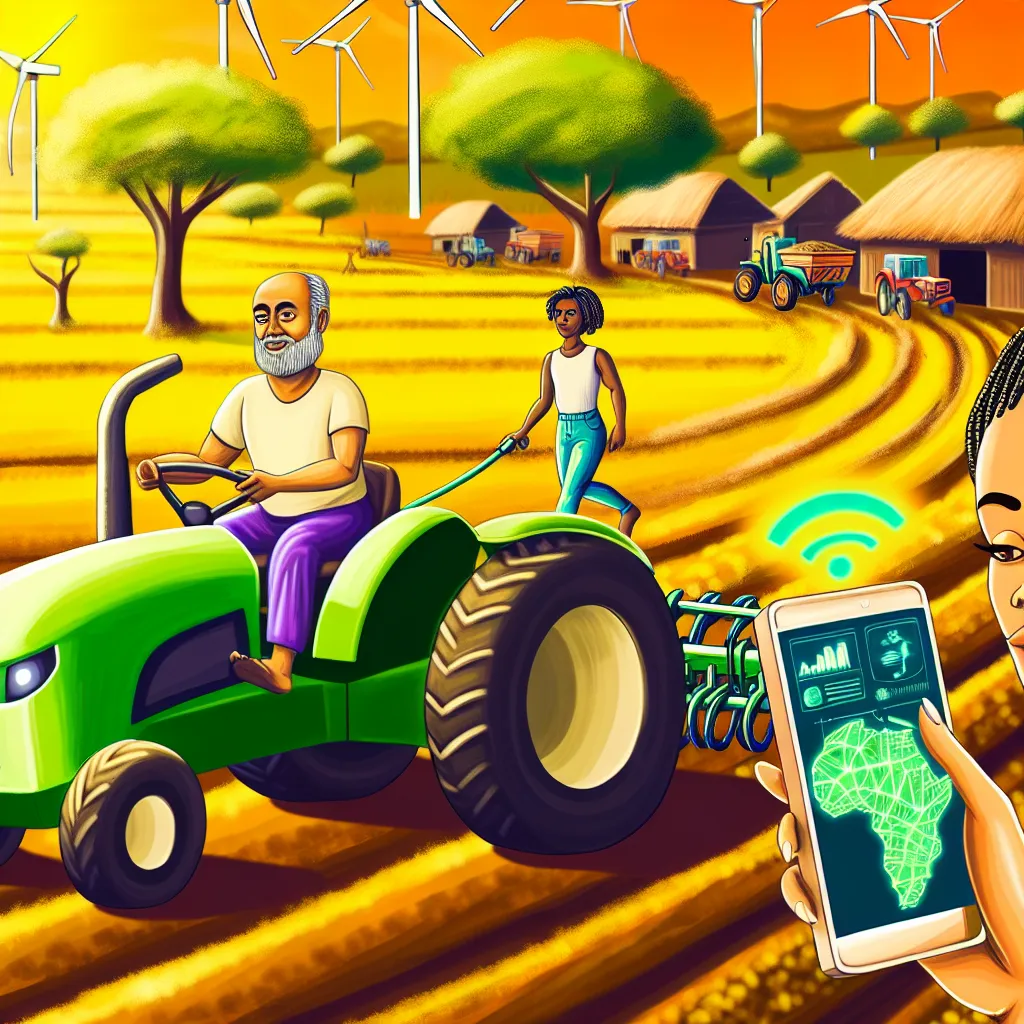
In the rapidly evolving landscape of artificial intelligence, the scale of large language models (LLMs) has been a point of pride, with their vast datasets and billions of parameters enabling human-like outputs. However, as these AI systems expand their footprint across various industries, the focus is shifting towards the quality and contextual relevance of the data that fuels them. This is particularly significant for AI in agriculture, a sector that has emerged as a priority for generative AI, especially in regions like Africa.
The African Union’s Continental AI Strategy, adopted in 2024, underscores the continent’s commitment to leveraging AI tools to achieve its Agenda 2063 development plan and the Sustainable Development Goals (SDGs). Similarly, domestic policy documents in multiple African, South Asian, and Latin American countries reflect a widespread commitment to using AI to accelerate agricultural modernization. The strategy aims to harness the power of AI to transform agriculture, a sector that is vital to the economies and food security of these regions.
The implications of this shift towards quality data are profound. For instance, in Africa, where agriculture accounts for a significant portion of the GDP and employment, the use of AI can lead to more efficient and sustainable farming practices. AI can help in predicting weather patterns, monitoring soil health, and optimizing the use of resources, thereby increasing crop yields and improving food security.
However, the effectiveness of these AI systems is contingent on the quality of the data they are trained on. As noted by experts, the reliability of AI systems significantly hinges on the quality and contextual relevance of their datasets. This means that for AI to be truly beneficial in agriculture, it must be trained on data that is specific to the region’s unique agricultural practices, climate, and soil conditions.
Moreover, the use of AI in agriculture also raises ethical and social considerations. For instance, there is a need to ensure that the benefits of AI are equitably distributed and that the technology does not exacerbate existing inequalities. There is also a need for transparency and accountability in the use of AI, to ensure that it is used in a manner that is fair, ethical, and respectful of human rights.
In conclusion, while the scale of large language models has been a point of pride, the focus is increasingly shifting towards the quality and contextual relevance of the data that fuels them. This is particularly significant for AI in agriculture, a sector that has emerged as a priority for generative AI, especially in regions like Africa. The use of AI in agriculture has the potential to transform the sector, but its effectiveness is contingent on the quality of the data it is trained on, and its use must be guided by ethical and social considerations.