
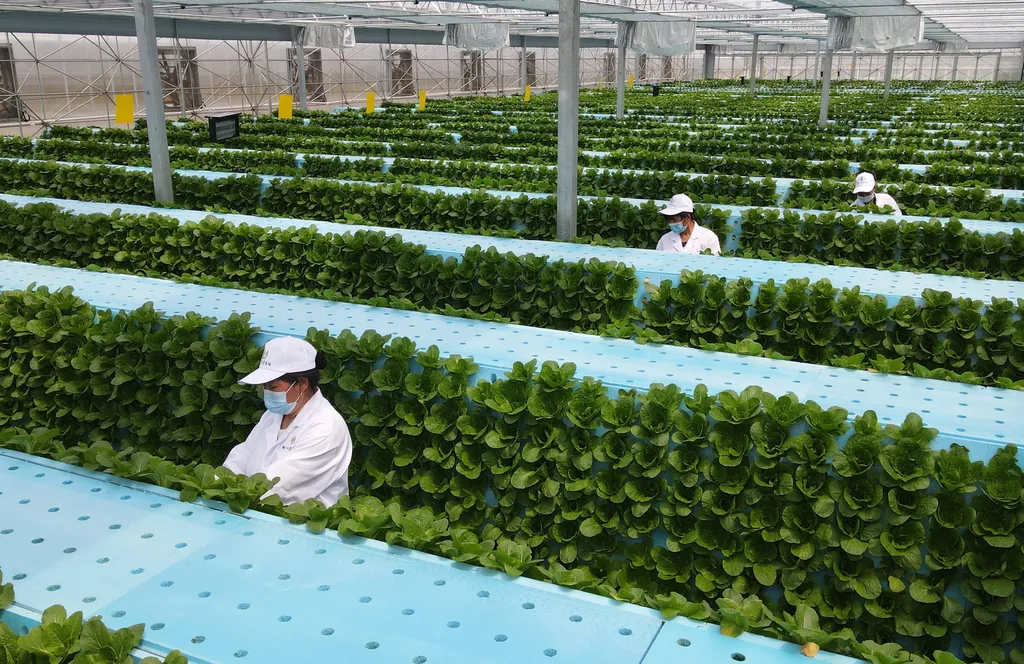
In the heart of China’s intensive agricultural regions, a pressing issue is taking root. Greenhouse vegetable production, a boon for crop yields, is also leaving an unseen mark on the soil beneath. A recent study published in the *Journal of Agriculture and Food Research* sheds light on this growing concern, offering insights that could reshape how farmers and policymakers approach soil health and nutrient management.
The research, led by Linjun Shen from the School of Ecology and Environmental Sciences at Yunnan University, delves into the long-term effects of intensive greenhouse cultivation. Shen and his team investigated greenhouse soils with varying cultivation histories, from less than a year to over a decade. Their findings reveal a complex interplay between nutrient inputs, antibiotic and heavy metal contamination, and soil health.
“Understanding the trade-offs between enhancing crop yields and maintaining soil health is crucial for sustainable agriculture,” Shen explains. The study introduces a novel approach to quantitatively assess contamination risks using the risk quotient (RQ) and a multi-factor heavy metal pollution index (Pt). This method allows for a more precise evaluation of the potential risks posed by soil contaminants to crop growth and soil health.
The results are eye-opening. RQ, a measure of antibiotic contamination, exhibited “pseudo-persistence,” accumulating in lower soil layers over time. Meanwhile, Pt, which assesses heavy metal contamination, increased continuously with cultivation duration and was predominantly retained in the plow pan layer. Soil nutrients were identified as the key drivers of antibiotic contamination risk, while soil texture played a dominant role in explaining heavy metal contamination risk.
Perhaps most alarming is the prediction that further increases in nutrient inputs could substantially intensify soil contamination risks. “A 10% increase in soil nutrient levels could elevate antibiotic contamination risk by more than 50%,” Shen warns. This finding underscores the urgent need for coordinated management of nutrient inputs and contamination risks in greenhouse agricultural systems.
The commercial implications of this research are significant. For the agriculture sector, the findings highlight the need for a more nuanced approach to nutrient management. Farmers may need to reconsider their current practices, balancing the need for high yields with the long-term health of their soils. This could involve adopting more precise nutrient application techniques, exploring alternative nutrient sources, or implementing soil remediation strategies.
Moreover, the study provides a scientific basis for policymakers to develop regulations and guidelines that promote sustainable agriculture. By understanding the key drivers of contamination risks, policymakers can design interventions that target the root causes of soil degradation.
Looking ahead, this research could shape future developments in the field of agritech. The study’s innovative approach to assessing contamination risks could be applied to other agricultural systems, providing valuable insights into the long-term impacts of intensive cultivation. Furthermore, the findings could spur the development of new technologies and practices aimed at mitigating contamination risks and enhancing soil health.
In the words of Linjun Shen, “This study provides scientific evidence for the coordinated management of nutrient inputs and contamination risks in greenhouse agricultural systems.” As the agriculture sector grapples with the challenges of feeding a growing population while preserving the environment, this research offers a timely and crucial contribution to the conversation.