
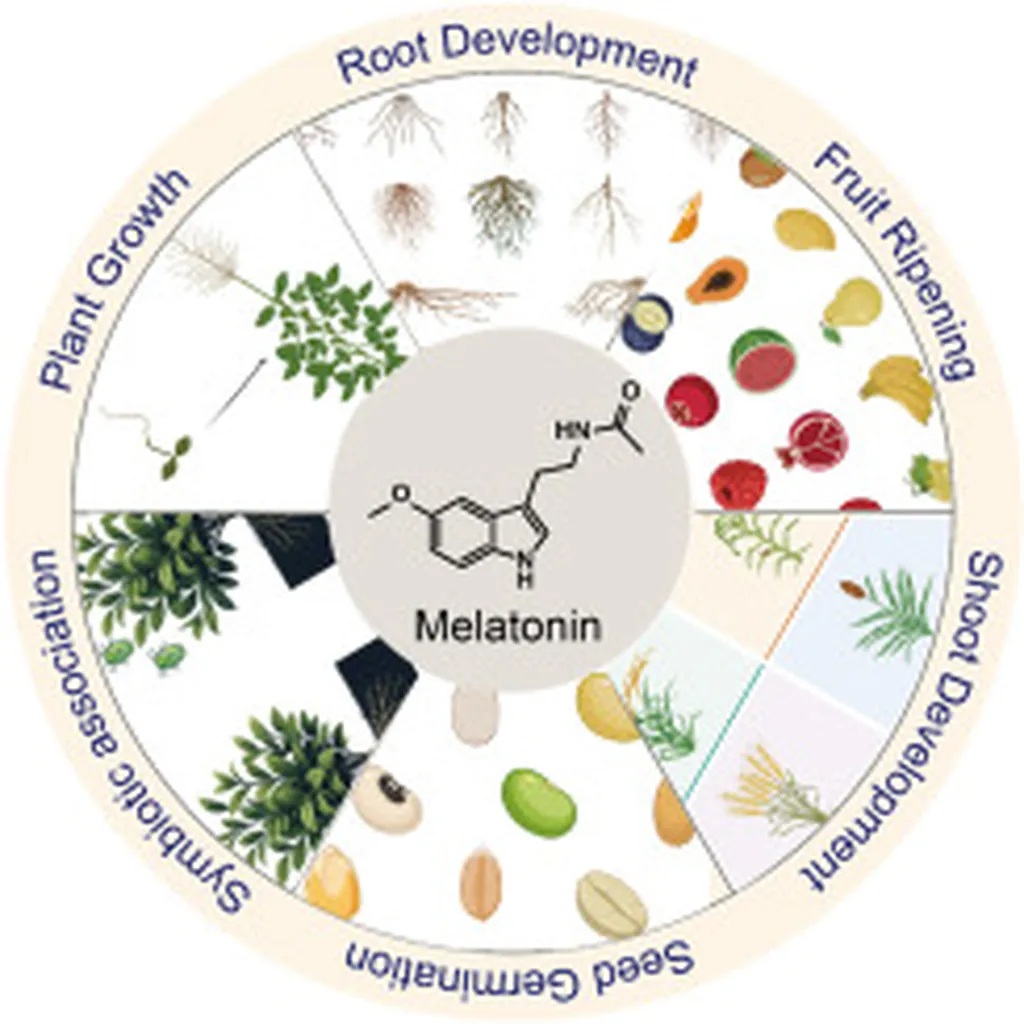
In the quest to reduce postharvest losses and enhance food security, a recent study published in *Biological Control* has uncovered a promising avenue for improving the efficacy of biocontrol agents in combating fungal pathogens in fruit. The research, led by Jinsong Leng of Guizhou University and Chongqing University of Arts and Sciences, explores the role of melatonin (ML) in bolstering the competitive ability of the biocontrol yeast Debaryomyces hansenii in wounded kiwifruit.
The study reveals that pretreating D. hansenii with 5 µM melatonin significantly enhances its survival and growth rate in kiwifruit wounds. This pretreatment reduces oxidative injury in the yeast, indicating an increased adaptability to the wound environment. “The melatonin-treated yeast exhibited a remarkable improvement in its ability to thrive in the challenging conditions of fruit wounds,” Leng explains. This adaptability translates into a stronger competitive edge against pathogenic fungi, including Botrytis cinerea, Penicillium expansum, and Alternaria alternata, which are notorious for causing postharvest decays.
The enhanced antioxidant capacity of D. hansenii, induced by melatonin, plays a pivotal role in this process. The study found that melatonin triggers the expression of several genes associated with stress tolerance, such as catalase 1, copper-zinc superoxide dismutase, and mitogen-activated protein kinase HOG1. These genes contribute to the yeast’s ability to mitigate oxidative stress, thereby improving its competitive fitness and biocontrol efficacy.
The commercial implications of this research are substantial. Postharvest losses due to fungal pathogens represent a significant economic burden for the agriculture sector. By enhancing the performance of biocontrol agents like D. hansenii, melatonin pretreatment could offer a sustainable and effective solution for reducing these losses. “This approach not only improves the shelf life of fruit but also aligns with the growing demand for environmentally friendly agricultural practices,” Leng notes.
The findings suggest that melatonin could be integrated into existing biocontrol strategies to create more robust and effective treatments against postharvest fungal decays. Future research could explore the application of melatonin in other biocontrol agents and fruit types, potentially revolutionizing the way we approach postharvest disease management.
As the agriculture sector continues to seek innovative solutions to enhance food security and sustainability, this research offers a promising glimpse into the future of biocontrol. By leveraging the natural properties of melatonin, we may unlock new possibilities for protecting our crops and ensuring a more resilient food supply.