
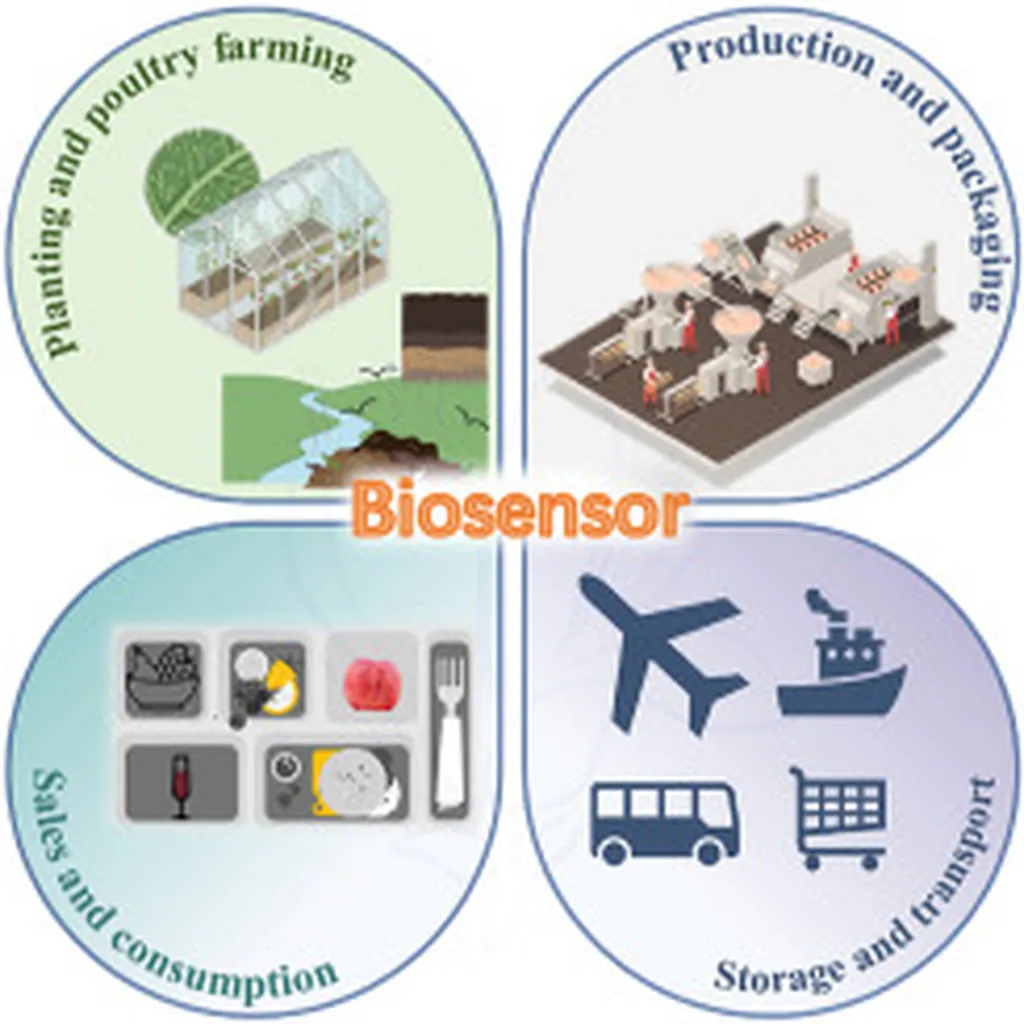
In the relentless battle against foodborne pathogens, researchers are arming themselves with next-generation immuno-biosensors, promising to revolutionize food safety and bolster the agriculture sector. A recent review published in *Talanta Open* delves into the cutting-edge advancements in immuno-based biosensors, highlighting their potential to transform pathogen detection and mitigate the devastating health and economic impacts of foodborne outbreaks.
The review, led by Sana Ahmed from the Smart Agriculture Innovation Center at Kyungpook National University in the Republic of Korea, underscores the urgent need for highly sensitive and rapid sensing technologies. Traditional methods, while effective, often fall short in terms of speed and feasibility, particularly in point-of-care (POC) settings. Immuno-based biosensors, with their ability to detect pathogens swiftly and sensitively, are stepping up to fill this critical gap.
“Immuno-based biosensors have evolved significantly, offering real-time, hyper-sensitive, and prompt monitoring capabilities,” Ahmed explains. These advancements are not just academic; they hold substantial commercial implications for the agriculture sector. By enabling rapid and accurate detection of pathogens, these technologies can prevent contamination, reduce waste, and safeguard public health, ultimately protecting the bottom line of agricultural businesses.
The review categorizes immuno-based biosensors into two main types: signal transduction-based and platform design-based. Signal transduction-based biosensors, such as electrochemical, optical, and quartz crystal microbalance technologies, offer real-time monitoring and high sensitivity. On the other hand, platform design-based biosensors, including lateral flow assays, microfluidic paper-based devices, and microchip-based devices, provide cost-effective and precise detection methods tailored for food safety and outbreak prediction.
Despite these advancements, challenges remain. Issues related to material variability, assay design complexity, and the need for trained operators can hinder reproducibility and efficiency. The review emphasizes the importance of addressing these challenges to fully realize the potential of immuno-biosensors in POC settings.
Looking ahead, the research suggests that the future of food pathogen detection lies in the integration of these advanced technologies. By overcoming current limitations and leveraging the strengths of both signal transduction-based and platform design-based biosensors, the agriculture sector can look forward to more robust, efficient, and cost-effective pathogen detection methods.
As the field continues to evolve, the insights from this review will undoubtedly shape future developments, driving innovation and enhancing food safety on a global scale. With the agriculture sector poised to benefit significantly from these advancements, the race towards more effective pathogen detection is not just a scientific endeavor but a commercial imperative.