
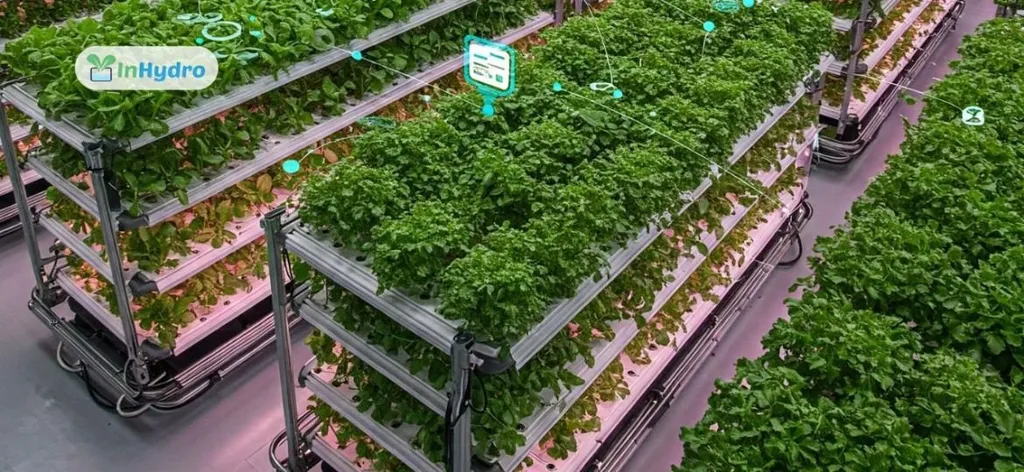
In the rapidly evolving world of agriculture, technology is playing an increasingly pivotal role in enhancing efficiency and productivity. A recent study published in the *Journal of Applied Computer Science and Technology* introduces Smart-Ponik, an innovative Internet of Things (IoT)-based system designed to revolutionize hydroponic farming. Led by Siti Aulia Rachmini from Universitas Sulawesi Barat, this research addresses critical challenges faced by hydroponic farmers, offering a glimpse into the future of precision agriculture.
Hydroponic farming, known for its soil-free cultivation method, has gained traction due to its efficient land use and high-quality yields. However, manual management often leads to inaccuracies in watering, nutrient regulation, and environmental monitoring, which can adversely affect crop productivity and quality. Smart-Ponik aims to mitigate these issues by integrating advanced sensors and automation technologies.
The system employs DHT22, soil moisture, and pH sensors to monitor key environmental parameters in real time. Data collected from these sensors is transmitted via the Message Queuing Telemetry Transport (MQTT) protocol to a central server, where it is visualized through a web-based dashboard. This real-time monitoring allows farmers to make informed decisions promptly. Additionally, the system sends automated notifications, ensuring that any deviations from optimal conditions are addressed immediately.
“Smart-Ponik minimizes manual errors and enhances environmental stability, which is crucial for consistent crop yields,” explains Rachmini. The research employed a Research and Development (R&D) method, encompassing needs analysis, system design, implementation, and testing. The results were impressive, with a 100% data transmission rate and an average latency of 0.00 seconds, although occasional delays of 0.01–0.02 seconds were noted due to network fluctuations. The automated control of pumps and fans achieved a 95% success rate, and black-box testing demonstrated a 100% functional pass rate.
The implications of this research for the agriculture sector are profound. By automating critical aspects of hydroponic farming, Smart-Ponik not only enhances productivity but also reduces the need for constant manual intervention. This can lead to significant cost savings and improved resource management, making hydroponic farming more accessible and sustainable.
As the agriculture industry continues to embrace technological advancements, systems like Smart-Ponik pave the way for more precise and efficient farming practices. The integration of IoT and automation technologies holds the promise of transforming traditional farming methods, ensuring higher yields and better quality crops. This research, published in the *Journal of Applied Computer Science and Technology* and led by Siti Aulia Rachmini from Universitas Sulawesi Barat, underscores the potential of IoT-based automation to revolutionize the agriculture sector, making it more resilient and productive in the face of growing global demands.