
In the heart of China’s Pinggu region, where peach orchards stretch across the landscape, a groundbreaking study is set to revolutionize how farmers assess iron levels in their crops. Traditional methods, while reliable, often come with a hefty price tag and require significant time and expertise. Enter a novel approach that combines digital imaging and artificial neural networks (ANN), promising a more cost-effective and scalable solution for precision agriculture.
The study, published in *Scientific Reports*, introduces a methodology that could transform the way farmers monitor and manage iron levels in peach leaves. By leveraging high-resolution images and advanced machine learning techniques, researchers have developed a model that achieves an impressive 86.7% accuracy in classifying iron levels. This breakthrough could have significant commercial impacts, enabling farmers to make data-driven decisions that enhance fruit quality and long-term productivity.
“Our approach not only reduces the cost and time associated with traditional diagnostic techniques but also provides a scalable solution that can be easily integrated into existing agricultural practices,” said Ze Luo, lead author of the study and a researcher at the School of Computer Science and Technology, Hengyang Normal University.
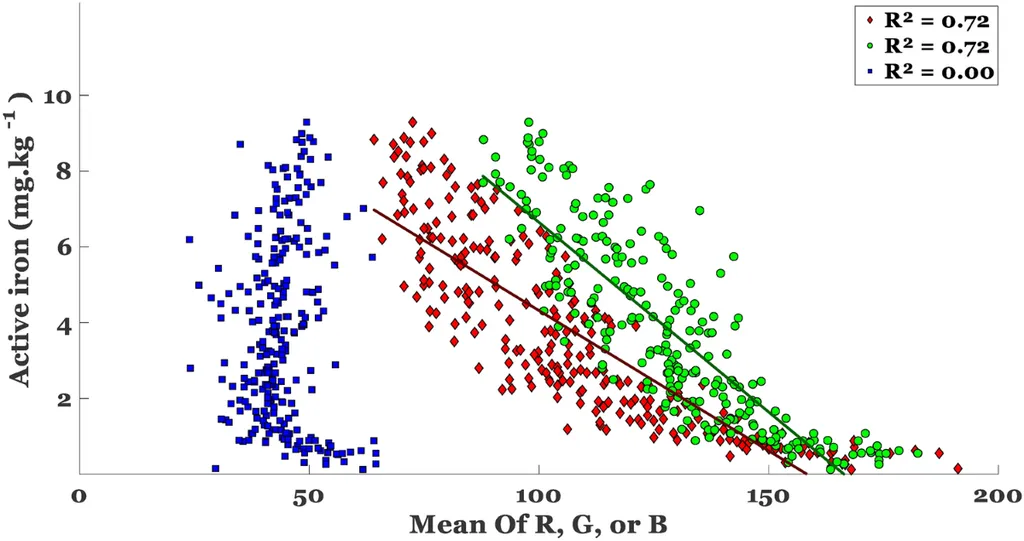
The research involved collecting 832 leaf samples and measuring their active iron content (Fe²⁺) using standard laboratory procedures. High-resolution images of the leaves were captured and analyzed across various color spaces, including RGB, HSV, and CIE Lab. Feature extraction and dimensionality reduction were performed using Principal Component Analysis (PCA), and classification of iron levels was conducted using a k-nearest neighbors (KNN) algorithm within a PCA-optimized ANN framework.
The resulting model, leveraging six principal components, demonstrated robust performance, with precision, recall, and F1-scores exceeding 86.5% for all classes. Receiver Operating Characteristic (ROC) curve analysis further confirmed the model’s reliability. However, the study noted that moderate iron levels were more prone to misclassification, often confused with either low or severe levels, highlighting the challenge of differentiating moderate cases.
This innovative approach holds considerable potential for evaluating iron status in peach leaves and could serve as a cost-effective and scalable tool for supporting precision agriculture practices. As the agriculture sector continues to embrace technology, such advancements could pave the way for more efficient and sustainable farming practices.
The study’s findings suggest that the proposed framework could be a game-changer for farmers, enabling them to monitor iron levels more accurately and efficiently. By integrating digital imaging and machine learning, this methodology offers a promising solution for enhancing fruit quality and long-term productivity in peach orchards.
As the agriculture sector continues to evolve, the integration of advanced technologies like digital imaging and artificial neural networks could redefine how farmers approach crop management. This research not only highlights the potential of these technologies but also underscores the importance of continuous innovation in the field of precision agriculture. With further refinement and widespread adoption, such methodologies could become a cornerstone of modern farming practices, ensuring better yields and sustainable agricultural development.