
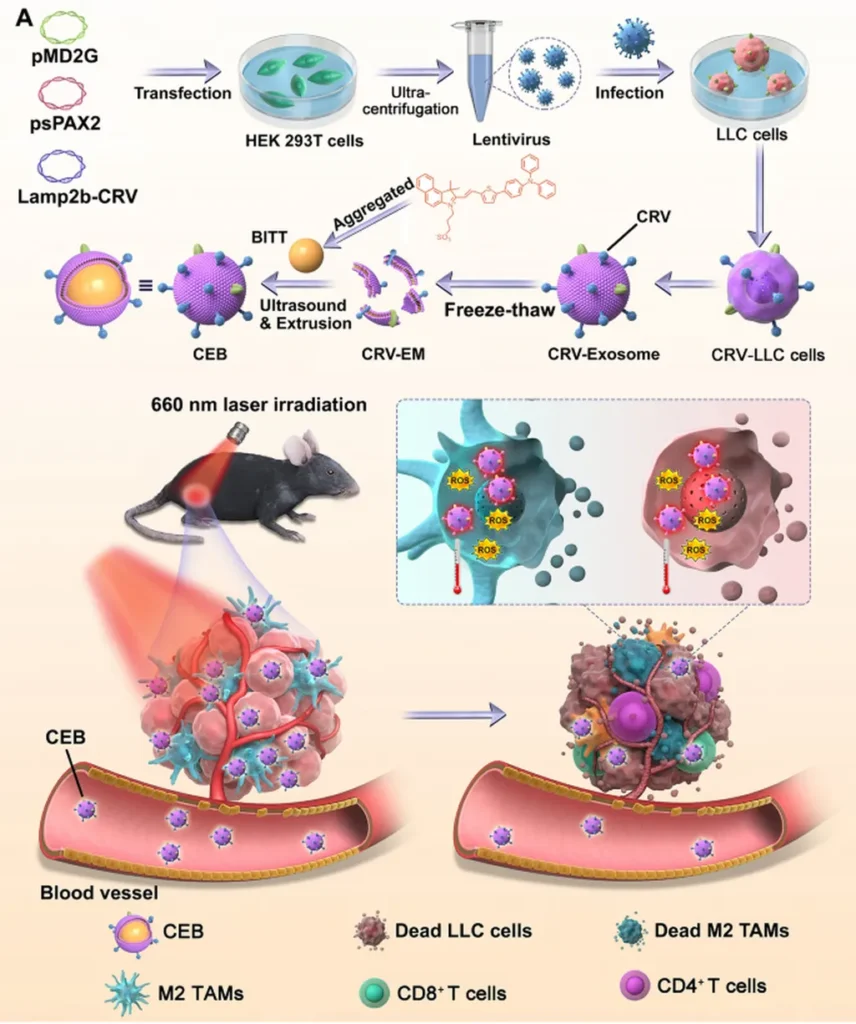
In a groundbreaking development that could revolutionize lung cancer therapy, researchers have unveiled a novel strategy that employs bioinspired AIE (Aggregation-Induced Emission) aggregates. This innovative approach, detailed in a recent study published in the *Journal of Nanobiotechnology*, offers a dual-pronged attack against cancer cells, potentially paving the way for more effective treatments.
The research, led by Yinshan Lin from the Guangzhou Municipal and Guangdong Provincial Key Laboratory of Molecular Target & Clinical Pharmacology, introduces a method that not only targets cancer cells but also enhances the body’s immune response. This “two birds with one stone” strategy leverages the unique properties of AIE aggregates, which become highly emissive when aggregated, making them ideal for both imaging and therapeutic applications.
“Our approach combines the precision of targeted therapy with the power of immunotherapy,” Lin explained. “By using bioinspired AIE aggregates, we can simultaneously deliver therapeutic agents directly to cancer cells and stimulate the immune system to attack the tumor.”
The implications of this research extend beyond the medical field, with potential applications in agriculture. The same principles that make AIE aggregates effective in cancer therapy could be adapted to create more efficient and targeted agricultural pesticides and herbicides. By delivering active ingredients directly to pests or weeds, this technology could reduce the environmental impact of agricultural chemicals and improve crop yields.
“This technology has the potential to transform the way we approach pest and weed control,” said a spokesperson for an agricultural technology firm. “By targeting only the organisms we want to eliminate, we can minimize collateral damage to beneficial species and the environment.”
The study’s findings open up new avenues for research and development in both medical and agricultural sectors. As scientists continue to explore the applications of AIE aggregates, we can expect to see more innovative solutions to complex problems.
“Our work is just the beginning,” Lin added. “We are excited to see how this technology will evolve and the impact it will have on various fields.”
With the publication of this research in the *Journal of Nanobiotechnology*, the scientific community is one step closer to unlocking the full potential of bioinspired AIE aggregates, offering hope for more effective cancer treatments and sustainable agricultural practices.