
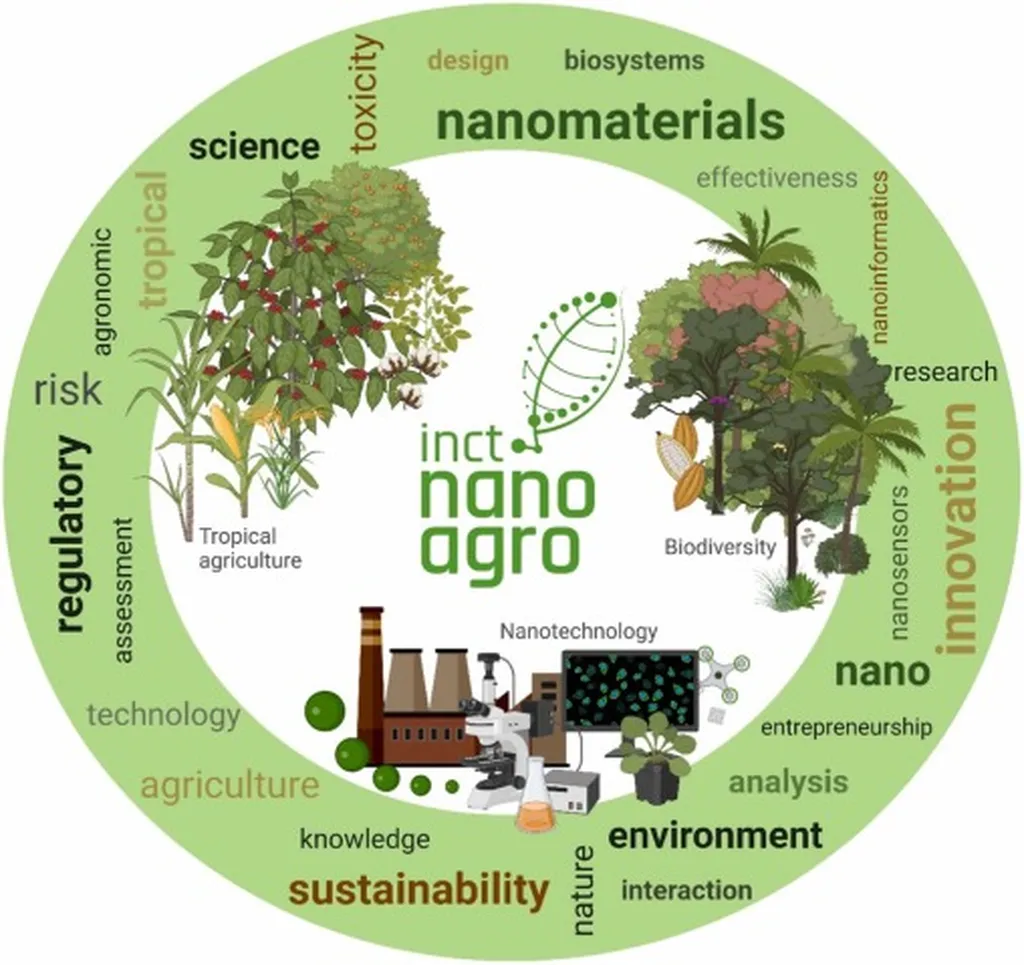
In the heart of Brazil, a team of researchers led by Marcia Regina Salvadori from the University of São Paulo’s Department of Microbiology is pioneering a green revolution in agriculture. Their work, published in *Discover Agriculture*, focuses on the synthesis of nanoparticles using biological matrices, offering a sustainable alternative to traditional agrochemicals.
The global agriculture sector is under immense pressure to feed a growing population, often resorting to excessive use of agrochemicals. This practice, while ensuring food security, has led to ecological instability, climate change, water scarcity, and soil degradation. The research team’s innovative approach aims to mitigate these issues by leveraging nanotechnology and biological matrices, such as bacteria, fungi, and plants, to create eco-friendly nanofertilizers and nanopesticides.
Nanofertilizers, as explained by Salvadori, “provide advantages over traditional methods, such as increasing crop productivity at low cost, enhancing plant growth, improving nutrient use, and boosting soil vitality.” These benefits are not just environmental but also economic, promising to increase crop yields and reduce production costs, a boon for farmers worldwide.
Nanopesticides, on the other hand, are gaining attention for their high efficacy and low toxicity. They offer targeted, slow, and controlled release of pesticides, reducing the need for frequent applications and minimizing environmental impact. This could significantly cut down on the billions of dollars spent annually on pesticides and their detrimental effects on ecosystems.
The commercial implications of this research are vast. The global nanofertilizers market size was valued at USD 1.6 billion in 2020 and is expected to grow at a CAGR of 12.1% from 2021 to 2028, according to a report by Grand View Research. Similarly, the nanopesticides market is also projected to witness substantial growth. This research could accelerate this growth, providing farmers with more sustainable and cost-effective options.
The use of biological matrices in the synthesis of nanoparticles is not only environmentally friendly but also cost-effective. Traditional chemical and physical methods of nanoparticle synthesis are high-cost and generate toxic by-products. In contrast, the green approach uses readily available biological resources, making the process more sustainable and affordable.
This research is a significant step towards sustainable agriculture, offering a glimpse into a future where technology and nature work hand in hand to feed the world. As Salvadori puts it, “This review considered the latest nanotechnological advances using biological matrices in the design of nanofertilizers and nanopesticides as safe alternatives to agrochemicals.” The potential of this research to shape the future of agriculture is immense, promising a greener, more sustainable, and more productive future for the sector.