
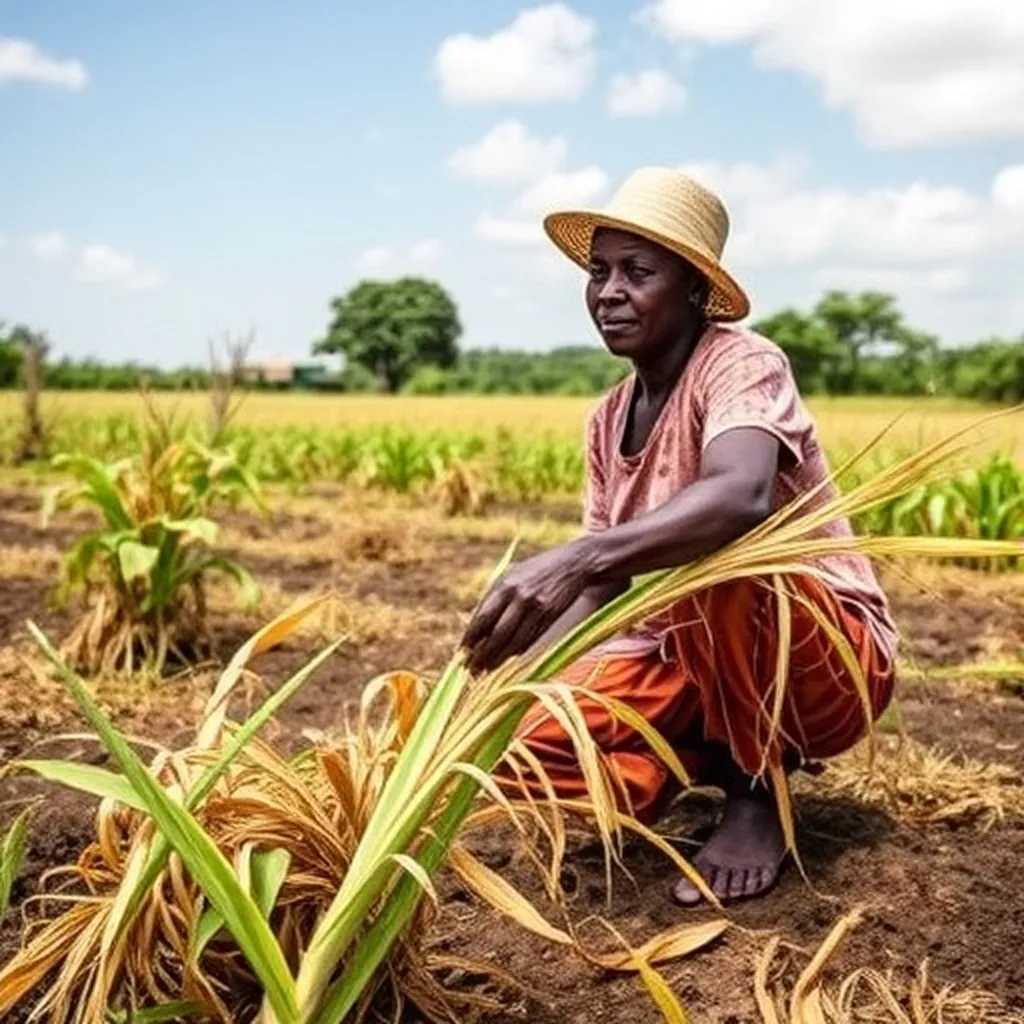
In the heart of Ghana’s Sissala East Municipality, a silent revolution is taking root, one that could very well shape the future of smallholder farming in the face of climate change. A recent study published in *Discover Agriculture* and led by Justice Aduko from the University of Business and Integrated Development Studies (UBIDS) sheds light on how climate change information is influencing adaptation strategies among smallholder crop farmers, with significant implications for the agriculture sector.
The study, which employed the Theory of Planned Behaviour (TPB), delved into the intricate ways farmers receive, understand, and act on climate information. The findings are clear: accessibility to climate change information increases farmers’ knowledge, preparation, and likelihood of adopting adaptation tactics. This is a game-changer for an industry grappling with the unpredictability of climate patterns.
“Our findings show that when farmers have access to relevant climate information, they are more likely to adapt their practices,” Aduko explained. “This could mean the difference between a bountiful harvest and a failed crop.”
The research highlighted that factors such as gender, education level, age, and farm size impact access to various forms of climatic information. This underscores the need for tailored approaches to disseminate information, ensuring that no farmer is left behind.
Radio and agricultural extension personnel emerged as the most prominent and trusted sources of climate change information. This is a crucial insight for policymakers and agricultural stakeholders looking to enhance the reach and effectiveness of their communication strategies.
The study also revealed that social interactions and personal experiences play a significant role in how farmers process climate information. This suggests that community engagement and peer-to-peer learning could be powerful tools in promoting adaptive behaviours.
The commercial impacts of these findings are substantial. By enhancing farmers’ access to and understanding of climate information, the agriculture sector can boost productivity, ensure food security, and mitigate the economic risks associated with climate change. This is not just about adapting to change; it’s about building resilience and seizing new opportunities.
Looking ahead, this research could shape future developments in agricultural extension services, climate information systems, and farmer training programs. It calls for a more inclusive, interactive, and farmer-centric approach to climate change adaptation.
As the world grapples with the realities of climate change, studies like this one offer a beacon of hope. They remind us that with the right information and support, farmers can adapt, thrive, and secure our collective future.