
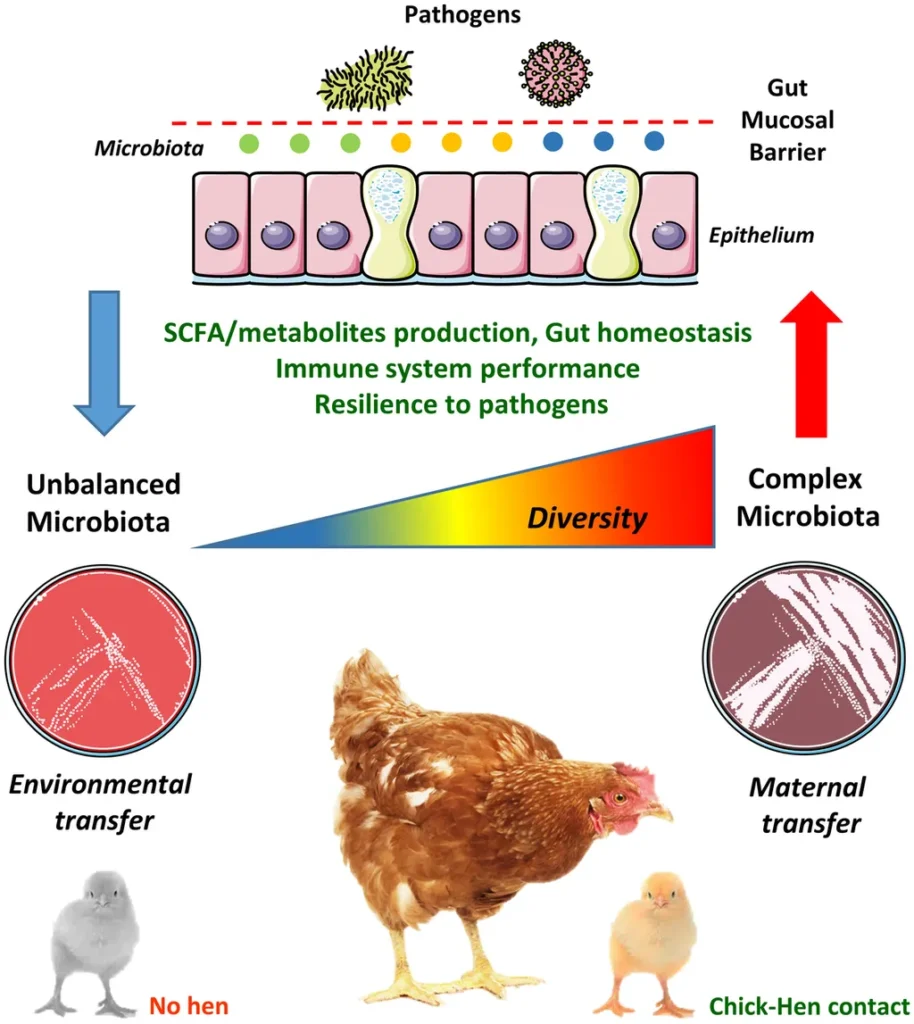
In the quest to enhance early-life development in chicks, a groundbreaking study published in the journal *Microbiome* has unveiled the pivotal role of gut microbiome-derived metabolites in promoting intestinal health. The research, led by Yu-Xuan Huang from the National Key Laboratory of Agricultural Microbiology at Huazhong Agricultural University, sheds light on how specific bacteria and their metabolites can bolster intestinal barrier function and antioxidant capacity in chicks.
The study focused on the early-life stages of broiler chicks, a critical period for intestinal development. By examining bacterial succession in the small intestine at four key time points, the researchers identified Bacillota as the dominant phylum after just three days post-hatch. At the genus level, Lactobacillus and Ligilactobacillus emerged as the most abundant, with their abundance positively correlated with small intestine weight.
One of the most significant findings was the identification of indole-3-carboxaldehyde (IAld) as a key metabolite derived from Lactobacillus gallinarum C2-16–2 (LG) and Lactobacillus salivarius D7-21 (LS). “We found that IAld can be converted into bioactive indole-3-carboxylic acid (ICA) in animals, which exhibited greater biological activity than IAld in vitro,” explained Huang. This discovery highlights the potential of these metabolites to enhance epithelial barrier function and antioxidant capacity in chicks.
The commercial implications of this research are substantial. By understanding the specific bacterial strains and metabolites that promote intestinal health, poultry farmers can develop targeted probiotic supplements and feed additives. These innovations could lead to healthier chicks, reduced mortality rates, and improved overall productivity in the poultry industry.
Moreover, the activation of AHR-NRF2 signaling by IAld and ICA opens new avenues for research into intestinal development and health. “Both IAld and ICA promoted tight junction protein expression and enhanced antioxidant capacity by activating AHR-NRF2 signaling,” noted Huang. This finding could pave the way for novel therapeutic strategies to combat intestinal disorders not only in chicks but potentially in other animals and even humans.
The study’s findings suggest that specific bacterial strains and metabolites serve as effective promoters of intestinal epithelial barrier function and antioxidant capacity during early intestinal development in chicks. As the agricultural sector continues to seek sustainable and efficient ways to enhance animal health, this research offers a promising path forward.
Published in *Microbiome* and led by Yu-Xuan Huang from the National Key Laboratory of Agricultural Microbiology at Huazhong Agricultural University, this study underscores the importance of gut microbiome-derived metabolites in early-life development. The implications for the agriculture sector are far-reaching, with potential benefits for poultry farmers and animal health researchers alike. As we delve deeper into the complexities of the gut microbiome, the possibilities for innovation and improvement in animal husbandry continue to grow.