
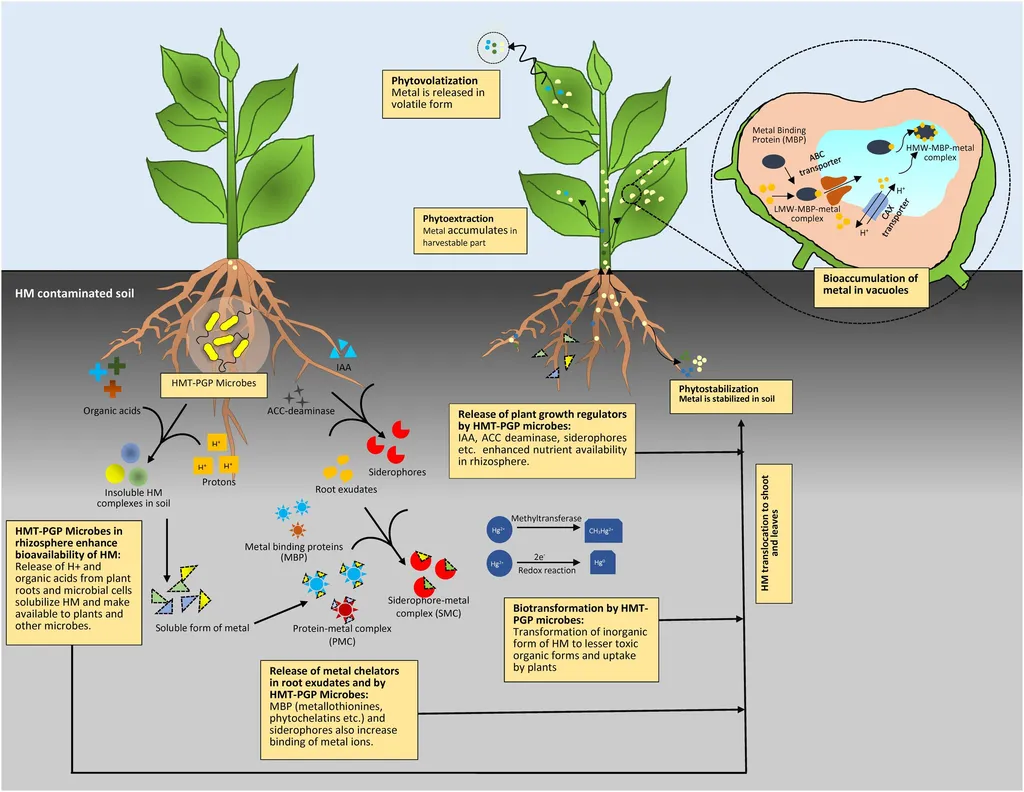
In the heart of India’s agricultural landscape, a tiny bacterium is making big waves in the fight against heavy metal contamination. Researchers have isolated a novel strain, Chitinophaga niastensis HMR31, from zinc-infested zones, which shows remarkable potential for biosorption and plant growth promotion. This discovery, published in *Scientific Reports*, could revolutionize sustainable agriculture and bioremediation practices.
Heavy metal contamination in soil is a silent menace, threatening agriculture, human health, and ecosystems. Traditional remediation methods are often costly and environmentally damaging. Enter Chitinophaga niastensis HMR31, a bacterium that not only absorbs heavy metals but also promotes plant growth. “This strain is a game-changer,” says lead author Ali Asger Bhojiya from the Department of Botany at U.S. Ostwal P.G. College, Mohanlal Sukhadia University. “It offers a sustainable, cost-effective, and eco-friendly approach to mitigate metal pollution.”
The bacterium’s biosorption efficiency follows an impressive order: Zn(II) > Fe(II) > Pb(II) > Cd(II) > Cr(III). Optimal biosorption occurs at pH 7.0, 35°C, with a contact time of 60 minutes, an initial metal concentration of 50 mg/L, and a biomass dose of 1.5 mg/mL. But the benefits don’t stop at biosorption. Chitinophaga niastensis HMR31 also exhibits multiple plant growth-promoting traits, including the production of indole-3-acetic acid (IAA), gibberellic acid (GA3), ammonia (NH3), hydrogen cyanide (HCN), siderophores, and the enzyme ACC deaminase. It also solubilizes phosphate, a crucial nutrient for plants.
In a pot experiment with Vigna radiata (mung bean) under zinc stress, inoculation with HMR31 alleviated toxicity and enhanced growth parameters. This dual functionality—biosorption and plant growth promotion—makes the strain a promising candidate for converting metal-contaminated sites into productive land.
The commercial implications for the agriculture sector are substantial. Farmers grappling with heavy metal contamination can look forward to a sustainable solution that not only cleans up their land but also boosts crop yields. “This research opens up new avenues for bioremediation and sustainable agriculture,” Bhojiya explains. “It’s a win-win situation for both the environment and farmers.”
The discovery of Chitinophaga niastensis HMR31 is a testament to the power of microbial solutions in addressing environmental challenges. As we grapple with the impacts of industrialization and intensive agriculture, such innovations offer hope for a greener, more sustainable future. The research, led by Ali Asger Bhojiya and published in *Scientific Reports*, is a significant step forward in the field of agritech and bioremediation.