
In the quest to safeguard water resources and ensure sustainable agriculture, a groundbreaking study published in *Ecological Informatics* has unveiled the potential of machine learning to revolutionize river pollution prediction. Led by Luisa S.R. Nogueira from the Graduate Program in Computational Modeling at the Federal University of Juiz de Fora, Brazil, the research offers a robust framework for forecasting the River Pollution Index (RPI) using advanced machine learning techniques.
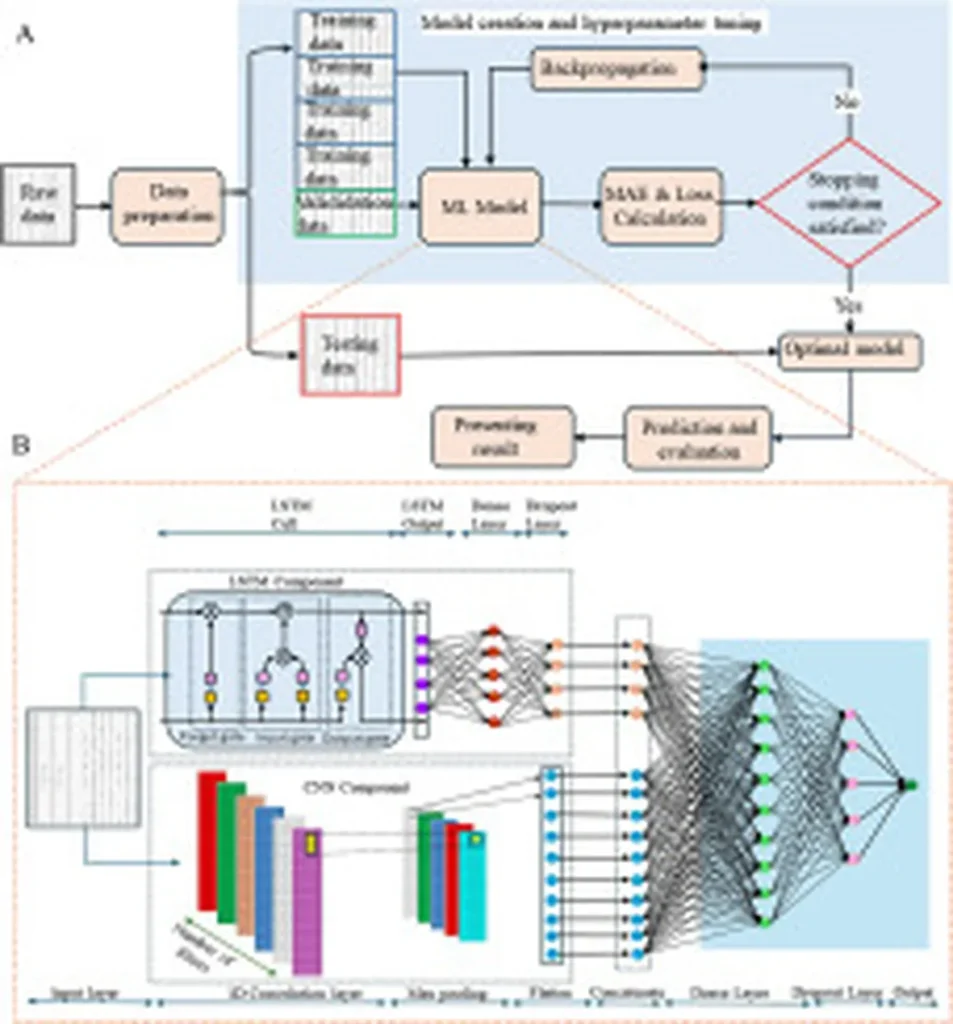
The study, which analyzed a comprehensive 36-year dataset from Taiwan’s Environmental Protection Administration, compared ensemble methods like CatBoost, XGBoost, and NGBoost against non-ensemble benchmarks such as Support Vector Machines (SVM), ElasticNet, and 1D Convolutional Neural Networks (CNN). The findings were striking: ensemble models consistently outperformed their non-ensemble counterparts, with CatBoost emerging as the most accurate and stable predictor.
“Ensemble methods excel at capturing the complex, non-linear interactions in water quality data,” Nogueira explained. “This capability is crucial for developing reliable predictive models that can inform decision-making in water resource management.”
The implications for the agriculture sector are profound. Accurate prediction of river pollution can help farmers and agribusinesses mitigate risks associated with water contamination, ensuring the safety and sustainability of irrigation practices. By leveraging these advanced machine learning models, stakeholders can make data-driven decisions that protect both crops and the environment.
“This research highlights the transformative potential of ensemble learning techniques in environmental monitoring,” Nogueira added. “By integrating these models into existing water management systems, we can enhance our ability to predict and respond to pollution events, ultimately supporting more sustainable agricultural practices.”
The study’s systematic implementation and optimization of various machine learning models provide a blueprint for future research in this field. As the agriculture sector continues to grapple with the challenges of water scarcity and pollution, the adoption of these advanced predictive tools could pave the way for more resilient and sustainable farming practices.
The research, published in *Ecological Informatics*, underscores the importance of interdisciplinary collaboration in addressing global environmental challenges. By harnessing the power of machine learning, we can unlock new possibilities for protecting our water resources and ensuring a sustainable future for agriculture.