
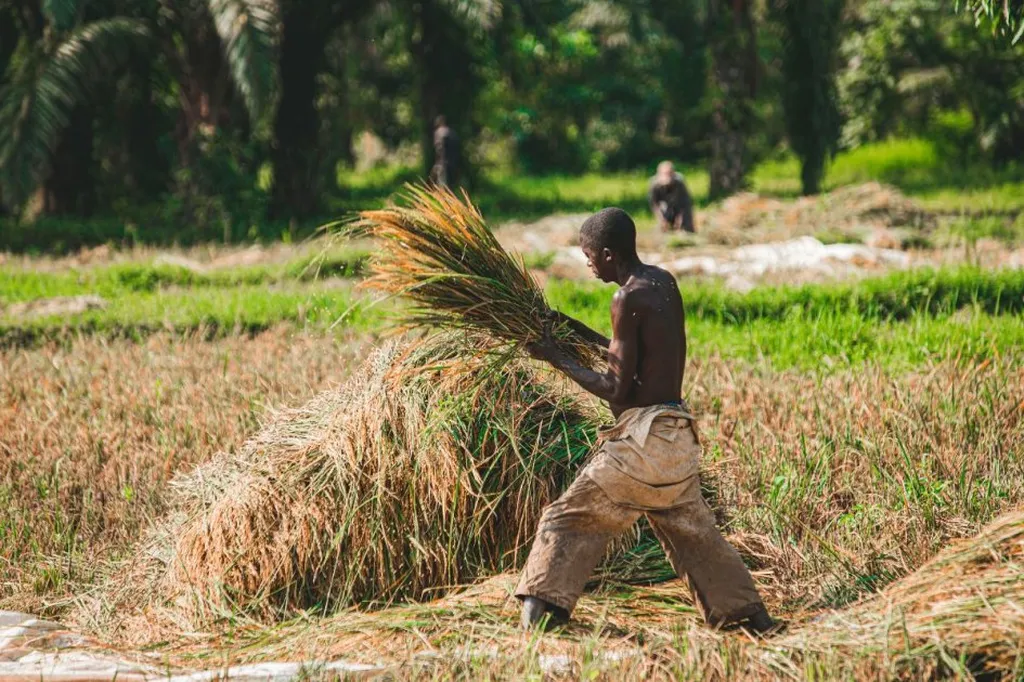
In the heart of Nigeria, smallholder farmers are facing a formidable challenge: climate change. But a recent study published in *Discover Agriculture* sheds light on how these farmers are adapting, and the factors that drive their choices. The research, led by Ekemini Richard Mbossoh from the Department of Agricultural Economics at the University of Uyo, delves into the adoption and choice of climate-smart agricultural practices (CSAPs), offering valuable insights for policymakers and the agriculture sector at large.
The study, which surveyed 250 farmers, identified ten CSAPs, including crop rotation, intercropping, and irrigation, and explored the factors influencing farmers’ choices. The results revealed that farmers’ decisions are interrelated and influenced by a variety of factors, from age and education to access to credit and climate information.
“Our findings show that farmers’ choices are not made in isolation,” Mbossoh explained. “They are influenced by a complex interplay of factors, and understanding these dynamics is crucial for promoting the adoption of multiple CSAPs.”
The study’s use of a multivariate probit model (MVP) is particularly noteworthy. This statistical tool allowed the researchers to analyze the correlations among the choices of different CSAPs, providing a more comprehensive understanding of farmers’ decision-making processes.
So, what does this mean for the agriculture sector? For one, it underscores the need for targeted policies that support farm-level innovations and promote social group formation. As Mbossoh put it, “Policymakers should formulate policies that support farm-level innovations, promote social group formation, and provide financial assistance to farmers to further encourage the adoption of multiple CSA practices for optimal outcomes.”
Moreover, the study highlights the importance of access to timely and updated climate information. This is a critical insight, given the increasing frequency and intensity of climate-related events. By providing farmers with the tools they need to make informed decisions, we can enhance the resilience of the agriculture sector and ensure food security.
Looking ahead, this research could shape future developments in the field by informing the design of more effective extension services and credit facilities. It could also pave the way for further studies on the economic impacts of CSAP adoption, providing a more holistic understanding of the benefits and challenges associated with climate-smart agriculture.
In the end, this study is a testament to the power of data-driven decision-making. By understanding the drivers of choice and uptake of CSAPs, we can empower smallholder farmers, enhance the resilience of the agriculture sector, and build a more sustainable future.