
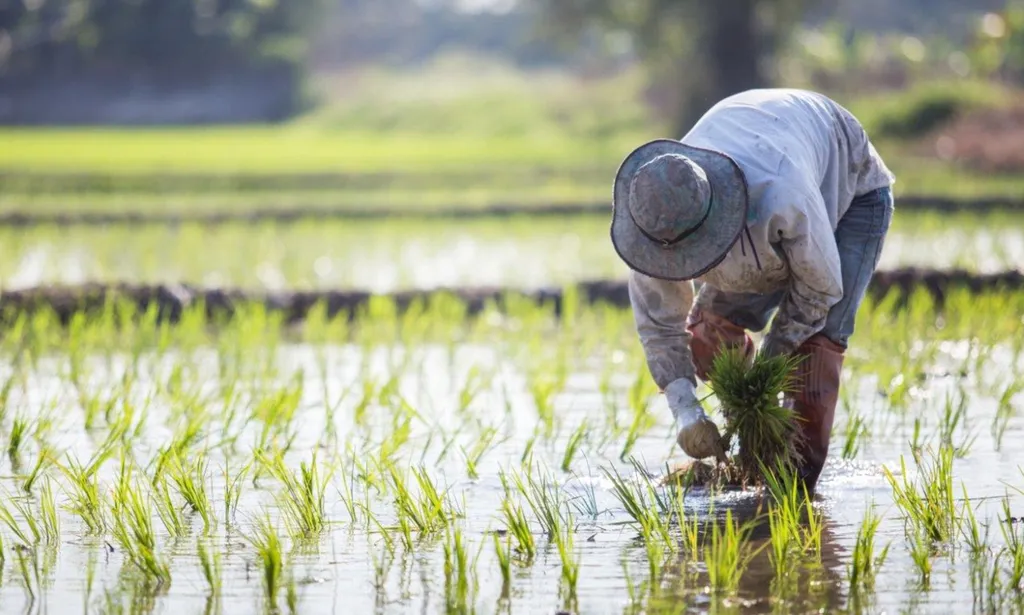
In a groundbreaking study published in *Nature Communications*, researchers have unveiled the significant cooling effect of paddy rice cultivation on land surface temperatures, a finding that could reshape our understanding of agriculture’s role in climate regulation. Led by Wei Weng from the State Key Laboratory of Soil Pollution Control and Safety at Zhejiang University, the research provides a comprehensive global analysis of how paddy fields influence local climates, offering valuable insights for the agriculture sector.
The study addresses a critical gap in climate science by quantifying the biophysical cooling effect of paddy rice, which has long been overshadowed by its well-documented greenhouse gas emissions. “While the warming effects of paddy rice have been extensively studied, the cooling benefits have remained poorly understood due to a lack of high-quality global data,” explains Weng. To bridge this gap, the team developed a universal rice mapping framework that integrates phenology-based and curve-matching methods, resulting in the creation of the GlobalRice500 dataset. This dataset offers an unprecedented level of detail, with daily temporal and 500-meter spatial resolution, covering global paddy rice cultivation over time.
The analysis revealed that paddy fields reduce daytime land surface temperatures by 0.21 to 0.27 degrees Celsius during the growing season compared to other croplands. This cooling effect is even more pronounced in larger fields and extends partially to surrounding landscapes. These findings highlight the potential for strategic land use planning to mitigate local temperature increases, a critical consideration in the face of global warming.
For the agriculture sector, these insights could open new avenues for sustainable farming practices. By optimizing the size and distribution of paddy fields, farmers and agricultural planners could enhance the cooling benefits while minimizing the negative impacts of greenhouse gas emissions. This dual approach could contribute to more resilient and climate-friendly agricultural systems.
The research also underscores the importance of integrating biophysical effects into climate models. “Our findings provide robust evidence of the surface cooling effect of paddy rice, calling for a comprehensive evaluation of its role in climate regulation,” Weng emphasizes. This could lead to more accurate climate predictions and better-informed policy decisions, ultimately benefiting both the environment and the agriculture industry.
As the world grapples with the challenges of climate change, this study offers a glimmer of hope. By leveraging the natural cooling properties of paddy rice, we may be able to develop more sustainable and climate-resilient agricultural practices. The research not only advances our scientific understanding but also paves the way for innovative solutions that could shape the future of farming.