
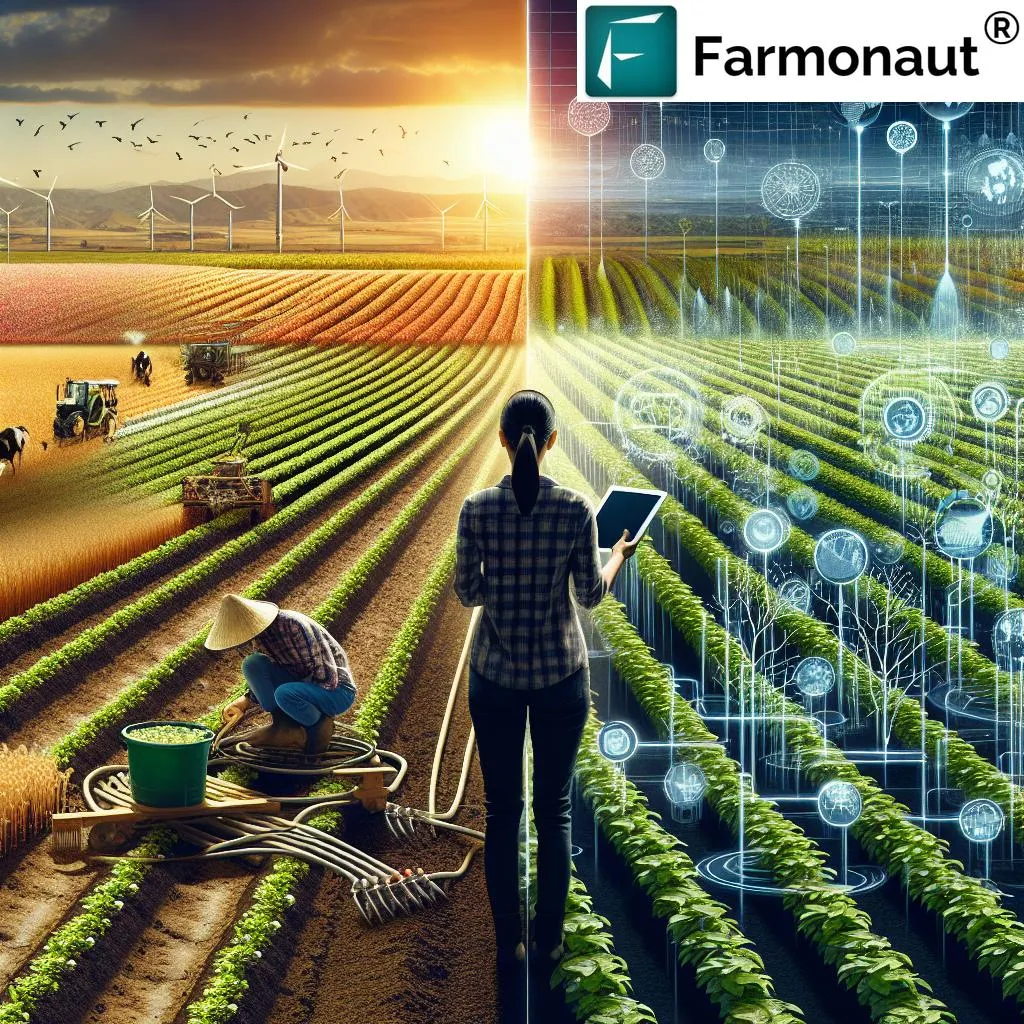
In the quest to feed a growing global population while minimizing environmental impact, precision agriculture (PA) has emerged as a promising solution. A recent review published in *npj Sustainable Agriculture* sheds light on the environmental benefits of PA, offering a data-driven perspective that could reshape agricultural practices and commercial strategies.
The study, led by Sarah-Louise Ruder from the University of Ottawa’s School of Sociological and Anthropological Studies, systematically reviewed 444 academic publications on PA and sustainability. Of these, 54 papers presented field-trial or modeling evidence, with 45 demonstrating tangible environmental benefits. These benefits included reduced fertilizer use, decreased herbicide or pesticide application, improved soil quality, and lower greenhouse gas emissions. The most compelling evidence came from variable rate technologies in grain farming, which showed significant reductions in fertilizer use compared to traditional methods.
“Our analysis reveals that precision agriculture can indeed lead to environmental benefits, but the evidence is not uniform across all practices and systems,” Ruder noted. This nuance is crucial for the agriculture sector, as it highlights the need for tailored approaches rather than one-size-fits-all solutions.
The commercial implications of these findings are substantial. Farmers and agribusinesses investing in precision technologies can expect not only to enhance productivity but also to meet increasingly stringent environmental regulations and consumer demands for sustainable practices. The review underscores the importance of adopting technologies that have been empirically tested, ensuring that investments yield both economic and environmental returns.
However, the study also identified a gap in the current research landscape. Many academics make claims about PA and sustainability without adequate evidence. Ruder emphasizes the need for more rigorous research that defines sustainability models and metrics, then tests PA technologies against these benchmarks across diverse agricultural systems.
This call to action could shape the future of precision agriculture, driving innovation and ensuring that new technologies are grounded in solid scientific evidence. As the agriculture sector continues to evolve, the integration of precision technologies will likely become a cornerstone of sustainable farming practices, benefiting both the environment and the bottom line.
The review’s findings, published in *npj Sustainable Agriculture*, provide a roadmap for stakeholders to navigate the complex landscape of precision agriculture. By focusing on evidence-based practices, the sector can achieve a balance between productivity and sustainability, paving the way for a more resilient and environmentally conscious future.