
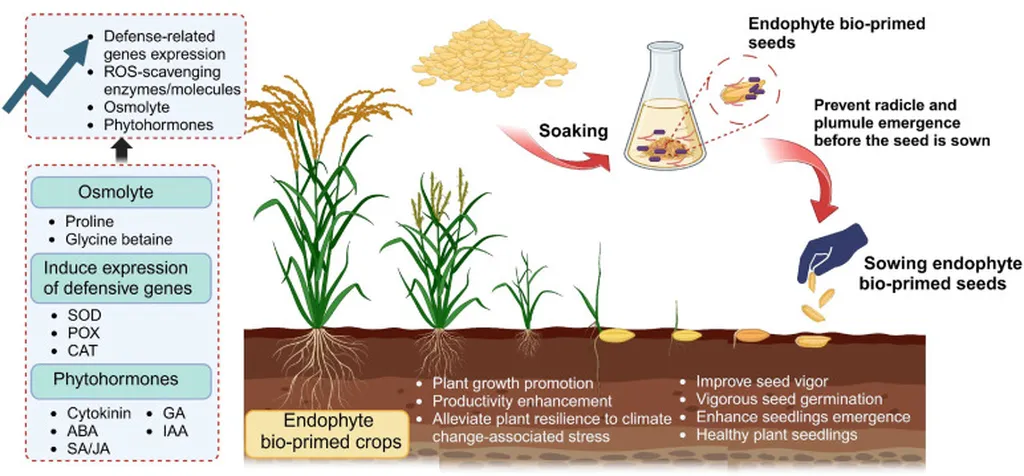
In the face of escalating climate change, farmers are grappling with increasingly frequent droughts and salinity issues, which are taking a toll on crop yields and food security. A recent review published in *Plant Stress* offers a glimmer of hope, highlighting an innovative approach to bolstering crop resilience: seed biopriming with stress-adapted, growth-promoting endophytes.
The study, led by Wiwiek Harsonowati of the Research Center for Horticulture at the National Research and Innovation Agency (BRIN) in Indonesia, delves into the morpho-physiological, transcriptional, metabolic, and biochemical responses of plants to drought and salinity. The research underscores the potential of endophyte-mediated seed priming as a cost-effective and environmentally friendly strategy to mitigate these stresses.
Seed biopriming involves treating seeds with beneficial microbes, known as endophytes, which colonize plants and enhance their ability to withstand environmental stressors. “This method not only promotes seed germination and plant growth but also triggers a cascade of beneficial responses, including phytohormone biosynthesis, osmotic adjustment, and antioxidant modulation,” explains Harsonowati.
The review highlights several key mechanisms through which endophyte-primed seeds confer stress resilience. These include the upregulation of stress-responsive genes, such as those involved in redox signaling and mitogen-activated protein kinase (MAPK) pathways, as well as interactions with other plant hormone networks. By enhancing these processes, endophyte-primed seeds can significantly improve plant tolerance to drought and salinity, ultimately leading to higher yields and more robust crops.
The commercial implications of this research are substantial. As climate change continues to disrupt traditional agricultural patterns, farmers are in desperate need of sustainable and economically viable solutions to ensure food security. Seed biopriming with stress-adapted endophytes offers a practical and scalable approach to enhancing crop resilience, potentially revolutionizing the way we cultivate crops in the face of adversity.
Moreover, the use of endophytes aligns with the growing demand for environmentally friendly agricultural practices. By reducing the need for chemical fertilizers and pesticides, this method not only boosts crop yields but also promotes sustainable farming practices that benefit both the environment and the bottom line.
The research published in *Plant Stress* represents a significant step forward in climate-smart agriculture. As the agricultural sector continues to grapple with the challenges posed by climate change, the adoption of innovative strategies like seed biopriming with endophytes could play a pivotal role in ensuring food security and sustainability for future generations.