
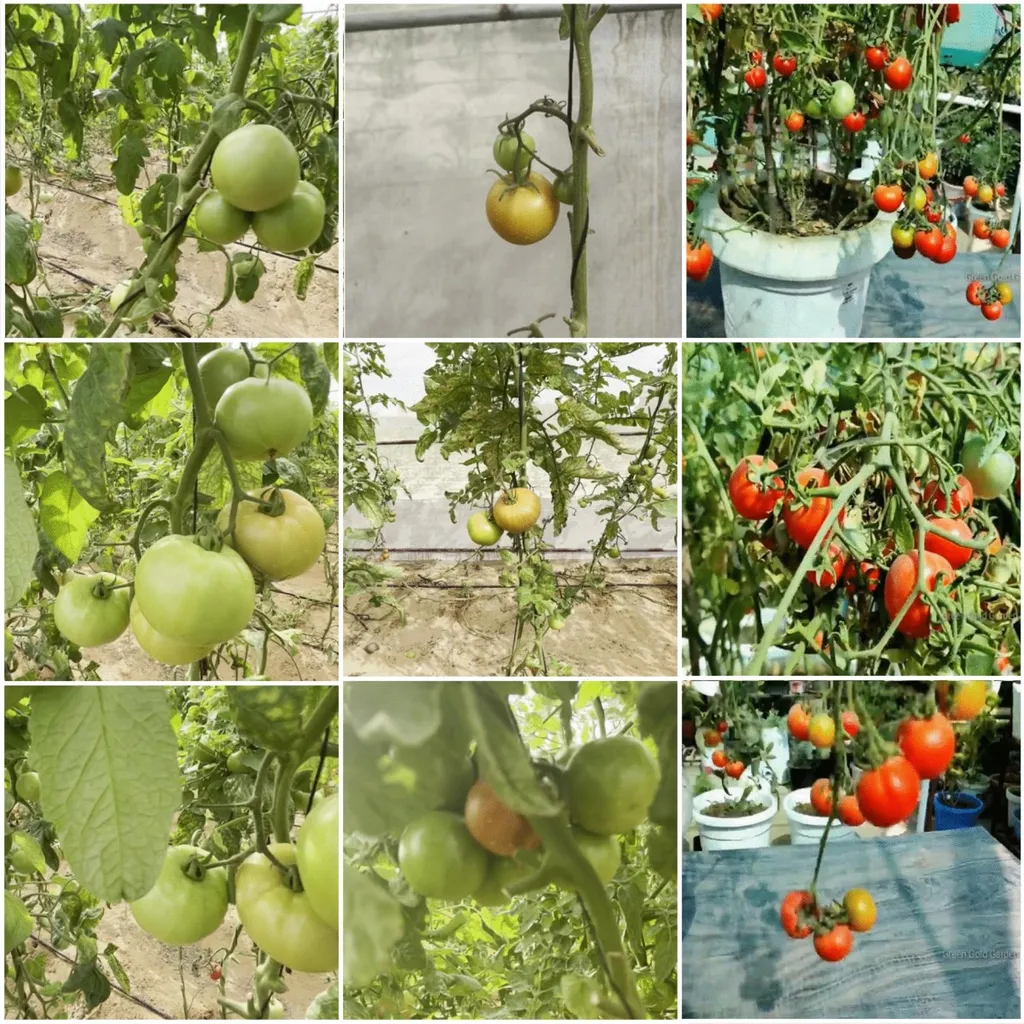
In the ever-evolving landscape of precision agriculture, a groundbreaking study published in *Scientific Reports* has introduced a novel approach to tomato ripeness detection that could revolutionize the way farmers assess and harvest their crops. The research, led by Parul Dubey from the Symbiosis Institute of Technology, Nagpur Campus, Symbiosis International (Deemed University), presents a multimodal transformer-based model called TomatoRipen-MMT, which fuses RGB and near-infrared (NIR) spectral data to achieve unprecedented accuracy in tomato maturity grading.
The study addresses a longstanding challenge in the agriculture sector: the accurate and reliable assessment of fruit ripeness. Traditional computer vision methods, which rely solely on RGB imagery, often struggle to differentiate subtle maturity changes and are sensitive to varying lighting conditions, occlusion, and cultivar-specific variations. Dubey and her team recognized the need for a more robust solution that could integrate complementary spectral cues to overcome these limitations.
The researchers curated a dataset comprising 224 hyperspectral samples of tomatoes, processed into aligned multimodal image pairs with balanced ripeness categories. The TomatoRipen-MMT model employs a multimodal Transformer framework with dual encoders, cross-spectral attention, and a joint decoder to fuse spatial and biochemical cues. The dynamic cross-attention mechanism within the model learns inter-modal dependencies between RGB and NIR signals, enhancing the interpretation of ripeness.
The results are impressive. TomatoRipen-MMT achieved a classification accuracy of 94.8% and a mean Intersection over Union (mIoU) of 82.6%, significantly outperforming baseline RGB-only, NIR-only, and fusion methods. “The integration of RGB and NIR data has allowed us to capture both the visual and biochemical aspects of tomato ripeness, leading to a more comprehensive and accurate assessment,” Dubey explained.
The commercial implications of this research are substantial. Accurate ripeness assessment is critical for yield optimization, reducing post-harvest losses, and enabling automated harvesting systems. By providing a reliable and high-precision tool for fruit maturity evaluation, TomatoRipen-MMT can help farmers make informed decisions, improve efficiency, and ultimately increase profitability.
The study also opens up new avenues for future research. As Dubey noted, “The success of our multimodal approach suggests that similar techniques could be applied to other crops and agricultural applications, further advancing the field of precision agriculture.”
The research published in *Scientific Reports* marks a significant step forward in the integration of advanced technologies into agricultural practices. By leveraging the power of multimodal transformers and spectral fusion, the TomatoRipen-MMT model sets a new standard for ripeness detection, paving the way for more innovative and efficient solutions in the agriculture sector.