
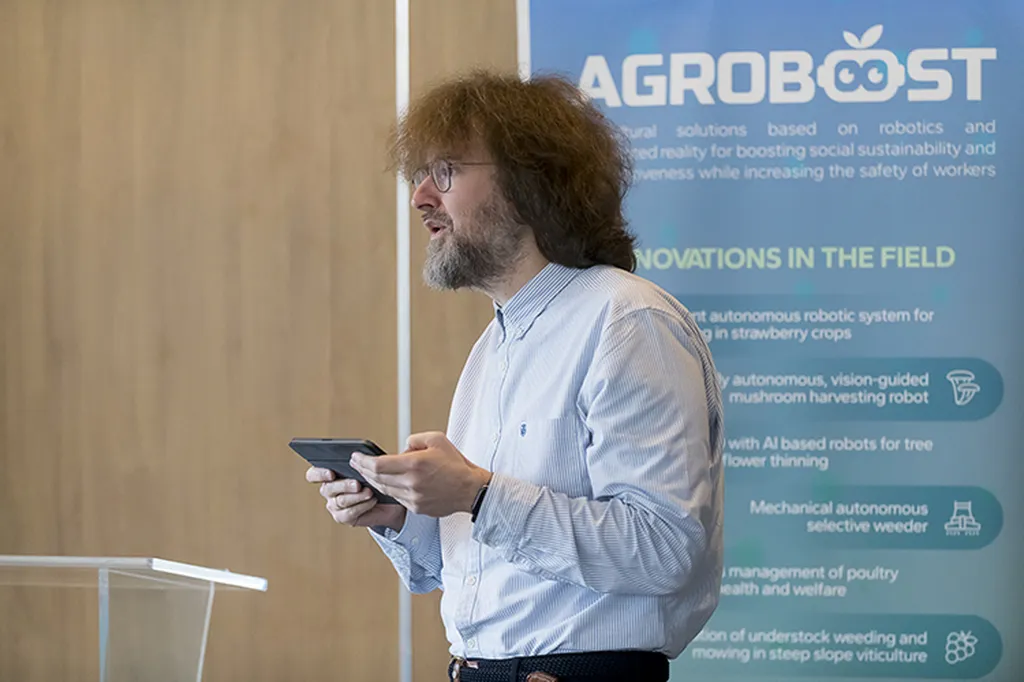
In a significant stride towards modernizing agricultural practices, the second symposium hosted by Advancements in Agricultural Development brought together leading experts to explore the transformative potential of artificial intelligence (AI) and digital technologies in agricultural development. The event, co-hosted by the University College Dublin School of Agriculture and Food Science, saw presentations from renowned institutions, including Auburn University, Digital Green, Harper Adams University, the International Food Policy Research Institute, the University of Florida, and Utah State University. The symposium, held on October 13 and 14, 2025, delved into how these emerging technologies can revolutionize extension and teaching efforts in the agricultural sector.
The symposium highlighted several key areas where AI and digital technologies are making substantial inroads. One of the most promising applications is in precision agriculture, where AI-driven tools are enabling farmers to optimize crop yields and resource use. “AI algorithms can analyze vast amounts of data from sensors and satellites to provide real-time recommendations on irrigation, fertilization, and pest control,” explained a presenter from the University of Florida. This precision not only enhances productivity but also reduces environmental impact, aligning with the United Nations’ Sustainable Development Goal (SDG) 2: Zero Hunger.
Another critical area of focus was the use of digital technologies in agricultural extension and advisory services. Digital platforms are being developed to provide farmers with timely and accurate information, bridging the gap between research and practice. “These technologies empower farmers, especially in developing regions, by giving them access to expert knowledge and best practices,” noted a researcher from Digital Green. This democratization of information is crucial for achieving SDG 4: Quality Education, as it fosters continuous learning and skill development among agricultural communities.
The symposium also explored the role of AI in agricultural education. Educational institutions are increasingly integrating AI and digital tools into their curricula to prepare the next generation of agricultural professionals. “By incorporating these technologies into our teaching programs, we are equipping students with the skills they need to thrive in a rapidly evolving agricultural landscape,” said a representative from Harper Adams University.
The commercial impacts of these advancements are substantial. AI and digital technologies can streamline operations, reduce costs, and increase profitability for farmers and agribusinesses. For instance, AI-driven predictive analytics can help farmers anticipate market trends and adjust their production accordingly, ensuring better returns on investment. Additionally, digital platforms can facilitate direct-to-consumer sales, opening up new revenue streams for small-scale farmers.
The symposium’s discussions underscored the potential of AI and digital technologies to drive sustainable agricultural development. By enhancing productivity, reducing waste, and improving access to knowledge, these innovations are poised to shape the future of agriculture. As the agricultural development community continues to embrace these technologies, the prospects for achieving food security and sustainable livelihoods become increasingly promising.
The symposium’s findings were published in a special issue of ‘Advancements in Agricultural Development’, led by T. Grady Roberts from the University of Florida, USA. This research not only advances our understanding of AI and digital technologies in agriculture but also provides a roadmap for future developments in the field. As the agricultural sector continues to evolve, the insights gained from this symposium will be instrumental in guiding policy, practice, and education.