
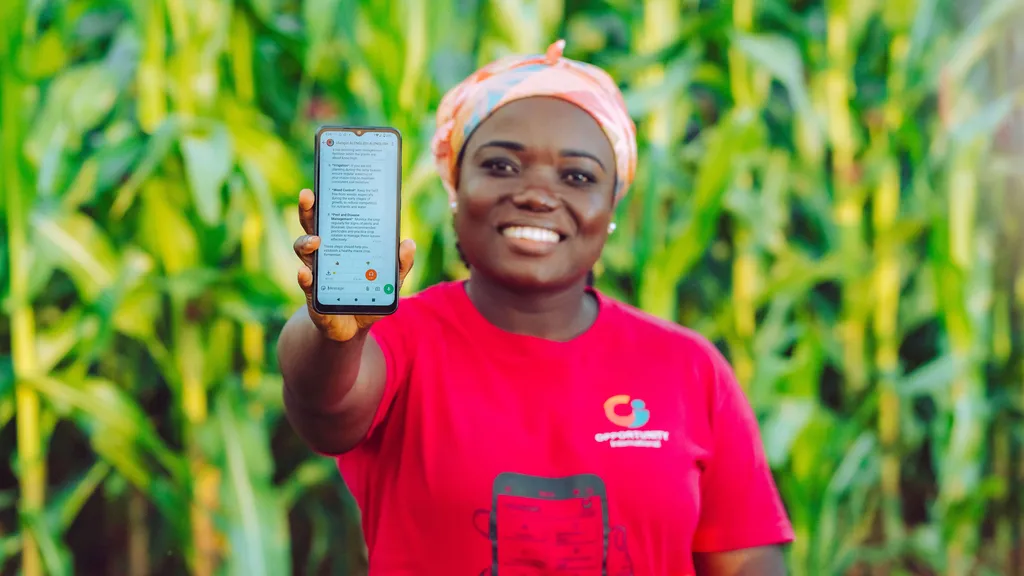
In the heart of India’s agricultural landscape, a quiet revolution is taking place, one that promises to reshape the way smallholder farmers receive and act on crucial agricultural advice. At the forefront of this transformation is Digital Green, an organization that has successfully adapted Reinforcement Learning from Human Feedback (RLHF) to deliver highly localized and relevant agricultural advice through an AI assistant called Farmer.Chat. This innovation, detailed in a recent paper published in ‘Advancements in Agricultural Development’ and led by Vineet Singh from Digital Green in Karnataka, India, is already supporting over 670,000 farmers across India, Kenya, Ethiopia, and Nigeria.
The challenge that Digital Green sought to address is a familiar one in the world of agricultural advisory: large language models (LLMs) often lack the training data necessary to provide accurate, contextually relevant advice for diverse agroecologies. “Most LLMs are trained on general data, which can lead to advice that is either too generic or completely misaligned with local conditions,” explains Singh. To tackle this, Digital Green developed a web-based annotation tool and implemented a multi-phase RLHF approach, collecting over 25,000 expert-reviewed Q&A pairs. This rigorous process has significantly improved the quality, tone, context, and cultural fit of the advice provided, particularly for region-specific agricultural queries.
The commercial impacts of this research are substantial. By providing smallholder farmers with access to high-quality, localized advice, Farmer.Chat has the potential to increase crop yields, improve farm management practices, and ultimately enhance food security. Moreover, the success of Farmer.Chat demonstrates the viability of RLHF in the agricultural sector, paving the way for similar tools to be developed and deployed in other regions and contexts.
Looking ahead, the research team is exploring the possibilities of multimodal RLHF, incorporating image, voice, and video data to create an even more comprehensive and inclusive ecosystem for AI agricultural advice. “Our goal is to foster a global, evidence-based ecosystem where farmers can access the information they need, when they need it, in the format that is most convenient for them,” says Singh.
The implications of this research extend beyond the immediate benefits to smallholder farmers. By pooling validated Q&A data, researchers, governments, and NGOs can strengthen global AI systems, ensuring that they are better equipped to serve the needs of diverse agricultural communities. As the world grapples with the challenges of climate change, food security, and sustainable development, innovations like Farmer.Chat offer a beacon of hope and a testament to the power of technology to drive positive change.
In the words of Singh, “This is just the beginning. The potential for AI in agriculture is vast, and we are excited to be at the forefront of this transformation.” As the agricultural sector continues to evolve, the lessons learned from Digital Green’s work will undoubtedly shape the development of future AI tools and technologies, ensuring that they are not only innovative but also inclusive, equitable, and effective.