
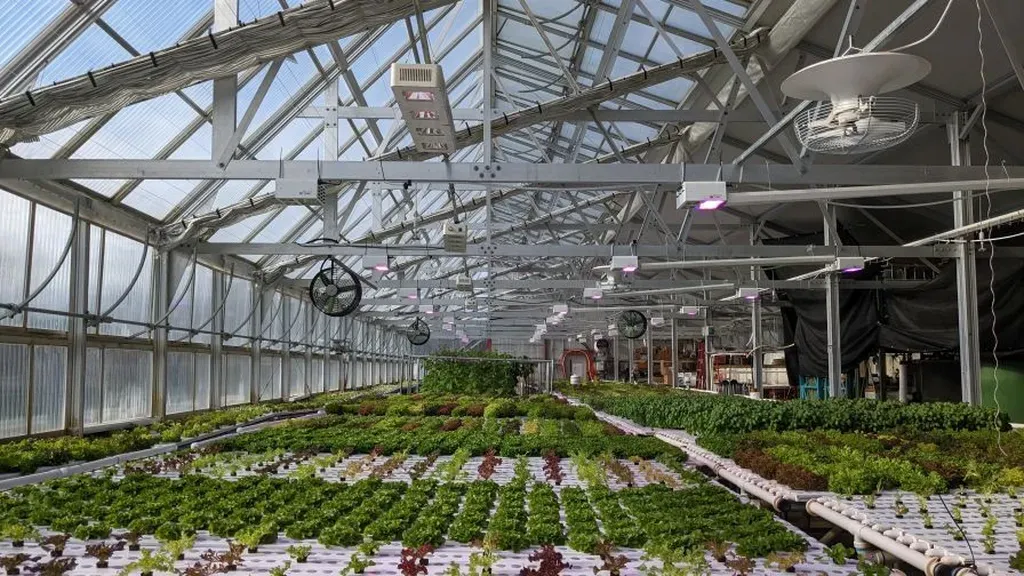
In the frigid grip of winter, a revolution is taking root in the city of Dingxi, nestled in the heart of China’s Loess Plateau. Smart greenhouses, a testament to human ingenuity, are defying the season’s harshness, enabling year-round agricultural cultivation. This transformation is not merely about extending the growing season; it’s a paradigm shift towards smart farming, a move away from the whims of weather-dependent practices.
Dingxi’s embrace of smart farming is evident in its 14 intensive smart seedling bases, 1,265 standardized greenhouses, and steel-framed sheds. These structures are not just shelters for crops; they are high-tech hubs equipped with internet of things devices. Integrated water and fertilizer systems, coupled with 5G-enabled environmental control technology, provide precise, real-time monitoring of temperature, light, water, and nutrients. This data-driven approach optimizes crop growth, ensuring a bountiful harvest regardless of the season.
The Dingxi Potato Research Institute is a shining example of this agricultural metamorphosis. Here, smart greenhouses automate the entire process of potato seed production, from one-click fertilization and watering to real-time growth monitoring. The institute has become a standardized base for potato seed production and exports in China, producing 60 million virus-free potato seed test-tube seedlings annually, along with nearly 120 million seed potatoes. These potatoes are not only nourishing the Chinese population but are also being exported to countries like Egypt and Saudi Arabia.
The Gansu Province State Farm Group, the province’s largest modern agricultural enterprise, is also at the forefront of this agricultural revolution. During the spring planting and autumn harvest seasons, high-tech production is a common sight across the company’s farms. Driverless tractors, equipped with the Beidou Navigation Satellite System, plow neat lines across fields, while drone fleets spray fertilizers evenly on crops. These high-tech devices have significantly boosted agricultural efficiency, more than fivefold compared to traditional methods.
In Gansu’s Linxia Hui autonomous prefecture, a 200,000-square-meter rose “super factory” is showcasing the power of technology in agriculture. The agriculture park, which began operation in 2022, integrates advanced technologies such as digital control, soilless cultivation, and post-harvest pre-cooling for fresh-cut flowers. This technological integration ensures roses bloom year-round, with an annual production exceeding 72 million stems. The factory not only contributes to the local economy, generating over 8.37 million yuan in sales last year, but also supports rural vitalization by providing stable jobs.
The rapid development of agricultural new productivity in Gansu is backed by policies and project funding. During China’s 14th Five-Year Plan (2021-25), the province increased investment in agricultural science and technology, implementing seed industry breakthroughs and technological support projects. A total of 129 key technologies to improve grain yield per unit area have been developed, and a special fund for agricultural machinery and equipment R&D has been set up.
This shift from traditional farming to smart agriculture is significantly empowering agricultural development. It’s a testament to the power of technology and innovation in transforming industries, creating jobs, and boosting economies. As we look to the future, the lessons from Dingxi and Gansu serve as a beacon, illuminating the path towards a more sustainable and productive agricultural sector.