
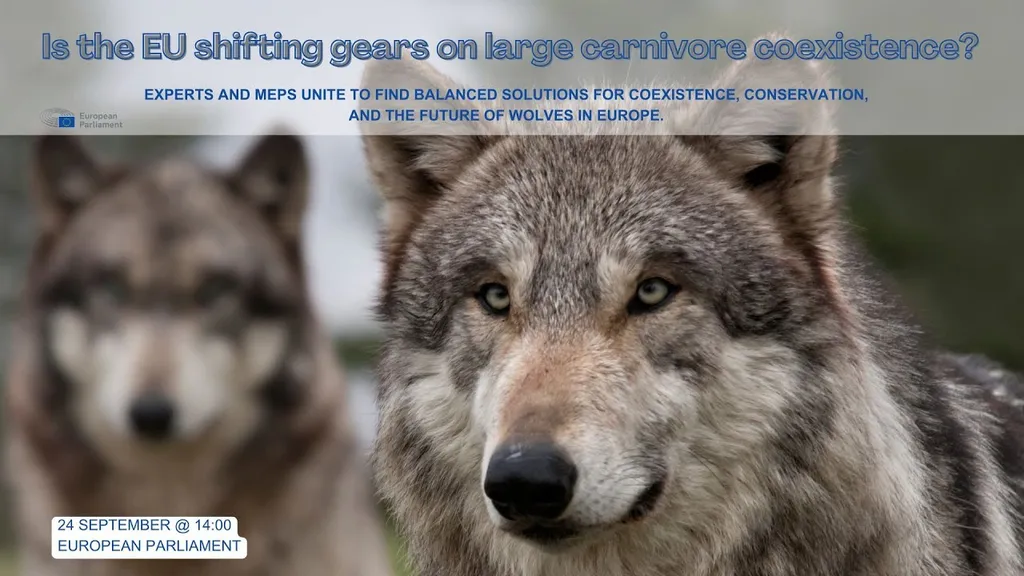
In the heart of Europe, a silent shift is taking place, one that could redefine the relationship between humans and some of their most formidable neighbors: large carnivorans like brown bears, grey wolves, and Eurasian lynxes. As these species gradually recover their populations, thanks to international and national conservation measures, they are increasingly coming into contact with human communities, particularly in agricultural areas. This complex dynamic is the focus of a recent study published in ‘Theriologia Ukrainica’, led by Volodymyr Domashlinets of the Deutsche Gesellschaft für Internationale Zusammenarbeit (GIZ) GmbH in Kyiv, Ukraine.
The research highlights a critical transition in conservation strategy, moving from strict protection to a more comprehensive approach aimed at coexistence. This shift is reflected in key regional legal frameworks like the Bern Convention (BC) and the Carpathian Convention (CC). “We’re seeing a paradigm change,” Domashlinets explains. “It’s no longer just about protecting these animals; it’s about integrating them into our landscapes and finding ways for humans and large carnivorans to share the same space.”
For the agriculture sector, this transition is particularly significant. As large carnivorans expand their ranges, they increasingly come into conflict with farmers and livestock. The study emphasizes the need for effective mechanisms to prevent damage and adequate compensation schemes for local communities. “Agricultural interests are not being ignored,” Domashlinets assures. “On the contrary, the new approach recognizes that coexistence requires addressing the very real impacts these animals can have on livelihoods.”
At the global level, the protection of large carnivorans is regulated by several international agreements, including the Convention on Biological Diversity (CBD), the Convention on International Trade in Endangered Species (CITES), and the Convention on Migratory Species (CMS). In Europe, the Bern Convention plays a pivotal role, categorizing large carnivorans into different appendices based on their protection status. A notable recent development is the decision to move the wolf from Appendix II (Strictly Protected) to Appendix III (Protected), reflecting the growing recognition of the need for flexible management strategies.
The Carpathian Convention is another critical framework, particularly for Ukraine, as the Carpathian Mountains are home to Europe’s largest populations of large carnivorans. The convention has facilitated international cooperation and the adoption of an International Action Plan for these species. “The Carpathians are a unique landscape,” Domashlinets notes. “They provide a vital habitat for large carnivorans, and their conservation here has implications for the entire continent.”
The study also highlights the importance of transboundary cooperation and harmonized monitoring systems. Projects like OBWIC and ConnectGREEN are paving the way for integrated management strategies that transcend national borders. However, the success of these efforts depends on several factors, including the harmonization of legislation with the EU Habitats Directive, the institutionalization of transboundary mechanisms, and the creation of national conflict management systems.
For the agriculture sector, the implications are profound. As large carnivorans become more prevalent, farmers will need to adapt their practices to minimize conflicts. This could involve investing in more robust livestock enclosures, employing guard animals, or participating in compensation programs. “It’s about finding a balance,” Domashlinets explains. “We need to protect these iconic species, but we also need to ensure that farmers can continue to make a living.”
The study also underscores the need for sustainable state support for harmonized monitoring systems. This could involve long-term funding for research and data collection, as well as the development of standardized protocols for managing human-wildlife conflicts. “Monitoring is crucial,” Domashlinets emphasizes. “It provides the data we need to make informed decisions and adapt our strategies as conditions change.”
In conclusion, the research published in ‘Theriologia Ukrainica’ offers a roadmap for the future of large carnivoran conservation in Europe. By emphasizing coexistence, transboundary cooperation, and the integration of agricultural interests, it provides a blueprint for a more harmonious relationship between humans and these magnificent creatures. As Domashlinets puts it, “The future of large carnivorans in Europe depends on our ability to coexist. It’s a challenge, but it’s also an opportunity to create a more sustainable and balanced landscape for all.”