
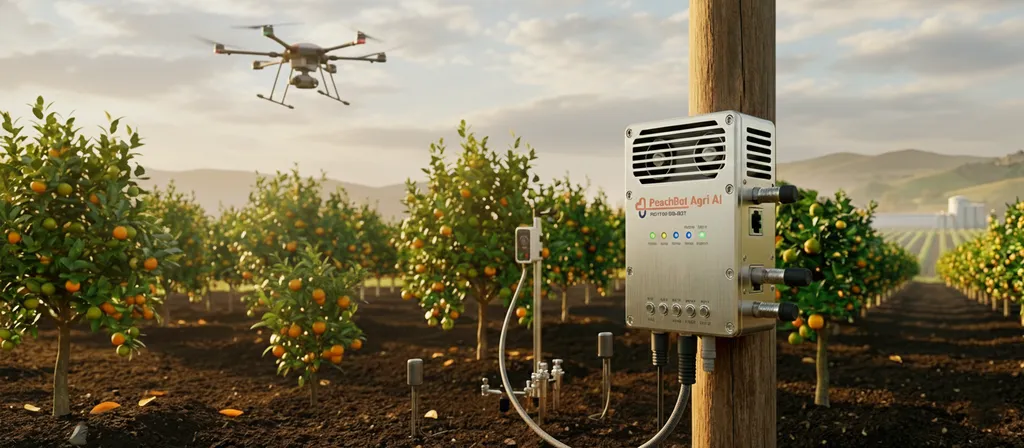
In the heart of Utah, a new digital ally is emerging to support small-scale peach producers, thanks to a pioneering study published in *Advancements in Agricultural Development*. Led by Paul A. Hill from Utah State University Extension, the research explores how large language models, specifically a custom-built GPT named Utah PeachBot, can revolutionize agricultural extension services. This innovation could have significant commercial impacts, streamlining advisory services and enhancing decision-making for farmers.
The study focuses on the practical application of AI foundational models in providing real-time, evidence-based support to Extension agents. By fine-tuning a low-cost AI model with curated horticultural resources, the researchers aimed to create a tool that could offer reliable and accurate advice on peach cultivation. The evaluation involved a panel of six Extension agents who assessed the model’s outputs, providing valuable insights into its strengths and limitations.
“Utah PeachBot showed high reliability and accuracy for general inquiries about peach cultivation,” said Hill. However, the study also highlighted inconsistencies in regional specificity and the practicality of recommendations. These findings underscore the need for iterative fine-tuning and the integration of local, context-specific data to enhance the model’s effectiveness.
The commercial implications of this research are substantial. By improving information dissemination and decision-making quality, customized GPTs like Utah PeachBot could significantly boost operational efficiency within extension systems. This, in turn, could lead to better yields, reduced costs, and increased profitability for small-scale farmers. The study recommends a phased approach to implementing such models, ensuring that they are continually refined through expert feedback and local data integration.
As the agricultural sector increasingly embraces digital transformation, the integration of AI foundational models into extension services could pave the way for more innovative and efficient advisory systems. This research, led by Paul A. Hill from Utah State University Extension and published in *Advancements in Agricultural Development*, offers a glimpse into the future of agricultural extension, where technology and expertise converge to support rural development and contribute to the global goal of Zero Hunger.
The journey towards widespread adoption of AI in agricultural extension is just beginning. As researchers and practitioners continue to refine these tools, the potential for enhancing agricultural productivity and sustainability grows. The Utah PeachBot study serves as a testament to the power of innovation in addressing real-world challenges, setting a precedent for future developments in the field.