
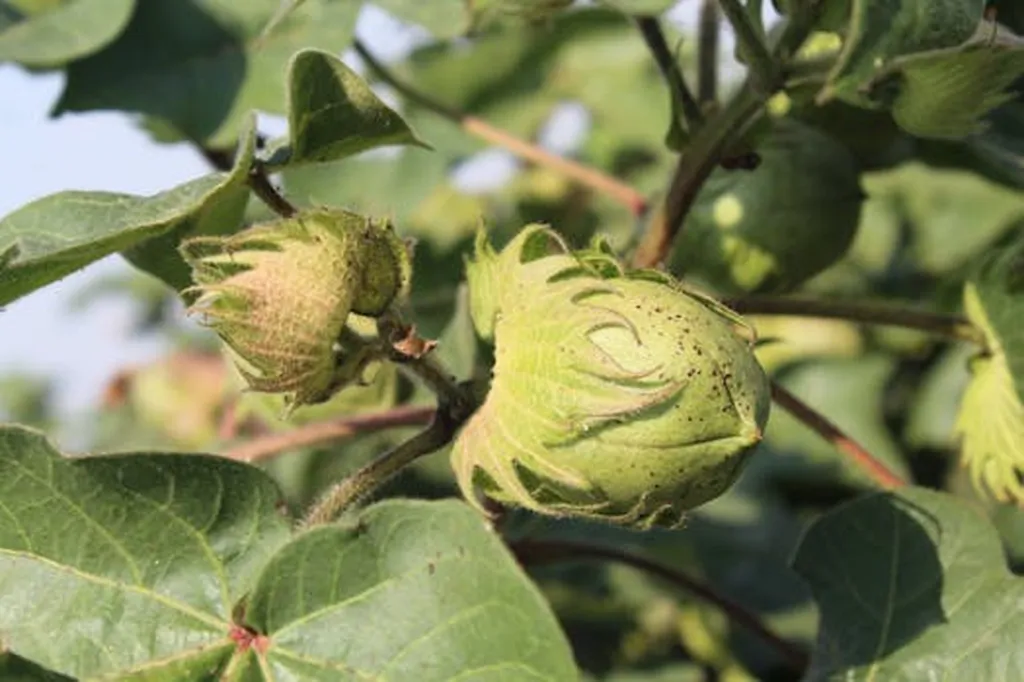
In the heart of arid oasis regions, where the landscape is a patchwork of cotton fields, farmers face a daunting challenge: accurately estimating cotton yields. The terrain’s fragmentation and the delicate balance between monitoring precision and computational costs have long been stumbling blocks. However, a recent study published in *Remote Sensing* offers a promising solution, potentially revolutionizing precision agriculture in these complex environments.
The research, led by Xianhui Zhong from the College of Information Engineering at Tarim University in China, introduces a robust integrated framework that combines multi-source remote sensing, spatiotemporal fusion, and data assimilation. The goal? To overcome the limitations of traditional methods and provide high-precision cotton yield estimations.
At the core of this innovative approach is the Agricultural Fusion (Agri-Fuse) algorithm. Unlike conventional methods like the Spatial and Temporal Adaptive Reflectance Fusion Model (STARFM), Agri-Fuse generates high-resolution time-series data with superior spectral fidelity. “The Agri-Fuse algorithm has proven to be a game-changer,” Zhong explains. “It effectively resolves spatiotemporal data gaps, providing us with a more accurate and reliable dataset for further analysis.”
But the innovation doesn’t stop there. The researchers took the high-precision Leaf Area Index (LAI) time series retrieved via the eXtreme Gradient Boosting (XGBoost) algorithm and integrated it into the Ensemble Kalman Filter (EnKF)-assimilated World Food Studies (WOFOST) model. This integration significantly corrected simulation biases, leading to a remarkable improvement in yield estimation accuracy.
The commercial implications of this research are substantial. For farmers in arid regions, accurate yield estimation can translate to better resource management, improved decision-making, and ultimately, increased profitability. “This framework provides a scalable, cost-effective solution for precision agriculture,” Zhong notes. “It’s not just about improving accuracy; it’s about making the process more efficient and accessible for farmers.”
The study also systematically evaluated the trade-off between assimilation frequency and efficiency. The findings identified a 3-day fusion interval as the optimal operational strategy, maintaining high accuracy while reducing computational costs by 66.5% compared to daily assimilation. This balance between precision and cost-efficiency is crucial for the widespread adoption of such technologies in the agriculture sector.
As we look to the future, this research could shape the development of more advanced and accessible precision agriculture tools. The integration of multi-source remote sensing, spatiotemporal fusion, and data assimilation opens up new possibilities for monitoring and managing crops in challenging environments. It’s a significant step forward in the quest for sustainable and efficient agriculture practices.
In the ever-evolving field of agritech, this study serves as a testament to the power of innovation and the potential of technology to transform traditional practices. As Zhong and his team continue to refine and expand their framework, the future of precision agriculture in arid regions looks brighter than ever.