
In the rugged and climatically diverse landscapes of the temperate Himalayas, farmers and allied sector workers face a unique set of challenges that threaten their livelihoods and the region’s agricultural sustainability. A recent study published in *AgriEngineering* sheds light on how artificial intelligence (AI) and machine learning (ML) could revolutionize these sectors, offering hope for improved efficiency, reduced losses, and enhanced market integration.
The research, led by Arnav Saxena from the Centre of Artificial Intelligence and Machine Learning (CAIML) at Sher-e-Kashmir University of Agricultural Sciences and Technology of Kashmir (SKUAST-K), systematically examines 21 critical problem areas across seven sectors: agriculture, agricultural engineering, fisheries, forestry, horticulture, sericulture, and animal husbandry. The study identifies three key challenges per sector, ranging from pest and disease pressures to inefficient resource use and fragmented supply chains.
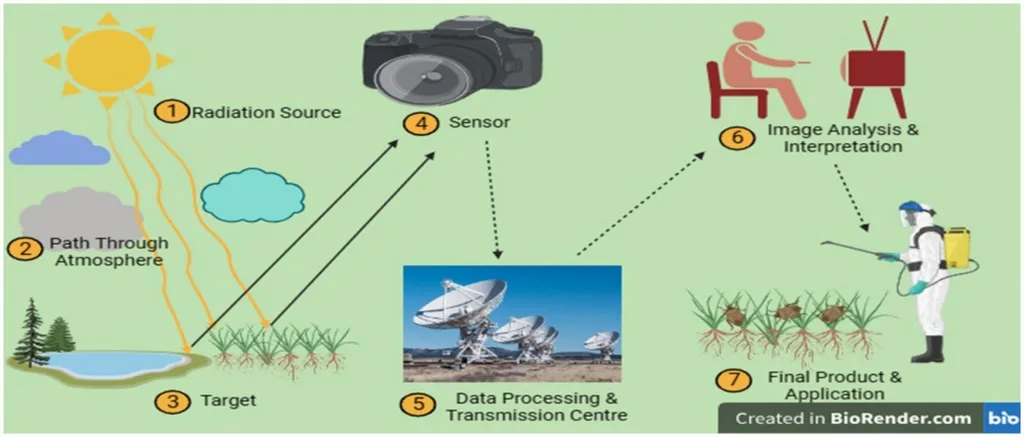
Saxena and his team evaluated various AI and ML interventions, including computer vision, predictive modeling, Internet of Things (IoT)-based monitoring, robotics, and blockchain-enabled traceability. These technologies have shown promising results in early pest and disease detection, improved resource-use efficiency, ecosystem monitoring, and market integration. For instance, computer vision systems can detect diseases in crops before they become visible to the human eye, allowing for timely intervention and reducing yield losses.
However, the study also highlights significant barriers to large-scale adoption. “Limited digital infrastructure, data scarcity, high capital costs, low digital literacy, and fragmented institutional frameworks are major hurdles,” Saxena explains. Despite these challenges, the potential economic impacts are substantial. The review quantifies revenue losses and suggests that AI-enabled solutions could significantly mitigate these losses, enhancing sustainability and livelihood security.
The research proposes feasible, context-aware strategies to overcome these barriers. These include developing lightweight edge-AI models that can operate with minimal infrastructure, creating localized data platforms to address data scarcity, and implementing capacity-building initiatives to improve digital literacy. Additionally, the study emphasizes the need for policy-aligned implementation pathways to ensure that these technologies are adopted and scaled effectively.
The findings of this study could shape future developments in the field by providing a roadmap for integrating AI and ML into the temperate Himalayan region’s agricultural and allied sectors. By addressing the identified gaps and leveraging the strengths of these technologies, stakeholders can enhance resilience and sustainability, ultimately securing livelihoods and promoting economic growth.
As the world grapples with the impacts of climate change and the need for sustainable development, the insights from this research offer a beacon of hope for the temperate Himalayas. By embracing AI and ML, the region can transform its agricultural practices, reduce losses, and create a more sustainable future for its people.