
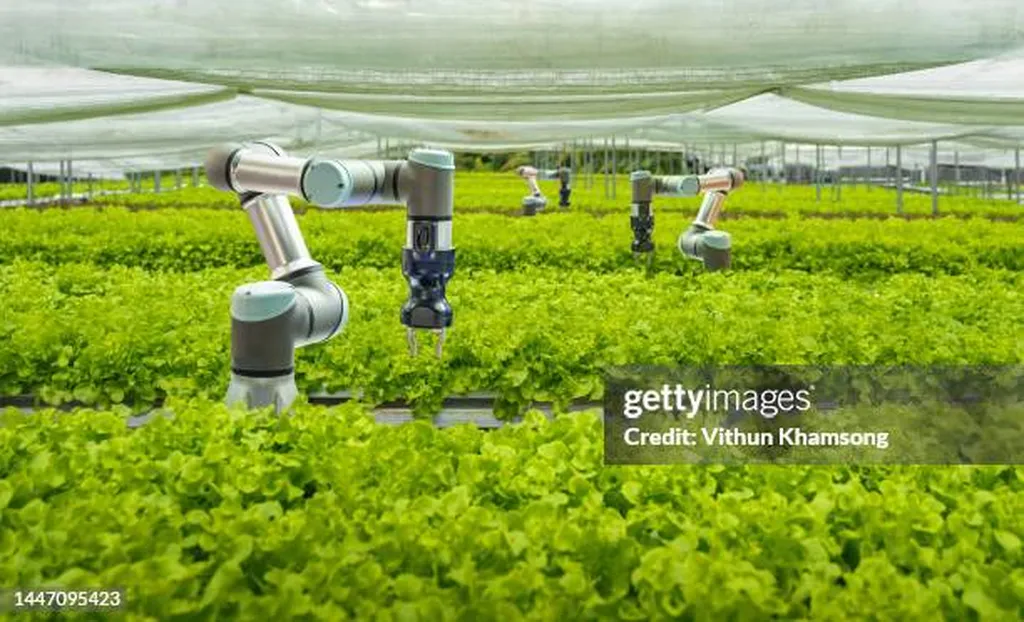
In the face of climate change and global food security challenges, the agricultural sector is turning to artificial intelligence (AI) and robotics to revolutionize farming practices. A recent systematic review published in the journal *Robotics* offers a comprehensive look at the trends and emerging directions in this rapidly evolving field, providing valuable insights for researchers, policymakers, and industry stakeholders.
The study, led by Simona Casini from the Dipartimento di Ingegneria dell’Informazione at the University of Pisa, analyzed over 3,600 research articles published between 2000 and 2025. Using advanced bibliometric tools like VOSviewer and SciMAT, the researchers identified four dominant themes in the integration of AI and robotics in agriculture: deep-learning-based perception, UAV-enabled remote sensing, data-driven decision systems, and precision agriculture.
“These technologies are not just about increasing efficiency; they are about building more sustainable and resilient food systems,” Casini explained. The review highlights how AI-driven robotic systems can address critical issues such as labor shortages and climate change impacts, offering solutions that are both innovative and scalable.
One of the most promising areas identified in the study is deep-learning-based perception, which enables robots to “see” and interpret agricultural environments with high accuracy. This technology is already being used in precision agriculture to monitor crop health, detect pests, and optimize irrigation, leading to significant cost savings and improved yields for farmers.
UAV-enabled remote sensing, another key theme, allows for real-time data collection over large areas, providing farmers with actionable insights to manage their fields more effectively. “The ability to gather and analyze data in real-time is transforming how farmers make decisions,” Casini noted. This technology is particularly valuable in large-scale farming operations, where timely interventions can make a substantial difference in crop outcomes.
Data-driven decision systems are also playing a crucial role in modern agriculture. By leveraging AI algorithms, these systems can process vast amounts of data to predict crop yields, optimize planting schedules, and even forecast weather patterns. This predictive capability is invaluable for farmers, helping them to mitigate risks and maximize productivity.
While the field has made significant strides in perception and aerial sensing, the review also identified several underdeveloped areas that present opportunities for future research. These include soft manipulation, multimodal sensing, sim-to-real transfer, and adaptive autonomy. Addressing these gaps could lead to the development of more versatile and autonomous robotic systems capable of performing a wider range of tasks in the field.
Geographically, the study revealed a strong concentration of research in China and India, reflecting the agricultural scale and investment dynamics in these regions. However, the global nature of the study suggests that the benefits of AI and robotics in agriculture are not limited by borders. As these technologies continue to advance, they have the potential to revolutionize farming practices worldwide, contributing to the United Nations’ Sustainable Development Goals, particularly those related to zero hunger and responsible consumption and production.
The commercial impact of these advancements cannot be overstated. Farmers who adopt AI-driven robotic systems stand to gain significant advantages in terms of efficiency, cost savings, and environmental sustainability. As the technology becomes more accessible and affordable, we can expect to see widespread adoption across the agricultural sector, driving innovation and growth.
This systematic review serves as a roadmap for the future of AI and robotics in agriculture, highlighting both the achievements and the challenges that lie ahead. By addressing the identified gaps and building on the existing research, the agricultural sector can look forward to a future where technology plays a central role in ensuring food security and sustainability for generations to come.