
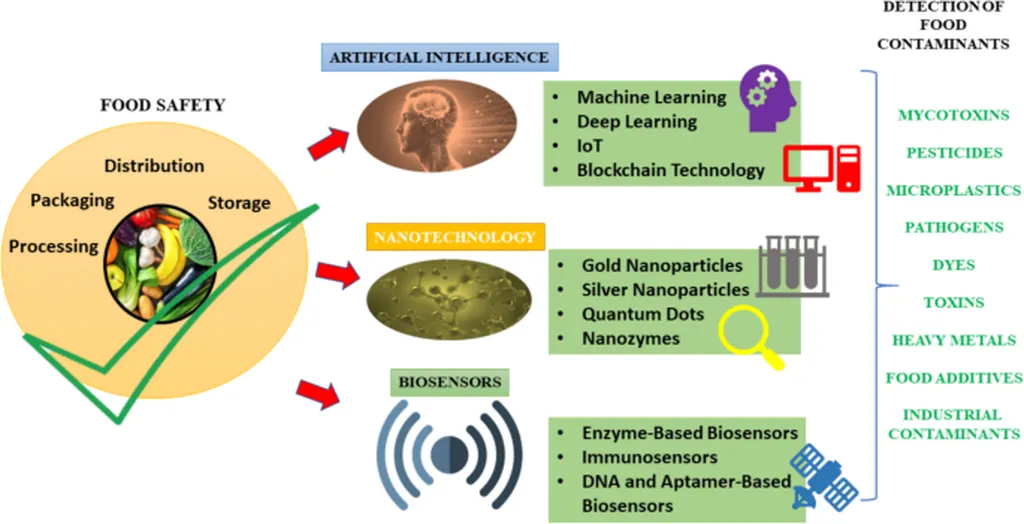
In the ever-evolving landscape of agricultural technology, a recent study published in *Applied Sciences* has shed light on a critical aspect of food safety: the accurate determination of stereoisomeric pyrethroids, particularly cypermethrin, in food matrices. Led by Iwona Wenio from the Department of Food Technology and Assessment at the Warsaw University of Life Sciences, the research addresses a significant analytical challenge in the agriculture sector, offering promising implications for regulatory monitoring and risk assessment.
Pyrethroids, synthetic analogues of natural pyrethrins, are widely used in agriculture and household pest control due to their high insecticidal activity and relatively low toxicity to mammals. However, their complex mixtures of stereoisomers present a unique challenge. These stereoisomers can have significantly different biological activities, toxicities, and environmental behaviors. As Iwona Wenio explains, “The accurate determination of these stereoisomeric forms is crucial for food safety monitoring. Our study aims to develop a reliable method for quantifying these compounds, especially cypermethrin, in food matrices.”
The research focuses on the development of an analytical method using both LC-MS/MS and GC-MS/MS techniques. The method meets the performance criteria outlined in SANTE/11312/2021 v2, demonstrating satisfactory recovery rates (91.6%), precision (RSDR 1.9%), and low limits of quantification (LOQ 0.010 µg/kg) for the quantification of alpha-cypermethrin. This approach offers a reliable tool for regulatory monitoring and risk assessment of pyrethroid residues, particularly those with complex stereochemistry.
The commercial impacts of this research are substantial. Accurate determination of pyrethroid residues is essential for ensuring food safety and compliance with regulatory standards. As the agriculture sector continues to grapple with the challenges of pesticide residue management, this method could become a cornerstone for regulatory bodies and food safety agencies. It provides a robust framework for monitoring and assessing the risks associated with pyrethroid residues, ultimately safeguarding consumer health and enhancing agricultural practices.
Moreover, this research paves the way for future developments in the field. As Iwona Wenio notes, “Our method can be adapted and optimized for other pyrethroids and food matrices, offering a versatile tool for comprehensive residue analysis.” This adaptability is crucial for the agriculture sector, which is constantly evolving and facing new challenges in pest control and food safety.
The study’s findings are a significant step forward in the quest for accurate and reliable methods of determining pyrethroid residues. As the agriculture sector continues to innovate and adapt, such advancements in analytical techniques will be instrumental in ensuring food safety and regulatory compliance. The research led by Iwona Wenio from the Warsaw University of Life Sciences not only addresses a critical analytical challenge but also opens new avenues for future developments in the field.