
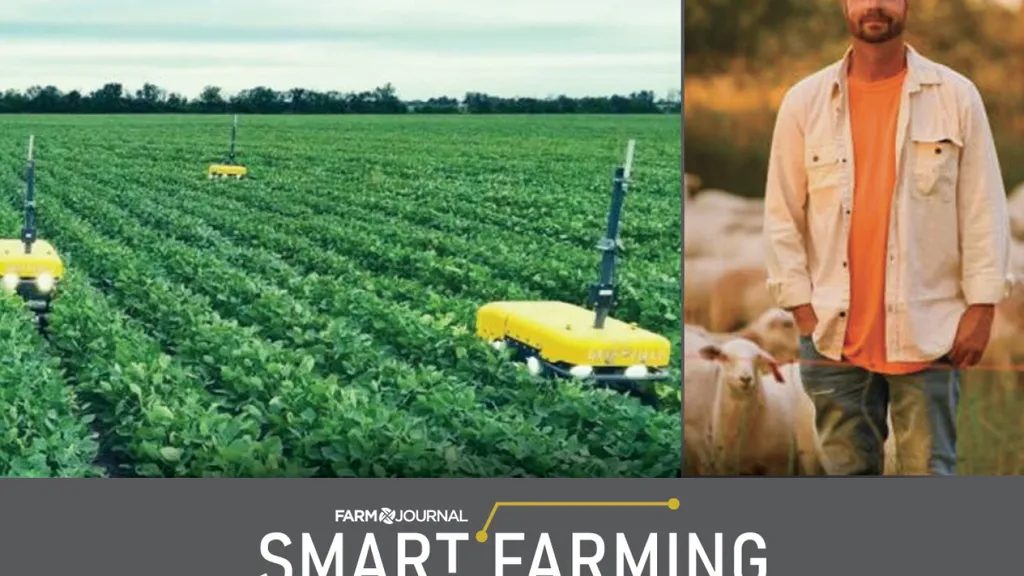
In the ever-evolving landscape of agricultural technology, a groundbreaking study published in the journal *Agriculture* is poised to redefine how robotic swarms operate in farming environments. The research, led by Kevin Marlon Soza-Mamani of the Universidad Católica del Norte in Chile, introduces a novel framework that could revolutionize the way multi-robot systems coordinate tasks such as crop monitoring and autonomous field maintenance.
The study focuses on the cohesive Potential Linked Nodes (PLNs) framework, a model designed to enhance the collective dynamics of large-scale robotic systems. By employing Artificial Potential Fields (APFs) and virtual node–link interactions, the PLN framework ensures that robotic swarms maintain high cohesion and adaptability. This adaptability is crucial for tasks that require precision and responsiveness, such as navigating through crop rows or responding to environmental changes.
“Our model governs swarm formation, modulates structural integrity, and enhances responsiveness to external perturbations,” Soza-Mamani explained. This means that the robotic swarms can maintain their formation even when faced with obstacles or changes in the environment, a significant advancement over previous models.
The implications for the agriculture sector are profound. As farming operations become increasingly automated, the ability to deploy robotic swarms that can work cohesively and adaptively is a game-changer. These swarms can perform tasks more efficiently and accurately, reducing the need for human intervention and potentially lowering operational costs. Moreover, the tunable parameters of the PLN framework allow for online adjustments, enabling farmers to fine-tune the swarm’s behavior based on real-time conditions.
The study’s comprehensive simulation experiments demonstrated the PLN model’s effectiveness in various scenarios, including static aggregation and dynamic flocking behavior. The experiments were conducted using differential-drive mobile robots, and additional tests were performed in a simulated cropping environment to evaluate the framework’s stability and cohesiveness under agricultural constraints. The results were quantified using density-based and inter-robot distance metrics, confirming the model’s ability to maintain formation integrity and cohesive stability.
Soza-Mamani’s research not only addresses the fundamental challenges in swarm robotics but also paves the way for future developments in the field. As the agriculture sector continues to embrace automation, the PLN framework could become a cornerstone for designing more intelligent and efficient robotic systems. The study, published in *Agriculture* and led by Soza-Mamani at the Universidad Católica del Norte, represents a significant step forward in the integration of robotic technology into modern farming practices.
The potential for this technology to transform agricultural operations is immense. By enabling robotic swarms to work more effectively and adaptively, farmers can achieve higher levels of precision and efficiency in their operations. This could lead to increased crop yields, reduced labor costs, and more sustainable farming practices. As the technology continues to evolve, the PLN framework could become an essential tool for the next generation of agricultural robotics.
In the broader context, this research highlights the importance of interdisciplinary collaboration in driving technological innovation. By combining insights from robotics, artificial intelligence, and agricultural science, researchers like Soza-Mamani are pushing the boundaries of what is possible in the field of agricultural technology. The PLN framework is a testament to the power of interdisciplinary research and its potential to address some of the most pressing challenges in modern agriculture.
As the agriculture sector continues to evolve, the role of robotic swarms will become increasingly important. The PLN framework offers a promising solution to the challenges of coordinating large-scale robotic systems, paving the way for more efficient and sustainable farming practices. With further research and development, this technology could become a standard tool in the agricultural toolkit, helping farmers to meet the demands of a growing global population while minimizing environmental impact.