
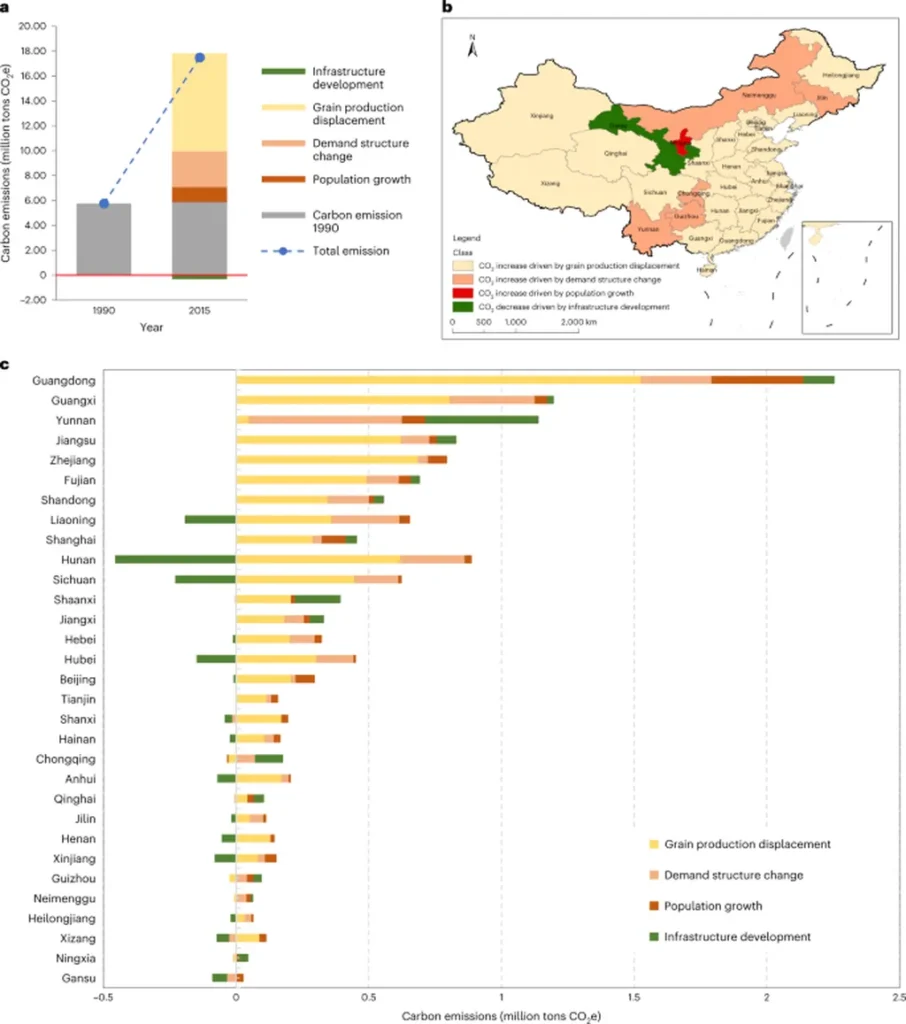
In the quest to reduce carbon emissions in grain production, a new study published in the journal *Agriculture* offers a roadmap for leveraging agricultural infrastructure to achieve significant reductions. The research, led by Mingtao Gao of the College of Economics and Management at Nanjing Forestry University, provides a detailed analysis of how different types of agricultural infrastructure can mitigate carbon emissions across 30 Chinese provinces from 2009 to 2023.
The study reveals that not all infrastructure is created equal when it comes to carbon reduction. Agricultural water infrastructure, digital infrastructure, agricultural power infrastructure, and rural transportation infrastructure all play distinct roles, with varying degrees of effectiveness. “Agricultural water infrastructure and digital infrastructure are particularly effective because they drive both structural improvements and technological advancements,” Gao explains. “This dual impact makes them powerful tools for reducing emissions.”
The research identifies three key mechanisms through which infrastructure contributes to carbon reduction: planting structure optimization, technological progress, and disaster incidence reduction. For instance, agricultural water infrastructure and digital infrastructure enhance planting efficiency and technological adoption, while agricultural water and rural transportation infrastructure help mitigate the impact of natural disasters, which can otherwise lead to increased emissions.
The findings also highlight regional disparities in the effectiveness of different infrastructure types. In northern regions, agricultural water infrastructure and rural transportation infrastructure show stronger effects, whereas southern regions benefit more from agricultural water and digital infrastructure. This regional variation underscores the importance of tailored infrastructure strategies. “One size does not fit all,” Gao notes. “Understanding these regional differences is crucial for designing effective policies that maximize carbon reduction benefits.”
The commercial implications for the agriculture sector are substantial. By investing in the right types of infrastructure, grain producers can significantly reduce their carbon footprint while potentially increasing yields. The study shows that infrastructure generates greater yield-enhancing effects for rice and wheat compared to corn, suggesting that targeted investments could lead to both environmental and economic gains.
The research also points to the need for policy interventions that promote digital agriculture and strengthen investments in agricultural water infrastructure. “Policy makers should focus on region-specific strategies that align with local conditions and production needs,” Gao advises. “This approach will not only reduce emissions but also support the long-term sustainability of grain production.”
As the agriculture sector grapples with the challenges of climate change and the need for sustainable practices, this study provides valuable insights into how infrastructure can be a powerful tool for carbon reduction. By understanding the nuanced impacts of different infrastructure types, stakeholders can make informed decisions that drive both environmental and economic benefits. The findings suggest that the future of grain production lies in strategic investments in infrastructure, tailored to regional needs and production goals.