
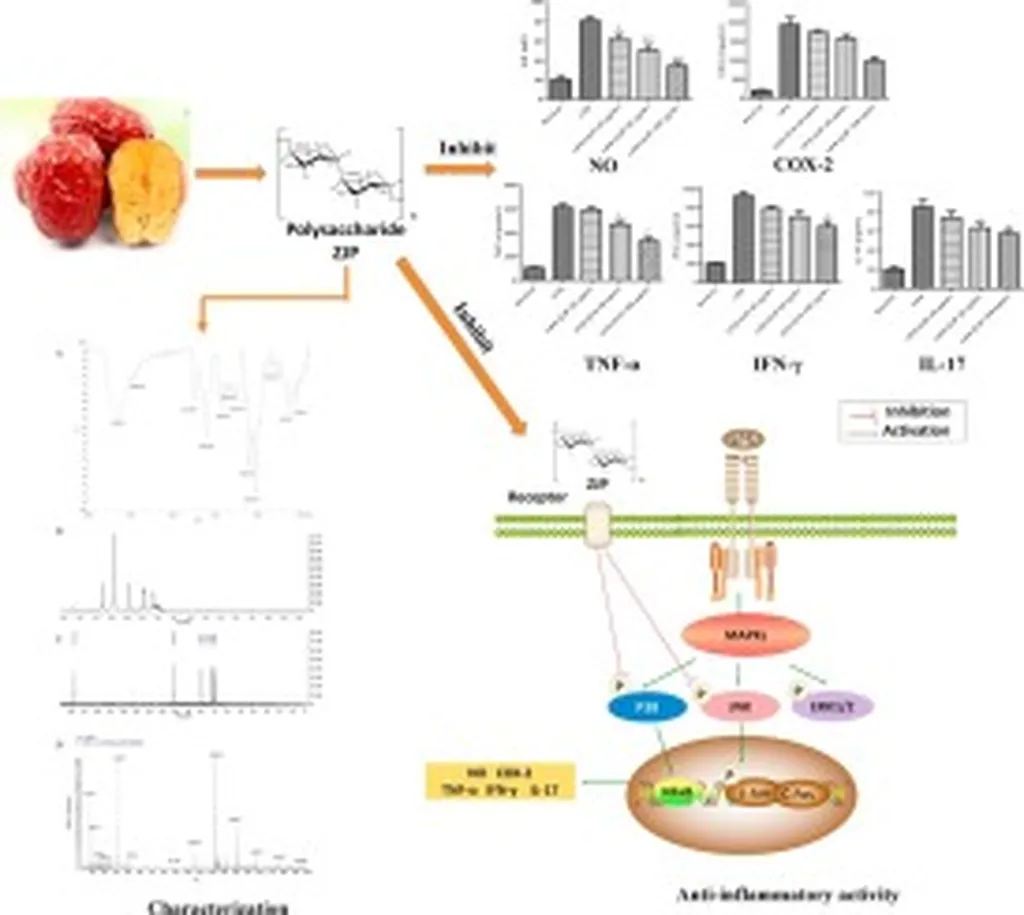
In the vast landscape of agricultural innovation, a humble fruit is making waves in the realm of immunology. Researchers have uncovered that polysaccharides derived from *Ziziphus jujuba*, commonly known as Chinese jujube or red date, exhibit significant immunomodulatory effects. This discovery, published in the journal *Foods*, could open new avenues for agricultural and biotech industries, particularly in the realm of functional foods and nutraceuticals.
The study, led by Bin Li from the College of Smart Agriculture at Xinjiang University, focuses on the polysaccharides extracted from the “Huizao” variety of *Ziziphus jujuba*. These polysaccharides, termed HP2-1, have shown promising results in both in vitro and in vivo studies. In vitro, HP2-1 increased the viability and phagocytic activity of RAW264.7 macrophages, a type of immune cell. This enhancement was accompanied by a boost in the secretion of key cytokines such as TNF-α, IL-6, and IL-1β, as well as the production of nitric oxide (NO) and reactive oxygen species (ROS).
“These findings suggest that HP2-1 can potentially stimulate immune responses, making it a valuable component in the development of immune-boosting foods and supplements,” Li explained. The in vivo studies further corroborated these results. In immunosuppressed mice, HP2-1 stimulated cytokine production, elevated immunoglobulin levels, and alleviated oxidative stress by increasing antioxidant enzyme activities and reducing malondialdehyde (MDA) production.
The research delves into the molecular mechanisms underlying these effects, revealing that HP2-1 modulates the TLR4/MAPK/NF-κB signaling pathway. This pathway is crucial for immune responses, and its activation leads to the phosphorylation of ERK, JNK, and p38 MAPKs, subsequently activating NF-κB and promoting cytokine secretion.
The implications of this research are far-reaching for the agriculture sector. As consumer demand for functional foods and natural health products continues to grow, the identification of bioactive compounds like HP2-1 presents a significant commercial opportunity. Farmers and agribusinesses could potentially diversify their crops to include high-value varieties of *Ziziphus jujuba*, catering to the burgeoning market for immune-boosting and health-promoting foods.
Moreover, this study highlights the importance of investing in research and development to unlock the full potential of agricultural products. “By understanding the bioactive components in our crops, we can add value to traditional agricultural products and create new revenue streams for farmers,” Li noted.
The findings also pave the way for further exploration into the therapeutic applications of *Ziziphus jujuba* polysaccharides. Future research could focus on optimizing the extraction and purification processes, as well as conducting clinical trials to validate the immunomodulatory effects in humans.
In conclusion, the discovery of the immunomodulatory properties of “Huizao” polysaccharides represents a significant step forward in the field of agricultural biotechnology. As the global population becomes increasingly health-conscious, the demand for natural and effective immune-boosting products is likely to surge. This research not only underscores the potential of *Ziziphus jujuba* as a valuable crop but also sets the stage for innovative developments in the agriculture and health industries.