
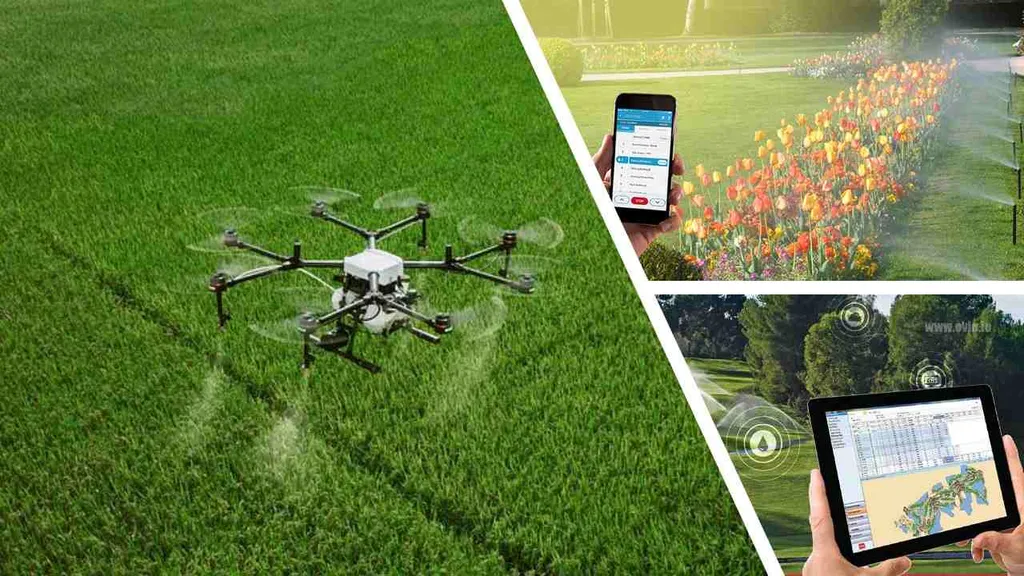
In the face of escalating global challenges such as water scarcity, climate change, and food security concerns, innovative solutions in agriculture are more critical than ever. A recent study published in the *Arab Universities Journal of Agricultural Sciences* introduces a promising advancement in irrigation technology that could revolutionize water management in agriculture. Led by Ahmed Yassen from the Soil Physics and Chemistry Department at the Desert Research Centre in Cairo, Egypt, and the Arid Lands Agricultural Research Institute at Ain-Shams University, the research presents a Climate-Smart Irrigation System (CSIS) designed to optimize water usage and enhance crop productivity.
The study addresses the pressing need for sustainable agricultural practices by developing a system that accurately estimates daily crop water requirements and manages irrigation timing. Using Root Mean Square Error (RMSE) to validate the sensors, the researchers compared the CSIS with traditional surface irrigation systems commonly used in Egypt. The experiment focused on pepper plants, utilizing decision-support software developed by the Food and Agriculture Organization of the United Nations (FAO) for irrigation scheduling, known as CROPWAT.
The results were compelling. The CSIS demonstrated remarkable accuracy, with RMSE values of 0.14 °C for air temperature and 30.57% for relative humidity. Notably, the evapotranspiration calculated by the CSIS differed from that calculated using CROPWAT, leading to a significant water saving of 75.58 mm per season. Despite these differences, there was no significant impact on the growth of pepper plants, indicating that the CSIS could be a viable and efficient alternative to traditional methods.
“Our findings suggest that the Climate-Smart Irrigation System not only conserves water but also maintains crop yield, which is crucial for sustainable agriculture,” said Ahmed Yassen, the lead author of the study. This research highlights the potential for machine learning and smart technology to transform irrigation practices, offering a scalable solution for farmers worldwide.
The commercial implications of this research are substantial. As water resources become increasingly scarce and the demand for food continues to rise, the adoption of climate-smart irrigation systems could significantly enhance agricultural productivity and sustainability. By reducing water waste and optimizing irrigation schedules, farmers can lower operational costs and improve crop yields, ultimately contributing to global food security.
The study’s findings pave the way for further exploration and development in the field of smart agriculture. As technology advances, the integration of machine learning and data-driven approaches into irrigation management could become a standard practice, benefiting both small-scale farmers and large agricultural enterprises. The research published in the *Arab Universities Journal of Agricultural Sciences* not only underscores the importance of innovative solutions in addressing agricultural challenges but also sets a precedent for future advancements in the sector.