
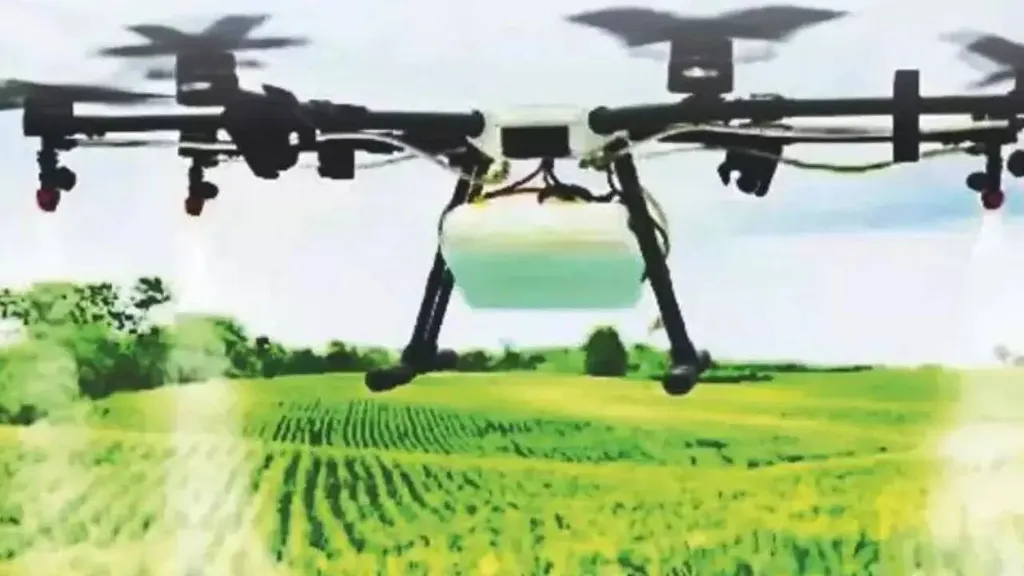
In the heart of India’s agricultural landscape, a quiet revolution is taking flight, quite literally. Researchers have been testing the efficacy of drone spraying systems for applying nano-urea in maize crops, and the results are promising not just for farmers, but for the entire agriculture sector. This innovative approach could redefine precision agriculture, making it more sustainable and efficient.
Traditional methods of applying nano-urea, such as tractor-operated gun sprayers, have long been the norm. However, these methods come with significant drawbacks: high water usage, labor intensity, and health risks for operators due to chemical exposure. Enter drone technology, which promises to mitigate these issues with precise, automated application and minimal resource use.
A recent study published in the journal ‘Drones’ and led by Ramesh Kumar Sahni from ICAR-Central Institute of Agricultural Engineering in Bhopal, India, compared the efficacy of drone spraying with conventional gun spraying for nano-urea application in maize crops. The findings are compelling. Both methods showed statistically similar Normalized Difference Vegetation Index (NDVI) and Soil Plant Analysis Development (SPAD) values eight days after application, indicating that drones are just as effective as traditional methods in delivering nutrients to crops.
“Drone spraying not only matches the effectiveness of conventional methods but also offers significant operational advantages,” says Sahni. The study revealed that drone spraying systems saved 95% water and reduced operational time, making them a more sustainable and efficient alternative.
The implications for the agriculture sector are profound. With water scarcity becoming an increasingly pressing issue, the ability to conserve water while maintaining crop yield is a game-changer. Additionally, the reduced operational time and labor requirements can lead to significant cost savings for farmers, enhancing their profitability and competitiveness.
The study also highlights the potential for drone technology to reduce operator exposure to chemicals, improving workplace safety and health outcomes. This is particularly important in a sector where laborers often face harsh working conditions and health risks.
Looking ahead, the adoption of drone spraying systems could accelerate the shift towards precision agriculture. As technology advances, we can expect drones to become even more sophisticated, with features such as real-time data collection and analysis, automated flight paths, and integration with other agricultural technologies. This could lead to a more interconnected and data-driven approach to farming, where decisions are based on real-time insights and predictive analytics.
Moreover, the scalability of drone technology means that it can be adapted to various crop types and farming conditions, making it a versatile tool for farmers worldwide. As the cost of drones continues to decrease and their capabilities expand, we can anticipate a broader adoption of this technology across the agricultural sector.
In conclusion, the study by Sahni and his team represents a significant step forward in the evolution of precision agriculture. By demonstrating the efficacy and advantages of drone spraying systems, they have paved the way for a more sustainable, efficient, and safe approach to crop management. As the agriculture sector continues to embrace technological innovation, drone technology is poised to play a pivotal role in shaping the future of farming.