
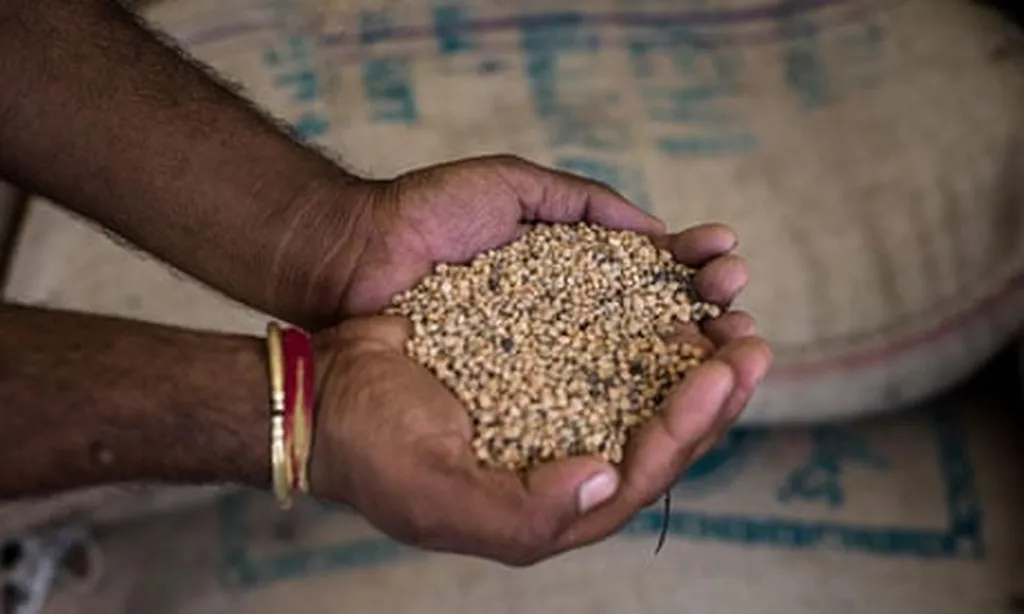
In the heart of India’s rainfed agro-ecological systems, a groundbreaking study is reshaping the way we think about maize cultivation. Researchers have been exploring the potential of dual-purpose baby corn hybrids, not just for their yield but also for their ability to provide forage biomass, a critical component for integrated crop-livestock systems. This research, led by Santosh Kumar of the ICAR-Indian Agricultural Research Institute in Hazaribagh, Jharkhand, offers promising insights into enhancing yield resilience and promoting sustainable intensification in agriculture.
The study, published in *Frontiers in Sustainable Food Systems*, delves into the intricate world of genotype × environment interactions. By evaluating various baby corn hybrids across multiple environments, the researchers aimed to identify those that could consistently deliver high yields and substantial forage biomass, even in the face of environmental variability. “Our goal was to find hybrids that not only perform well in terms of yield but also provide significant forage biomass, thereby supporting both crop and livestock production,” Kumar explained.
The implications of this research are profound for the agriculture sector. Dual-purpose crops like these can play a pivotal role in climate-smart agriculture, helping farmers adapt to unpredictable weather patterns and resource limitations. By integrating crop and livestock systems, farmers can diversify their income streams and enhance the overall sustainability of their operations. “This approach can be a game-changer for smallholder farmers, who often rely on both crop and livestock production for their livelihoods,” Kumar added.
The study’s findings highlight the importance of selecting the right hybrids for specific environments. By understanding the genotype × environment interactions, farmers and agronomists can make more informed decisions about which hybrids to plant, ultimately leading to more stable and productive harvests. This research also underscores the need for further investment in breeding programs that focus on developing dual-purpose crops tailored to diverse agro-ecological systems.
As the agriculture sector continues to grapple with the challenges posed by climate change and resource depletion, the insights from this study offer a beacon of hope. By embracing dual-purpose crops and integrating crop-livestock systems, farmers can enhance their resilience and contribute to more sustainable and productive agricultural practices. The research led by Santosh Kumar and his team at the ICAR-Indian Agricultural Research Institute serves as a testament to the power of innovative thinking and scientific rigor in addressing the pressing challenges of our time.