
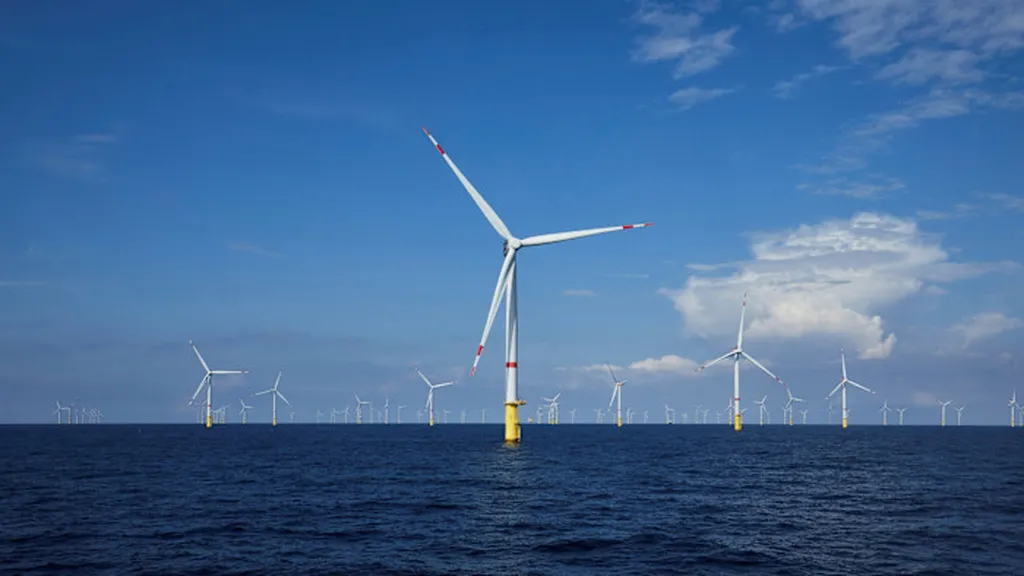
In a significant move towards energy independence and sustainability, a coalition of European leaders has pledged to build 100 gigawatts of offshore wind capacity. This ambitious target, enough to power more than 50 million homes, was agreed upon at a meeting in Hamburg, Germany. The ministers from the U.K., Germany, France, Belgium, Iceland, Ireland, the Netherlands, Luxembourg, Denmark, and Norway endorsed a blueprint for a vast offshore wind network that would interconnect neighboring countries, facilitating energy distribution based on demand.
The agreement underscores the growing concerns over Europe’s reliance on imported fossil fuels, particularly in the face of geopolitical tensions with Russia and the U.S. German Energy Minister Katherina Reiche highlighted that the plan would enhance “strategic sovereignty,” a critical aspect for Europe’s energy security.
This initiative follows two previous summits held in response to the 2022 Russian invasion of Ukraine, where countries committed to expanding offshore wind to reduce dependence on Russian natural gas. Europe has made notable strides in this direction, significantly cutting down on Russian gas imports. In 2019, 60 percent of natural gas imported to the European Economic Area came through Russian pipelines. By 2025, this figure had plummeted to just 8 percent. Concurrently, the share of gas imported from the U.S. surged from 4 to 39 percent, according to a recent policy brief from a coalition of European think tanks.
However, the increased reliance on U.S. imports presents new risks. The policy brief warns that Europe’s energy imports have become increasingly concentrated around a single supplier, raising concerns about energy security. The U.S. has explicitly stated in its latest national security strategy that expanding energy exports is a means to “project power” overseas. Raffaele Piria of the Berlin-based Ecologic Institute noted that U.S. government interference in gas markets to exert pressure on Europe was once considered unthinkable, but this assumption is now questionable in the current geopolitical climate.
Louise van Schaik of the Dutch think tank Clingendael emphasized that true energy security lies in accelerating domestic renewables and electrification to phase out gas and oil imports, rather than shifting fossil fuel suppliers.
For the agriculture sector, this shift towards renewable energy and energy independence has profound implications. Farmers, who are significant energy consumers, could benefit from more stable and potentially lower energy costs as renewable sources become more prevalent. Additionally, the development of offshore wind farms could create new economic opportunities in rural coastal areas, fostering local economic growth and job creation.
Investors, on the other hand, are likely to see new opportunities in the renewable energy sector, particularly in offshore wind projects. The European leaders’ pledge is expected to drive significant investment in this area, creating a favorable environment for both domestic and international investors. However, investors must also be mindful of the geopolitical risks and the potential for market volatility as Europe navigates its energy transition.
In conclusion, the European leaders’ commitment to expanding offshore wind capacity represents a strategic move towards energy independence and sustainability. While it presents opportunities for the agriculture sector and investors, it also underscases the need for a balanced approach that prioritizes domestic renewable energy development and reduces reliance on any single fossil fuel supplier.